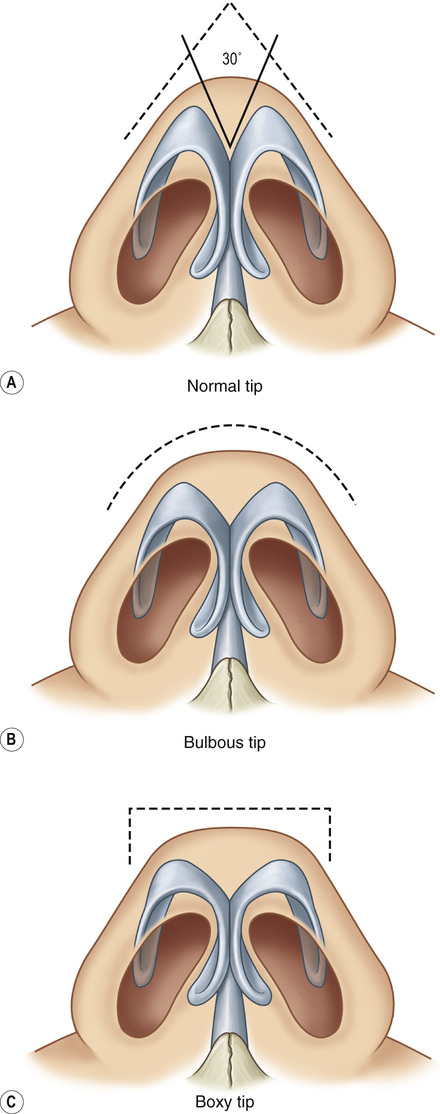
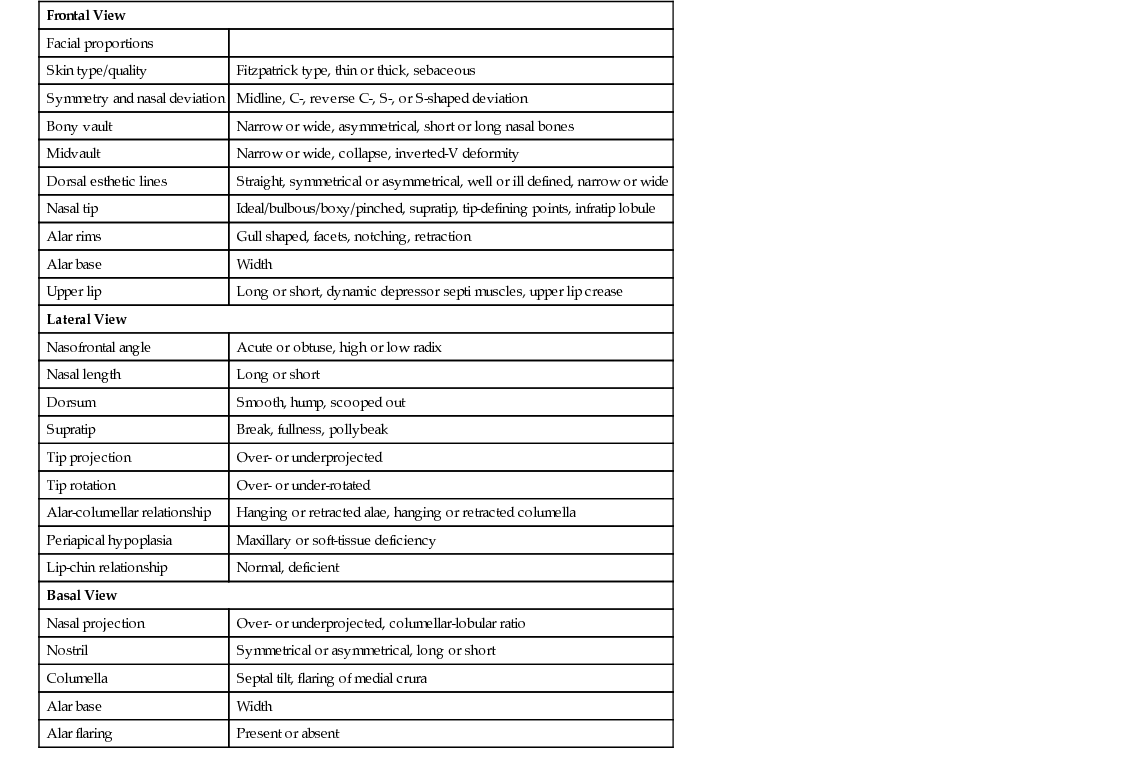
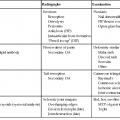
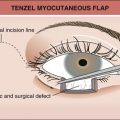
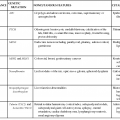
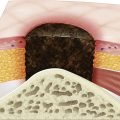
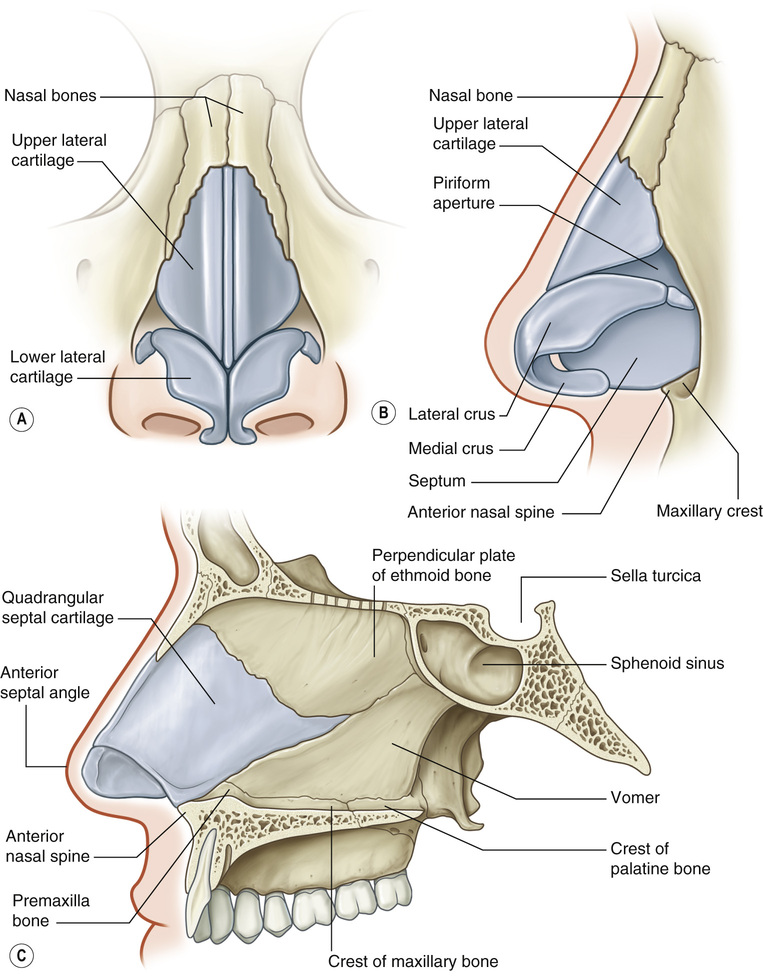
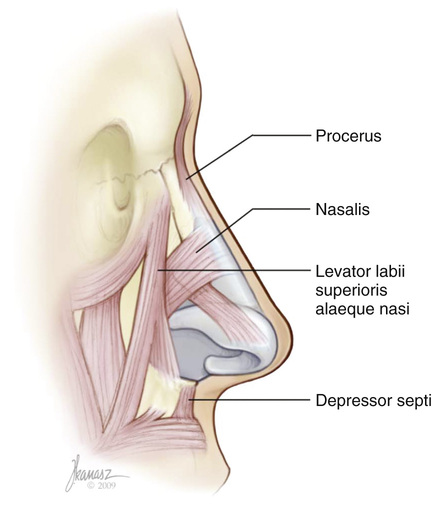
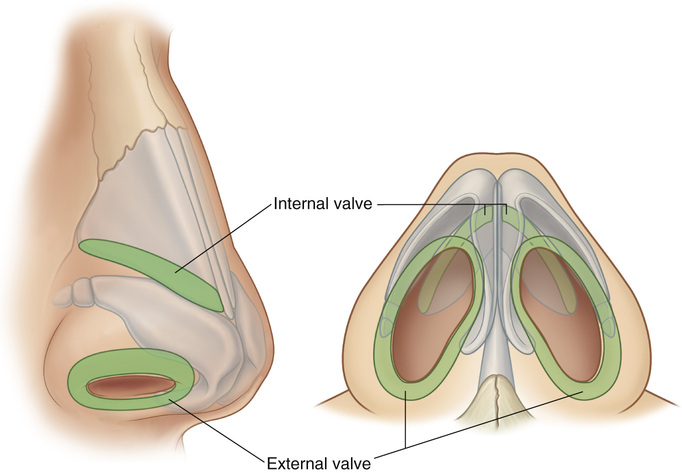
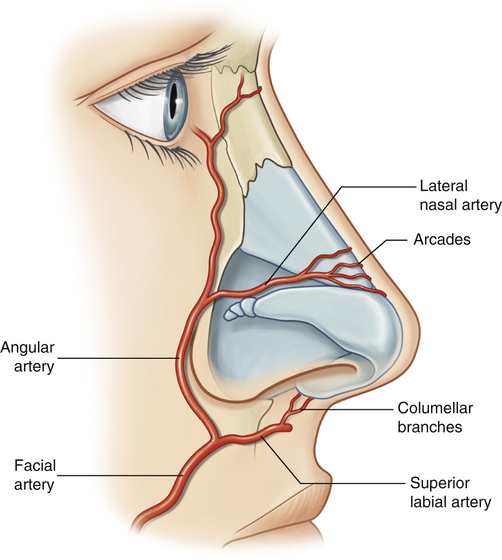
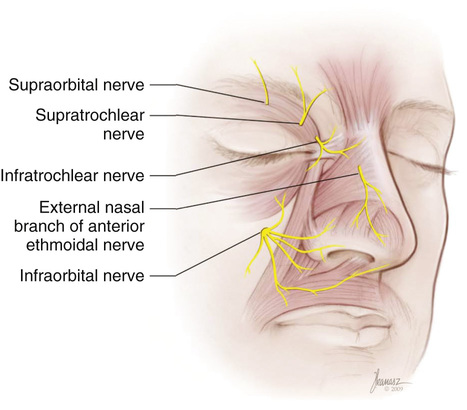
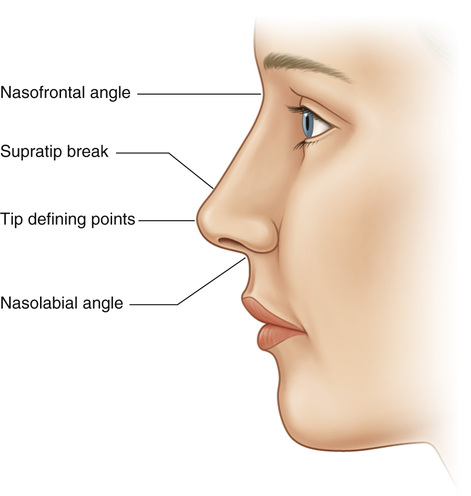
1. The nose is a system of two closely related layers. • Outer layer: Soft, elastic sleeve that slides over the semirigid inner framework • Inner layer: Semirigid framework ▪ Nasal lining: Mucosal inner layer (see Figure 27.1) 2. Muscles of the nose: Crucial to dynamic function of the nasal valve and airway • Facial paralysis (cranial nerve [CN] VII) can cause nasal airway obstruction on side of lesion • Depressor septi nasi: Depresses nasal tip (see Figure 27.2) 3. Nasal valves • INV (between septum and ULC): 10 to 15 degrees; if <10 = spreader grafts. ▪ Contributes the most to nasal air-flow resistance • External nasal valve (ENV; at genu of LLC and nares): Often from over-resection of LLC; treatment: Alar batten grafts (see Figure 27.3) 4. Vascular supply to the nose • Nasal tip: Columellar artery (superior labial a. → facial a. → external carotid a.), lateral nasal a. (angular a. → facial a. → external carotid a.) • Nasal sidewall, dorsum: Angular a. and lateral nasal a. ▪ The lateral nasal a. also perfuses the nasal tip during open rhinoplasty. • Posterior nasal septum: Sphenopalatine a. • Upper/central nasal septum: Posterior ethmoid a. (see Figure 27.4). 5. Sensory innervation of the nose • External branch of the anterior ethmoidal nerve: Nasal tip; vulnerable to damage during endonasal rhinoplasty procedures • Infraorbital nerve: Lower lateral half of the nose and columellar skin • Infratrochlear nerve: Cephalic portion of the nasal sidewalls and the skin overlying the radix • Supraorbital nerve also innervates the skin of the radix. • Supratrochlear nerve supplies sensation to the forehead skin. • The nose is made up of 9 esthetic subunits. • Conduit for oxygenated air to enter the lungs • Reservoir for warming and humidifying inspired air • Filters air and provides first-line immune defense against pathogens • The middle meatus marks the path of primary air flow within the nasal cavity. • Causes of obstruction include any abnormality that results in increased nasal resistance and decreased air flow (e.g., septal deviation, trauma, nasal valve collapse, turbinate hypertrophy, intranasal masses) ▪ INV incompetence and/or collapse thought to be the most common cause • In cases of rhinitis and turbinate hypertrophy, preoperative medical treatment is recommended. ▪ Viral rhinitis: Oral/topical decongestants 1. Nasofrontal angle: Males, 120 to 130 degrees; females, 115 to 125 degrees 2. Nasolabial angle: Males, 90 to 95 degrees; females, 100 to 105 degrees 3. Tip projection: Equal to base width; 2/3 length of nose (see Figure 27.7) 4. Base width: Equal to intercanthal distance 5. Angle of divergence refers to middle crura of LLC; the angle between R and L middle crus while looking at the nose from anterioposterior (AP) view. • Ideal angle: 30 to 60 degrees; >60 = boxy tip, <30 = narrow tip (see Figure 27.8) 6. The nostrils should have a teardrop configuration, with the diameter of the base slightly larger than the diameter of the apex. • The long axis of each nostril points in a slight medial direction (see Table 27.1). 3. The Asian nose is characterized by alar flare, a bulbous nasal tip, a short retracted columella (i.e., no columellar show), thick subcutaneous tissue, and a wide, flat nasal dorsum. • Asian rhinoplasty generally focuses on augmentation of the nasal dorsum with an alloplastic implant. ▪ Silicone implants are especially popular throughout Asia. • Caused by prominence of the caudal septum or convexity of the caudal margin of the medial crura • Treatment options: Resection of the caudal margin of the medial crura 5. Esthetic septorhinoplasty carries a high incidence of postoperative patient dissatisfaction. • Patient selection is critical. • Most common reasons for dissatisfaction ○ Patients with unrealistic expectations or excessive demands ○ Patients who are indecisive, immature, secretive, motivated by others, or unstable ○ Patients with body dysmorphic disorder (BDD) • Management of the dissatisfied patient: Frequent communication and follow-up 6. BDD • Affects 7% to 15% of all plastic surgery patients • Characterized by the degree of concern being much greater than the degree of deformity; patients are generally unaware that concerns are excessive. • Most patients with BDD are single (70% never married) and up to 50% have suicidal ideation. • Critical for planning, demonstration of results, and patient education • Lighting, patient positioning, and obtaining standard views are paramount for best photographic results. ▪ Standard views include frontal, oblique, lateral, basilar, cephalic, and smiling lateral
Rhinoplasty and Nasal Reconstruction
Anatomy of the Nose
Nasal Physiology
Ideal Nasal Analysis (see Figure 27.6)
Preoperative Considerations

Stay updated, free articles. Join our Telegram channel

Full access? Get Clinical Tree


Rhinoplasty and Nasal Reconstruction
Chapter 27
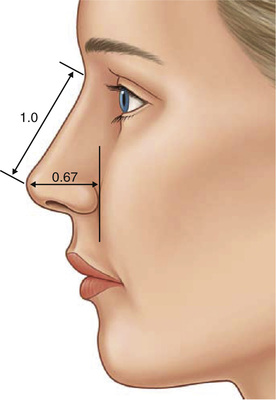
 their nasal length.