Introduction
Advances in trauma and burn management over the past three decades have resulted in improved survival and reduced morbidity from major burns. The cost of such care, however, is high; it requires conservation of resources such that only a limited number of burn intensive care units (ICUs) with the capabilities of caring for such labor-intensive patients can be found; hence, regional burn care has evolved. This regionalization has led to the need for effective prehospital management, transportation, and emergency care. Progress in the development of rapid, effective transport systems has resulted in marked improvement in the clinical course and survival for victims of thermal trauma.
For burn victims, there are usually two phases of transport. The first is the entry of the burn patient into the emergency medical system with treatment at the scene and transport to the initial care facility. The second phase is the assessment and stabilization of the patient at the initial care facility and transportation to the burn ICU. With this perspective in mind, this chapter reviews current principles of optimal prehospital management, transportation, and emergency care.
Prehospital care
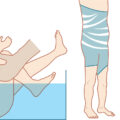
Immediate burn care by first responders is important: it can vastly alter outcomes and significantly limit burn progression and depth. The goal of prehospital care should be to ease the burning process and prevent further complications and secondary injuries from burn shock. Identifying burn patients appropriately for immediate transfer is an important step in reducing morbidity and mortality. Before any specific treatment, a patient must be removed from the source of injury and the burning process stopped. As the patient is removed from the injuring source, care must be taken so that a rescuer does not become another victim. All caregivers should be aware of the possibility that they may be injured by contact with the patient or the patient’s clothing. Universal precautions, including wearing gloves, gowns, masks, and protective eyewear, should be used whenever contact with blood or body fluids is likely. Burning clothing should be removed as soon as possible to prevent further injury. It has been shown that prompt removal of clothing after scald injuries may reduce postburn morbidity. All rings, watches, jewelry, and belts should be removed because they can retain heat and produce a tourniquet-like effect with digital vascular ischemia. If water is readily available, it should be poured directly on the burned area during the first 5 minutes maximum to avoid hypothermia. Early cooling can reduce the depth of the burn and reduce pain, but cooling measures must be used with caution because a significant drop in body temperature may result in hypothermia with ventricular fibrillation or asystole. Cold water treatment over large body surfaces has been shown to trigger clinically relevant hypothermia. Ice or ice packs should never be used because they may cause further injury to the skin or produce hypothermia.
Initial management of chemical burns involves removing saturated clothing, brushing the skin if the agent is a powder, and irrigating with copious amounts of water, taking care not to spread the chemical on burns to adjacent unburned areas. Irrigation with water should continue from the scene of the accident through emergency evaluation in the hospital until achieving a normal skin pH level (5.4–5.9). Efforts to neutralize chemicals are contraindicated because of the additional generation of heat, which would further contribute to tissue damage. A rescuer must be careful not to come in contact with the chemical.
The initial management of patients who suffer an electrical injury includes confirming that the scene is safe from electrical current, which must be turned off from its source.
On-site assessment of a burned patient
Initial assessment of a burned patient is divided into primary and secondary survey. In the primary survey, immediate life-threatening conditions are quickly identified and treated. The primary survey is a rapid, systematic approach to identify life-threatening conditions. The secondary survey is a more thorough, head-to-toe evaluation of the patient. Initial management of a burned patient should be the same as for any other trauma patient, with attention directed at the ABCDE, as follows:
-
■
A: Securing the A irway and Cervical Spine Protection
-
■
B: B reathing and Ventilation
-
■
C: C irculation and C ardiac Status
-
■
D: D isability, Neurologic D eficit, and Gross D eformity
-
■
E: E xposure and E nvironmental Control
Primary survey
Exposure to heated gases and smoke from the combustion of a variety of materials results in damage to the respiratory tract. Direct heat to the upper airways results in edema formation, which may obstruct the airway. Initially, heated 100% humidified oxygen should be given to all patients when no obvious signs of respiratory distress are present. Upper airway obstruction may develop rapidly after injury, and the respiratory status must be continually monitored to assess the need for airway control and ventilator support. Progressive hoarseness is a sign of impending airway obstruction. Endotracheal intubation should be done early before edema obliterates the anatomy of the area. Intubation should be performed by the most experienced provider. ,
The patient’s chest should be exposed to adequately assess ventilatory exchange. Circumferential burns may restrict breathing and chest movement. Airway patency alone does not assure adequate ventilation. After an airway is established, breathing must be assessed to ensure adequate chest expansion. Impaired ventilation and poor oxygenation may be due to smoke inhalation or carbon monoxide intoxication. Endotracheal intubation is necessary for unconscious patients, for those in acute respiratory distress, or for patients with burns of the face or neck that may result in edema, which causes obstruction of the airway. , The nasal route is the recommended site of intubation. Assisted ventilation with 100% humidified oxygen is required for all intubated patients.
Blood pressure is not the most accurate method of monitoring a patient with a large burn because of the pathophysiologic changes that accompany such an injury. Blood pressure may be difficult to ascertain because of edema in the extremities.
Increased circulating catecholamines after burns often elevate the adult heart rate to 100 to 120 bpm. Heart rates above this level may indicate hypovolemia from an associated trauma, inadequate oxygenation, unrelieved pain, or anxiety.
If a burn victim was in an explosion or deceleration accident, there is the possibility of a spinal cord injury. Appropriate cervical spine stabilization must be accomplished by whatever means necessary, including a cervical collar to keep the head immobilized until the condition can be evaluated.
Secondary survey
After completing a primary survey, a thorough head-to-toe evaluation of the patient is imperative. A careful determination of trauma other than obvious burn wounds should be made. If no immediate life-threatening injury or hazard is present, a secondary examination can be performed before moving the patient; precautions such as cervical collars, backboards, and splints should be used. Secondary survey should examine the patient’s medical history, medications, allergies, and the mechanisms of injury. Any suspicion of nonaccidental injury should lead to immediate admission of a child to the hospital, irrespective of how trivial the burn injury is, and notification of social services.
There should never be a delay in transporting burn victims to an emergency facility because of an inability to establish intravenous (IV) access. The American Burn Association recommends that if a patient is less than 60 minutes from a hospital, an IV is not essential and can be deferred until a patient is at the hospital. If an IV line is established, lactated Ringer’s solution (LR) should be infused at the following rates:
-
■
13 years and older: 500 mL/h
-
■
6 to 12 years old: 250 mL/h
-
■
5 years and younger: 125 mL/h
Prehospital care of wounds is basic and simple because it requires only protection from the environment with an application of a dry and clean dressing or sheet to cover the involved part. Covering wounds is the first step in diminishing pain. Narcotics may be given for pain, but only intravenously in small doses and only enough to control pain. It has been shown that despite training of medical staff, provision for analgesia for children with burns is lacking and needs further clarification. Intramuscular (IM) or subcutaneous routes should never be used because fluid resuscitation could result in unpredictable patterns of uptake. No topical antimicrobial agents should be applied in the burns. , The patient should then be wrapped in a dry and clean sheet and blanket to minimize heat loss and to control temperature during transport.
Transport to hospital emergency department
Rapid, uncontrolled transport of a burn victim is not the highest priority, except in cases where other life-threatening conditions coexist. In most accidents involving major burns, ground transportation of victims to a hospital is available and appropriate. Helicopter transport is of greatest use when the distance between an accident and a hospital is 30 to 150 miles or when a patient’s condition warrants. Whatever the mode of transport, it should be of appropriate size and have emergency equipment available, as well as trained personnel, such as a nurse, physician, paramedic, or respiratory therapist.
An estimate of burn size and depth assists in making a determination of severity, prognosis, and disposition of a patient, and it should be done after the primary survey is completed. Burn size directly affects fluid resuscitation, nutritional support, and surgical interventions. The size of a burn wound is most frequently estimated by using the rule of nines method ( Fig. 6.1 ). The American Burn Association identifies certain injuries as usually requiring a referral to a burn center. Patients with these burns should be treated in a specialized burn facility after initial assessment and treatment at an emergency department. Questions about specific patients should be resolved by consultation with a burn-center physician ( Box 6.1 ). ,
Estimation of burn size using the rule of nines.
(From American Burn Association. Advanced Burn Life Support Providers Manual . Chicago, IL: American Burn Association; 2022.)
Box 6.1
From American Burn Association . Advanced Burn Life Support Provider Manual. American Burn Association; 2022.
TBSA, Total body surface area.
Criteria for Transfer of a Burn Patient to a Burn Center
-
■
Full-thickness burns
-
■
Partial-thickness 10% TBSA
-
■
Any deep partial- or full-thickness burns involving the face, hands, genitalia, feet, perineum, or over any joints
-
■
Patients with burns and other comorbidities
-
■
Patients with concomitant traumatic injuries
-
■
Circumferential injuries
-
■
Poorly controlled pain
-
■
All patients with suspected inhalation injury
-
■
All pediatric burns may benefit from burn center referral due to pain, dressing change needs, rehabilitation, patient/caregiver needs, or nonaccidental trauma
-
■
All chemical injuries
-
■
All high voltage (1000-V) electrical injuries
-
■
Lightning injury
Keeping the patient warm and dry
Hypothermia is detrimental to traumatized patients and can be avoided or at least minimized using dry and warmed sheets and blankets. Wet dressings should be avoided.
Pain control
The degree of pain experienced initially by the burn victim is inversely proportional to the severity of the injury. No medication for pain relief should be given intramuscularly or subcutaneously. For mild pain, acetaminophen 650 mg orally every 4 to 6 hours may be given. For severe pain, morphine, 1 to 4 mg intravenously every 2 to 4 hours, is the drug of choice, although meperidine 10 to 40 mg by IV push every 2 to 4 hours may be used. Recommendations for tetanus prophylaxis are based on the patient’s immunization history. All patients with burns should receive 0.5 mL of tetanus toxoid. If prior immunization is absent or unclear, or if the last booster was more than 10 years ago, 250 units of tetanus immunoglobulin is also given.
Transferring a burn patient
The appearance of burned skin is rather obvious and has the potential to mask or cover any other potential injuries that the burn patient could have. The burn patient is a trauma patient with burns and should be promptly and effectively evaluated to include other potential injuries. It is important to establish effective communication between the transferring unit and the receiving center. The American Burn Association has referral guidelines that identify those patients needing to be transferred to a burn center. ,
Once the need to transfer the patient is identified, the transferring process begins. The doctor-to-doctor referral process starts with the initial care facility. Available phone numbers and doctor information should be available to centers, and the center should promptly call and ask for all the information needed for the transfer.
The referring physician should give a brief and concise history of the event that includes the time of injury and all resuscitation efforts attempted before the call. The ABCDEs of trauma resuscitation should be discussed and the most current vital signs and physical examination findings should be presented. The accepting facility should then fill out an intake form that details all the information. Understanding the patient’s status is essential for a successful and uneventful transfer. It is imperative that physicians participate in the process by adding to the already available information gathered by other personnel.
Transferring a patient without the needed information can potentially lead to bad outcomes and/or unnecessary expense. For example, a burn patient with an underlying anoxic brain injury could be transferred to a burn center when instead the diagnosis of brain death could have been made at the initial care facility.
Physicians can access patient information utilizing different technologies. Although a doctor-to-doctor phone call is preferred by many, today’s technology allows patient data to be transferred, including pictures and laboratory results and any other clinical information needed to further assess the patient’s needs. Although some physicians still prefer the immediacy of the telephone, secure electronic messaging tools are beginning to supplement phone calls and beepers to facilitate communication among physicians. ,
Transportation guidelines
The primary purpose of any transport team is not to bring a patient to an ICU but to bring that level of care to the patient as soon as possible. Therefore the critical time involved in a transport scenario is the time it takes to get the team to the patient. The time involved in transporting a patient back to a burn center becomes secondary. Communication and teamwork are vital to an effective transport system.
When transportation is required from a referring facility to a specialized burn center, a patient can be well stabilized before being moved. Initially, the referring facility should be informed that all patient referrals require physician-to-physician discussion. Pertinent information needed includes patient demographic data, time, date, cause and extent of burn injury, weight and height, baseline vital signs, neurologic status, laboratory data, respiratory status, medical and surgical history, and allergies.
The referring hospital is informed of specific treatment protocols regarding patient management before transfer. To ensure patient stability, the following guidelines are offered:
-
■
Establish two IV sites, preferably in an unburned upper extremity, and secure IV tubes with sutures.
-
■
Insert a Foley catheter and monitor for acceptable urine output (0.5 mL/kg/h for adults; 1 mL/kg/h for children).
-
■
Insert a nasogastric tube and ensure that the patient takes nothing by mouth.
-
■
Maintain body temperature between 38°C and 39°C (taken rectally).
-
■
For burns less than 24 hours old, only use lactated Ringer’s (LR) solution. The staff physician will advise on the infusion rate, which is calculated based on the percentage of total body surface area burned.
After physician-to-physician contact and collection of all pertinent information, the physicians will make recommendations regarding an appropriate mode of transportation. The options are based on distance to a referring unit, patient complexity, and comprehensiveness of medical care required. Options include:
-
■
Full medical ICU transport with a complete team consisting of a physician, a nurse, and a respiratory therapist from the burn facility
-
■
Medical intensive care transport via fixed wing aircraft or helicopter with a team from the referring facility
-
■
Private plane with medical personnel to attend patient
-
■
Commercial airline
-
■
Private ground ambulance
-
■
Transport van with appropriate personnel
Transport team composition
Related posts:

Stay updated, free articles. Join our Telegram channel

Full access? Get Clinical Tree


