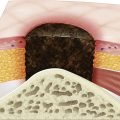
1. Human bites • Eikenella species unique to human bites ▪ Treat with penicillin including ampicillin and amoxicillin ▪ Eikenella species are resistant to clindamycin. 2. Dog bites • Immediately irrigate wounds with saline and wash with soap and/or Betadine • Leave puncture wounds open to heal by secondary intent. • Lacerations can be repaired after copious irrigation if wound appears clean. • Penicillin antibiotics most commonly used • Must be concerned about rabies ▪ If a known animal, it should be quarantined for at least 10 days. ▪ If an unknown animal, rabies prophylaxis is indicated. ◆ If prior vaccination: Wash wound thoroughly and provide booster vaccine. ◆ If no prior vaccination: Wash wound thoroughly, administer rabies vaccine and rabies immunoglobulin. 3. Cat bites • High rate of infection from cat bites • Many infections are polymicrobial; however, Pasteurella multocida is unique to cat bites. ▪ Pasteurella is resistant to cephalexin and cefazolin. 4. Snake bites • The majority of snakebites are from pit vipers. • Antivenin is indicated for progressive injury or symptoms. ▪ If nonurgent, skin test first for hypersensitivity reaction is preferred. • Avoid debridement and/or tourniquet application 5. Spider bites ○ Watch for hematologic side effects. ▪ Treat with calcium gluconate and benzodiazepines (e.g., diazepam). ▪ Spider antivenin can be used in immunocompromised patients. • Stings are typically self-limiting in adults. • Treat initially with cold compresses and observation. • In children, symptoms can be more severe. ▪ Treat with admission, monitoring, and potentially intubation for airway protection. • Avoid debridement and tourniquet application. 1. Necrotizing fasciitis: A progressive soft-tissue infection affecting skin, subcutaneous tissue, and fascia and sparing muscle • Extremely high mortality and rapid progression • Can result from minor trauma or hematogenous spread ▪ Most patients have predisposing morbidity, placing them at risk. ○ Diabetes • Requires emergent debridement of all devitalized tissue • Type 1 (75% of cases): Polymicrobial, mixed aerobic and anaerobic infections (non-group-A Streptococcus) ▪ Treat with ampicillin-sulbactam, clindamycin, ciprofloxacin, or gentamicin. • Type 2: Monomicrobial, group-A Streptococcus (Streptococcus pyogenes) ▪ Treat with clindamycin and penicillin. • Initial cellulitis stage: Tenderness, erythema, edema, warm skin, fever ▪ May have increased white blood cells (WBCs), thrombocytopenia, hyperkalemia • Cellulitis progresses to ischemia with severe pain, crepitus, and bullae formation. • Final stage characterized by frank necrosis, anesthesia, and “dishwater” drainage. • Emergent surgical debridement ▪ Include fasciotomies in setting of compartment syndrome. ▪ Many require multiple trips to the operating room for serial debridement. • A necrotizing soft-tissue infection of the perineum • Risk factors: Diabetes, alcoholism, smoking, leukemia, immunocompromised • Rapid progression and high mortality • Treat as above and include antibiotic coverage for anaerobic clostridium species. 1. Methicillin-resistant Staphylococcus aureus (MRSA) • Increasingly common flora, especially in the nares • More virulent and resistant to penicillins and cephalosporins • Suspect in patient with persistent infection in setting of penicillin antibiotic treatment. ▪ Treat with vancomycin, linezolid, trimethoprim-sulfamethoxazole (Bactrim), or clindamycin. • Signs ▪ Edema of the upper and lower eyelids ▪ Erythema and cellulitis in the periorbital region • Diagnosis: Computed tomography (CT) scan • Treatment: Broad-spectrum intravenous antibiotics and operative drainage • Rapid progression, with high mortality ▪ Most common pathogens are Neisseria meningitides and MRSA • Typically involves pediatric patients • Treatment: Supportive care, broad-spectrum intravenous antibiotics, and activated protein C • Most common pathogens are Staphylococcus aureus and Streptococcus viridans. • Can occur after surgery, trauma, or retained foreign bodies (e.g., nasal packing, tampons, etc.) • Most common pathogens are Staphylococcus aureus and group-A Streptococcus pyogenes. • Treatment: Supportive care and antibiotics • Can develop after surgery, trauma, injury • Risk factors can include host (diabetes, malnutrition, obesity, ischemia, steroid use, immunosuppression), wound (presence of nonviable tissue, foreign bodies, contamination), and procedural (length of operation) characteristics. ▪ Of the wound factors, contamination portends the highest risk. • Treatment: Drainage and/or debridement, antibiotics, supportive care
Soft-Tissue and Hand Infections
Bites
Necrotizing Soft-Tissue Infections
Other Common Soft-Tissue Infections

Stay updated, free articles. Join our Telegram channel

Full access? Get Clinical Tree


Soft-Tissue and Hand Infections
Chapter 21