1. Introduction
Burns disrupt the protective skin barrier, compromising the range of vital protective and homeostatic functions. Early excision of major burns has been shown to improve patient outcomes. Burn excision is subsequently followed by a requirement to cover the wound bed created. In major burns, the lack of available donor sites to harvest conventional autologous skin grafts to achieve wound closure is challenging. This is the basis from which the demand for skin substitutes first evolved, with Burke and Yannas pioneering the introduction of alternative wound cover after burn excision to provide skin coverage when autologous grafting may not be possible or practical. They invented a dermal scaffold composed of bovine collagen and shark glycosaminoglycan matrix with an epithelial equivalent, the silicone layer. This became known as Integra. The first multicenter clinical trial using Integra was published in 1988. Integra was eventually granted approval by the US Food and Drug Administration (FDA) in 1996 for use in life-threatening thermal injuries, awarded CE mark approval in the European Union in 1998, and in 2002 the FDA approved its use in scar resurfacing. During that same period, Rheinwald and Green described the technique of cultured epidermal autografts (CEA), which provided an alternative adjunct to help achieve wound cover.
Since these initial discoveries, the selection of available skin substitutes has rapidly increased, ultimately aiming to develop a widely available and inexpensive substitute that is both easily applied and capable of restoring a protective and homeostatic barrier.
2. Classification of skin substitutes
Skin substitutes provide biologic wound coverage either on a temporary or a permanent basis and, as such, are most commonly classified accordingly ( Tables 50.1 and 50.2 ). Permanent substitutes are mostly in the form of scaffolds that become integrated into the wound and are eventually replaced by host cells, with the scaffold itself finally undergoing reabsorption. Temporary substitutes, on the other hand, do not integrate into the wound; they instead temporarily adhere to the wound and may induce growth and promote healing of the underlying wound bed. Other classifications include autologous, allogenic, or xenograft; biologic or synthetic; cellular or acellular; and single layer or composite.
Table 50.1
Temporary Skin Substitutes and Their Structures, Mechanisms of Action, and Relevant Strengths and Limitations
| Skin Substitute | Structure | Indication/Mechanism of Action | Strengths and Limitations |
|---|---|---|---|
| Allograft | Human cadaveric split-thickness skin grafts. Can be either cryo- or glycerol preserved | Allogenic skin graft vascularizes initially as per autograft; however, it is eventually rejected by the host within 3–4 weeks | Temporary coverage when insufficient autologous graft is available. Theoretic nonzero risk of transmitting communicable disease. Costly given strict regulation and limited availability |
| Xenograft | Animal-derived skin graft, usually porcine (e.g., EZ Derm, acellular dermis) or fish skin–derived (Kerecis Omega-3 Burn) | Used as an alternative to allografts. It does not vascularize. It adheres to wounds and provides temporary coverage | Temporary wound coverage in partial-thickness burns. Lower cost than allograft. In fish, limited processing as no known pathogenicity to humans. No randomized trials available to confirm relative efficacy |
| Amniotic membrane (EpiBurn, EpiFix) | The innermost layer of the placenta; it consists of a single epithelial layer, a basement layer, and an avascular stroma Available in frozen or glycerol-preserved forms | Promotes migration and adhesion of epithelial cells. It has high concentration of hyaluronan and decorin and has antiinflammatory, antiangiogenic, antimicrobial, and antiscarring actions | Temporizing wound coverage in partial-thickness burns. Immunologically privileged, so no host response like in allograft. Cheap. Relatively poor mechanical stability and limited donor pool |
| Biobrane (Smith & Nephew, London; Hull, United Kingdom) | Consists of a silicone membrane bonded to a nylon mesh that is impregnated with porcine dermal collagen peptides | The collagen peptide coating enhances adherence to the wound. Biobrane has no inherent antimicrobial properties | Relatively good adherence level to the wound bed and relatively inexpensive. No inherent antimicrobial properties, so theoretically greater risk of underlying wound infection |
| Suprathel (PolyMedics Innovations GmbH; Denkendorf, Germany) | Entirely synthetic and composed of synthetic copolymers, mostly polylactic acid (DL-lactide, trimethylenecarbonate, and e-caprolactone) | This has similar indications to Biobrane and is used for temporary cover of partial-thickness burns and donor sites | High degree of plasticity, good porosity, prevents buildup of wound exudate. Relatively expensive compared with other temporary skin substitutes |
| Oasis (Smith & Nephew, London; Hull, United Kingdom) | Collagen matrix, derived from acellular porcine intestinal submucosa | Indicated as a single-application dressing for deep dermal burns. Bioresorbable dressing acting as a scaffold for cell migration in reepithelialization | Single application resulting in no routine dressing changes and reduction in pain scores reported |
| Omiderm (Omikron Scientific Ltd.; Rehovot, Israel) | Synthetic polymer made from hydrophilized polyurethane | Similar indications to Biobrane and Suprathel in covering partial-thickness burns and/or autologous donor sites | High plasticity, so good utility in mobile extremities, prevents exudative accumulation. Nonantigenic properties of synthetic polymer. Less good wound adherence than comparable skin substitutes (e.g., Suprathel) |
| Epiprotect (S2Medical AB; Linköping, Sweden) | Consists of a thin film of biosynthetic cellulose polymer in a nanofibrillar network | Acts as a permeable epithelial barrier that adheres well to superficial and partial-thickness burns as a single application dressing | Good adherence, permeability, with evidence of decreased pain and absolute reduction in dressing changes required. No immunogenic response |
Table 50.2
Permanent Skin Substitutes and Their Structures, Mechanisms of Action, and Relevant Strengths and Limitations
| Skin Substitute | Structure | Indication/Mechanism of Action | Strengths and Limitations |
|---|---|---|---|
|
EPIDERMAL SUBSTITUTES
|
|||
| Epicel (Vericel Corporation; Ann Arbor, MI) | Autologous culture epithelial autograft. Consists of a petroleum gauze and autologous keratinocyte sheets that have been harvested and cocultured with murine cells | Indicated for deep dermal and full-thickness burns. Sheets of between 2 and 8 cell layers thick are usually cultured for wound application | Autologous tissue with no antigenicity effects. Expensive, relatively fragile requiring careful handling, and time consuming to produce |
| ReCell (Avita Medical; Cambridge, United Kingdom) | Autologous noncultured cell therapy. Preconfluent autologous epidermis obtained by trypsinizing a small biopsy into a suspension to be directly sprayed onto the wound | Used as epidermal component skin substitute. Consists of full range of epidermal cells, including fibroblasts, melanocytes, keratinocytes, and Langerhans cells that organize to provide epidermal coverage | Prepared intraoperatively, no need for tissue culturing facility. Provides complete epidermal components. Positive effects on scarring and decreasing pain. Costly and limited application as only epidermal substitute |
|
DERMAL SUBSTITUTES
|
|||
| Integra (Integra LifeSciences; Plainsboro, NJ) |
|
The bilayered dermal template is widely used in burns, most often used in a two-stage procedure. Single layer variety used as a single-stage procedure. The single layer is used both in acute burns and in reconstruction. Crosslinked collagen provides the stability of the dermal construct | Pioneering reconstructive tool used in acute burn care and scar resurfacing. Relatively expensive product. Vulnerable to loss if the wound bed becomes infected |
| Matriderm (Medskin Solutions; Billerbeck, Germany) | A single layer of matrix of non-crosslinked bovine collagen and tendon-derived elastin hydrolysate. Available in 1- and 2-mm thicknesses | A scaffold that promotes the regeneration of a new dermis. Split-thickness skin graft is applied on top as a single-stage procedure | Useful in reconstruction of functional or aesthetic anatomic locations. Relatively expensive product that is also vulnerable to complete loss if it becomes infected |
|
Polyurethane foam adhered via a polyurethane binding layer to a nonbiodegradable polyurethane membrane | Increasingly used as a dermal substitute in burns in two-stage procedures. Acts as a dermal scaffold to vascularization and integration into a wound bed, over which autologous graft can be inset | No risk of cross-species antigenicity. Potentially more robust to infection than bovine-derived dermal substitutes. Widespread evidence still emerging, still costly |
| Pelnac (Gunze Limited; Kyoto, Japan) | Consists of crosslinked calf collagen with a thin silicone outer layer | Very similar structure to bilayered Integra but the silicone layer is thinner and more subtle, potentially lending itself well to aesthetic areas requiring careful contouring | Potentially shorter time period to revascularization and second-stage procedure. The matrix may be liable to greater contraction than other dermal substitutes |
| Alloderm (Lifecell Corporation; Branchburg Township, NJ) | Donated human skin that is processed to remove the epidermis and cells, leaving an acellular matrix consisting of collagen and a basement membrane | Acellular dermis acts as a scaffold for fibroblast and vascular ingrowth. Split-thickness skin grafts are applied over it in a single-stage procedure | Effective dermal substitute. More limited in supply because of reliance on cadaveric tissue and processing. Potential antigenicity. Costly because of production, less widely favored than other dermal skin substitutes, and lower shelf life |
| Orcel (Forticell Bioscience Inc.; New York, NY) | Bilayered collagen constructs seeded with allogenic keratinocytes and fibroblasts derived from neonatal foreskin | The matrix acts as a scaffold, and the allogenic cells produce growth factors and are eventually replaced by the host’s own cells within a few weeks | Efficacy in expediting split-thickness skin graft donor site healing for reharvesting. Relatively expensive in production in comparison to other skin substitutes used for similar purposes |
| PriMatrix (TEI Biosciences Inc.; South Boston, MA) | Acellular fetal bovine dermal scaffold consisting of a porous matrix of collagenous proteins | A crosslinked scaffold used to support new dermis formation and revascularization to allow for subsequent autologous grafting | Good results in expediting healing. Expensive skin substitute |
|
COMBINED EPIDERMAL AND DERMAL SUBSTITUTES
|
|||
| StrataGraft (Stratatech Corporation; Madison, WI) | Bilayered construct with a dermal layer with human dermal fibroblasts and an epidermal layer that is produced by near-diploid immortalized keratinocyte S (NIKS) cells | A fully stratified multilayered epidermal equivalent is generated by the NIKS cells, which are a pathogen-free keratinocyte cell line. The substitute releases bioactive molecules that condition the wound for healing | Provision of both dermal and epidermal skin components. Good evidence in wound closure in deep partial thickness burns. Some potential for surrounding skin irritation (e.g., pruritus) in recipients and relatively expensive |
| Apligraf (Organogenesis Inc.; Canton, MA) | Similar to Orcel, it is formed from collagen type I constructs seeded with allogenic keratinocytes and fibroblasts derived from neonatal foreskin | Bilaminar skin substitutes, acts as a scaffold to induce host cell migration and repopulation. The top layer containing keratinocytes is exposed to the atmosphere during manufacture, forming a stratified layer | Stratified top layer from manufacture technique provides good barrier function. Found greater utility in chronic wounds rather than deep partial-thickness or full-thickness burn management |
| PermaDerm (Regenicin Inc.; Little Falls, NJ) | Bilayered collagen matrix with basement membrane seeded with autologous keratinocytes and fibroblasts | A permanent alternate substitute that can provide complete wound cover and closure. Only a small autologous skin biopsy can potentially be used to cover the entire body after 3–4 weeks. It has been used in major burns | Only requires a small portion of autologous donor tissue. Capable of providing good coverage in major burns Relatively time consuming/specialist and hence expensive process |
| Zurich Skin (denovoSkin, Cutiss AG) | Cultured autologous bilayered skin substitute | Permanent skin substitute consisting of both dermal and epidermal layers, resulting from autologous tissue culture. Could potentially offer a combined dermal and epidermal wound coverage option in acute and major burns, as well as in resurfacing procedures | Cultured skin substitute containing dermal and epidermal layer. Initial efficacy in providing natural skin coverage with good preclinical study outcomes. Clinical trials ongoing so not as yet widely used in burns surgery |
Temporary skin substitutes can be used to cover partial-thickness burns, full-thickness excised wounds, widely meshed skin grafts, and, occasionally, skin graft donor sites. As the temporary nomenclature indicates, they are not incorporated into the architecture of the healed wound, as is the case in permanent skin substitutes. In partial-thickness burns, their purpose is to provide an optimal healing environment, simulating the barrier function of native skin while facilitating cell migration in the healing and repair of the underlying wound. This ultimately allows for reepithelialization, with lost epidermis regenerated from the remaining underlying epithelial components present in the dermis that are covered by the temporary skin substitute. Temporary skin substitutes provide a form of biologic wound cover that transiently adheres to the wound, reducing moisture loss, preventing bacterial colonization, and promoting growth and healing of the underlying wound bed. This is different from that of wound dressings, such as the silicone-based dressings Mepitel or Mepilex (Mölnlycke; Gothenburg, Sweden), the silver trilaminate dressing Acticoat (Smith & Nephew; St. Petersburg, FL), and the hydrofiber cellulose impregnated Aquacel-Ag (ConvaTec; Princeton, NJ). Such dressings provide wound cover and promote healing without wound bed adherence.
In contrast, permanent skin substitutes are mainly in the form of scaffolds that become integrated into the wound and eventually are replaced by host cells, with the scaffold itself eventually undergoing complete reabsorption. They are used to cover full-thickness wounds resulting from burns, trauma, or neoplastic excisions. With advances in the resuscitative management of acute burns, the survival of major burn patients with significant total body surface area (TBSA) burns has driven an escalating demand for permanent reconstructive options when autologous donor sites are severely limited. Permanent skin substitutes have been developed to cover full-thickness wounds resulting from burn excision. They remain permanently integrated, forming a neodermal layer onto which an autologous split-thickness skin graft (SSG) can be applied. They also offer great utility in the resurfacing and reconstruction of postburn scarring, with permanent skin substitutes containing dermal components that are thought to provide particularly beneficial effects on long-term scar outcomes. ,
3. Available skin substitutes
3.1 Temporary
3.1.1 Biologic
Allograft harvested from human cadaveric donors is perhaps the most widely used example of a biologic temporary skin substitute. It can be refrigerated and used in a fresh state within the first week postharvest, resulting in its vascularization and adherence to the wound bed. However, this is rarely used because the cell viability deteriorates rapidly, and allograft is most commonly used in its cryopreserved state as a temporary skin substitute, , adhering to the wound bed until graft rejection occurs 3 to 4 weeks postapplication. As a temporizing measure, it is a highly effective method of wound closure and revolutionized practice in major burns, helping to decrease mortality. Furthermore, adherence for 3 to 4 weeks prevents the need for multiple and potentially painful dressing changes. Allograft is also available in a glycerol-preserved form. Glycerol preservation is less expensive and preserves allograft structure, although cellular components are destroyed. However, glycerol-preserved allograft can be distributed at refrigerated temperatures and is effective as a biologic dressing in partial-thickness burns, even though it is less adherent to wound beds when compared with cryopreserved allograft. Lastly, allograft can be used to create an acellular dermal matrix, either by its processing from human allograft or by debridement of the epithelial component, with the remaining dermal layer a permanent recipient for CEA or cultured composite skin substitute. Of note, as allograft recipients are not human leukocyte antigen (HLA) matched, they may develop anti-HLA antibodies via allosensitization that could have implications for future transplant compatibility.
Xenografts are another temporary skin substitute option and are animal-derived skin substitutes. Porcine-derived xenografts are commonly available, and these adhere to the wound bed, providing coverage for underlying dermal regeneration. However, there is some limited efficacy reported in burn healing potential when comparing porcine-derived substitutes with simple dressings. , Furthermore, some established porcine-derived substitutes (e.g., EZ Derm; Naples, FL) were eventually withdrawn from the market after a faulty product recall. Fish skin-derived alternatives are also present commercially, specifically Atlantic cod skin containing high amounts of omega-3 (Kerecis Omega-3 Burn; Isafjordur, Iceland). , This acts similarly to porcine xenograft and temporizes the underlying wound bed while reepithelialization occurs. Other recently developed xenografts include InnovaMatrix (Triad Life Sciences, Inc.; Memphis, TN), a decellularized extracellular matrix substitute procured from porcine placental tissue that acts as biodegradable wound coverage. The processing of InnovaMatrix removes cells while maintaining the porcine placental source material. This is thought to generate sheets of decellularized InnovaMatrix that may have enhanced regenerative potential and can be applied once as a biologic wound cover to facilitate healing without dressing changes.
Human amniotic membrane is another example of a biologic temporary skin substitute. It consists of a single epithelial layer, a basement membrane, and avascular stroma, all derived from the innermost placental layer. It has been used historically across the globe, with dehydrated forms such as EpiFix and EpiBurn containing decorin that is thought to promote healing and have antiscarring properties through their inactivation of transforming growth factor β 1 . Amniotic membrane is also advantageous in that it is an immunologically privileged tissue type, so it does not elicit a host immune response when in situ as a skin substitute. However, it remains expensive, lacks some efficacy in barrier function compared with allograft, and its availability is limited by the need to consent donors peripartum when amnion harvest is not the priority of the clinician present.
3.1.2 Synthetic
Temporary skin substitutes also exist that are wholly or partially derived from synthetic components, including Biobrane, AWBAT, and Suprathel. Despite some parallels drawn between wound dressings and synthetic-containing temporary skin substitutes, temporary skin substitutes represent options that only require a single application to the wound bed. Not only does this distinguish them from wound dressings, but it also represents a significant advantage, especially in pediatric patients, because it avoids the pain and associated psychological trauma that may result from repeated wound dressing changes. , Epiprotect (S2Medical AB; Linköping, Sweden) is a biosynthetic cellulose temporary skin substitute that is also found to decrease pain and the total number of required dressing changes. , It is found to be equally effective in superficial burns as equivalent porcine xenograft without any immunologic or ethical/cultural issues.
3.2 Permanent
3.2.1 Dermal
One example of a bilayer acellular dermal substitute is Integra (Integra LifeSciences; Plainsboro, NJ), which has been used for decades in burns, trauma, and reconstructive surgery, with its use in major burns yielding favorable short- and long-term outcomes. The dermal bovine crosslinked collagen matrix is combined with chondroitin 6-sulfate glycosaminoglycan, and its vascularization and formation of neodermis occur over 3 to 4 weeks ( Fig. 50.1 ) under the protective cover of the silicone epithelial-equivalent layer. This allows for wound closure during the critical time of waiting for limited donor sites to heal and be ready for reharvesting ( Fig. 50.2 ). In fact, the fully matured vascularized matrix can be left in place, even for several further weeks, as long as the silicone layer remains adherent to it. The regenerated dermis has initially been noted as thicker than the normal dermis before thinning and becoming increasingly pliable, with positive outcomes recorded in terms of durable wound closure, minimal donor morbidity, and minimization of long-term contracture. More recently, Single-Layer Integra has also been utilized, , proving effective in single-stage reconstructive procedures where its structure facilitates the immediate application of SSG over the Integra. ,
Stages of Integra vascularization. Matrix color is correlated with the stage of vascularization. Clinical (left) and histologic appearances (right) . (A and B) Appearance at first stage, day 0 with pale colored matrix. (C and D) Matrix developing a pinkish color at day 21, and (E and F) a peachy color at 4 weeks. (F) CD31-stained endothelial cells in the superficial layer of the neodermis.
(From Moiemen NS, Vlachou E, Staiano JJ, et al. Reconstructive surgery with Integra dermal regeneration template: histologic study. Clinical evaluation and current practice. Plast Reconstruct Surg. 2006;117[7]:S160-S174.)
Acute early burn excision and Integra application with 7-year follow-up. Top row : (A) Patient with 60% total body surface area flame burn; (B) Postexcision of burn on back and (C) legs. Middle row : (D) Day 9 postexcision appearance of burn wound and application of Integra on back. (E) Day 18 appearance of abdominal and (F) leg burn wounds postexcision and application of Integra. Bottom row : (G) Appearance of the healed wounds 7 years postburn of the back, (H) abdomen, and (I) lower limbs.
The advantage of using Integra over a prolonged period is that clinicians have been able to evaluate the long-term outcomes of Integra more fully. One landmark paper documented the long-term outcomes of a burn patient cohort in which two-stage reconstruction of scars using Integra had been performed more than 2 years before assessment. This work detailed clinical outcomes using subjective (Vancouver Scar Scale [VSS]) and objective (Cutometer) scar assessment measures and histologically analyzing dermal substitute punch biopsy specimens. Improvements were found in a range of patient-reported scar measures, with the most marked improvements recorded in the range of motion achieved postreconstruction and in both scar softness and visual appearance. VSS was decreased from prereconstructive measures, with a progressive decrease recorded at annual measures taken postoperatively. Cutometer analysis showed persistent differences to normal skin, with viscoelasticity of Integra found to resemble normal skin measures most closely. Histology showed elastin and collagen present in all samples, although with abnormal arrangement. Collagen arrangement patterns were most akin to that of normal dermis and/or relatively immature scars. Nodular collagen arrangements, which are more typical of hypertrophic scars, were not found to span the full thickness of the reticular dermis. Nerve fibers were also identified in the reconstructed dermis sampled, suggesting a mechanism for patient-reported improvements in sensation and possibly also indicating the ongoing slow reinnervation of Integra with its continued long-term maturation.
Matriderm (MedSkin Solutions Dr. Suwelack AG; Billerbeck, Germany) was the first recorded acellular dermal substitute used in single-stage operations. It consists of a thin matrix of bovine collagen and elastin. , Matriderm is formed from non-crosslinked collagen, so it is vascularized more rapidly than Integra and resorbs more quickly, gaining CE certification in 2005 and FDA approval in 2021. This early angiogenic activity is shown histologically, with matrix resorption completed by the second month postoperatively. It has applications in burns where function and aesthetics are essential (e.g., in the hand overlying joints and/or on the face), possibly because of the positive clinical findings regarding scar quality and pliability postoperatively. , Initial postoperative improvement in scar assessment measures was absent 1 year postoperatively, , although there was identified improvement in scar quality over a decade later compared with SSG alone. This may result from the improved scar pliability identified and the effects of longer-term scar remodeling and maturation. Furthermore, like Single-Layer Integra, the requirement for immediate grafting is a limitation in major burns when donor sites are sparse. However, longitudinal studies have shown long-lasting efficacy in both acute burn and reconstructive settings.
A more recently produced fully synthetic permanent skin substitute is NovoSorb Biodegradable Temporizing Matrix (BTM) (PolyNovo; Melbourne, Australia), which was granted CE mark approval in 2019 and FDA approval in 2017 for use in full-thickness wounds and partial thickness burns ( Fig. 50.3 ). It is made up entirely of polyurethane in a layered structure, where a biodegradable polyurethane open-cell foam is adhered to a nonbiodegradable polyurethane membrane using a polyurethane adhesive. Like Integra, a staged operative approach with BTM is used, and maturation is allowed over 2 to 3 weeks. The polyurethane membrane is then removed, and SSG is applied in the second stage of operation. Initial results show promise regarding potentially lowered costs and lack of antigenicity from its fully synthetic structure, , with its efficacy reported in wound coverage in large TBSA burns. , In animal studies, the vascularization achieved using BTM is thought to exceed that in Integra, with potentially decreased contraction and scarring. The synthetic structure may also underlie its observed resilience to infection, with successful matrix salvage demonstrated; however, no longitudinal data as yet indicate BTM is superior to existing dermal substitutes.
Acute early burn excision and biodegradable temporizing matrix (BTM) application in a 37-year-old female with 35% total body surface area flame burn. (A) Preexcision and (B) postexcision images of abdominal/trunk burns. (C) BTM was applied as wound coverage at the time of excision and is (D) shown 2 weeks postapplication during a change of dressing. (E) Second-stage procedure with application of split-thickness skin graft was performed, and graft take was reviewed at 1 week and (F) 2 weeks postprocedure.
3.2.2 Epidermal skin substitutes
In contrast to dermal skin substitutes, some permanent skin substitutes aim to restore only the epidermal components of the skin. Autologous epithelial autografts (i.e., CEA) have long been used as permanent skin substitutes alongside SSGs. , , CEA production and preparation involve the harvesting of patient tissue, which is then cultured in a lab to grow sufficient skin for reapplication operatively. Epicel (Vericel; Cambridge, MA) is FDA approved and is the most well-known form of CEA, consisting of autologous keratinocytes cultured ex vivo in the presence of proliferation-arrested murine fibroblasts. It can be used for wound coverage alone or in combination with SSG. , However, in reality, it is infrequently used as a first-line treatment because of concerns over its lack of ability to withstand shearing forces, graft loss, and the intensive and costly nature of its production. , ,
Alternative epidermal skin substitutes include autologous noncultured cell therapy, most notably ReCell (Avita Medical; Woburn, MA). ReCell is prepared intraoperatively and consists of a relatively small partial-thickness skin biopsy that contains the full range of epidermal cells, eliminating the need for culture. It has been shown to provide effective wound coverage in burns when used alone or when supplementing SSGs, with some comparability to SSGs in deeper burns also reported.
Rapid healing of skin graft donor sites is critical to patients with major burns. Expanded preconfluent autologous epidermal cells (ReCell) or sprayed CEA may accelerate epithelization and allow more frequent harvesting from the limited donor sites in these situations. , , However, wider use is prohibited by cost and efficacy. ReCell has also accelerated the healing of partial-thickness burn wounds when covered with widely meshed skin grafts. Other autologous options similar to ReCell include SkinGun (RenovaCare, Inc.; NY, USA) , and MySkin (Regenerys; Sheffield, UK), but their improved efficacy has yet to be reported.
3.2.3 Combined dermal and epidermal skin substitutes
Some permanent skin substitutes aim to reconstitute both epidermal and dermal skin layers. They are developed as composite skin substitutes, including bilaminar cellular substitutes, such as Apligraf and Orcel. Apligraf (Organogenesis; Canton, MA) was the first available composite substitute but has recorded efficacy more so in chronic wounds than deep partial-thickness or full-thickness burns. , Another permanent skin substitute produced from harvested autologous epithelial cells and fibroblasts is engineered skin substitute, PermaDerm (Reginicin Inc.; Little Falls, NJ). It is advantageous in that it only requires a very limited skin biopsy from the patient and can facilitate complete wound coverage in a bilayer structure, showing promising utility in major burns.
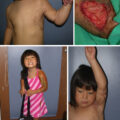
Zurich Skin (denovoSkin, Cutiss AG) is the latest in dermoepidermal skin substitutes, representing a laboratory-grown autologous dermoepidermal skin analog developed by the Tissue Biology Research Unit (Department of Surgery, University Children’s Hospital; Zurich, Switzerland) for use in massive skin loss. It differs from other cultured skin substitutes in that it also contains a dermal component, with numerous preclinical and animal studies finding it effective in wound coverage. To date, a phase 1 clinical trial has been completed, and a phase 2 clinical trial comparing it to SSGs is in progress. It has even been used in extensive pediatric burns on a compassionate basis because of the favorable phase 1 trial results, with it reportedly providing remarkable similarities to natural skin coverage ( Fig. 50.4 ).
Use of Zurich Skin in wound coverage in a 5-year-old child. (A) Trunk shown 35 days postburn with previously applied autologous graft using Meek micrografting (circumscribed in green ) and Integra (circumscribed in blue ). (B) Intraoperative view immediately postapplication of Zurich Skin to the previously applied Integra. (C) Trunk outcomes 70 days postapplication of Zurich Skin (circumscribed in blue ). (D) Both legs shown postapplication of Zurich Skin; before application of Zurich Skin the wound beds were covered with allograft alone. (E) Zurich Skin outcomes 49 days postapplication; total of 105 days postburn.
(From Moiemen N, Schiestl C, Hartmann-Fritsch F, et al. First time compassionate use of laboratory engineered autologous Zurich skin in a massively burned child. Burns Open. 2021;5[3]:113-117.)
StrataGraft (StrataTech, A Mallinckrodt Company; Madison, WI) is another more recently developed product, bioengineered to be a full-thickness skin substitute consisting of human fibroblasts and an epithelial layer overlying a collagen dermal layer. Alongside the fibroblasts embedded into the collagen gel are neonatal immortalized keratinocytes generated from a single-source human cell line, capable of providing a stable source of human keratinocytes. It is not an acutely immunogenic skin substitute in traumatic wounds and maintains barrier function effectively. , Surgically, it is handled similarly to other permanent skin substitutes because it can be meshed and subsequently stapled or sutured into place. Its use in multicenter randomized controlled trials has shown promising wound closure results in deep partial-thickness burns in the absence of autograft use, , with comparable safety profiles and wound closure rates to autograft. , Further registered clinical trials are active, comparing the postburn scarring outcomes of StrataGraft to autograft, its efficacy in pediatric burn patients, and the concurrent use of StrataGraft in major burn wound coverage when used alongside SSGs.
4. Surgical considerations and techniques
4.1 Applications in acute burn wound coverage
As discussed, temporary skin substitutes can be used to cover partial-thickness burns, full-thickness excised burn wounds, widely meshed skin grafts, and (occasionally) skin graft donor sites. For full-thickness excised burn wounds, temporary skin substitutes can provide coverage if skin grafting or if application of a permanent substitute is planned as a staged procedure. Staged procedures can be planned in certain circumstances to reduce wound exudate and ensure complete hemostasis, and as such may be delayed for 24 to 48 hours after wound excision in a major burn.
Allograft is frequently used in cryopreserved sheets to provide biologic wound coverage postburn excision. These sheets are best applied uniformly and parallel to the wound edge without attempting to traverse wound corners because this can cause tenting of the allograft and limit its effective adherence to the wound bed. Allograft can be handled more robustly than autologous SSG during its inset into the wound. Once anchored at one wound edge using staples, the allograft can be pulled carefully to length, with rapid inset along its edge into the wound with further stapling. This process is then repeated until wound coverage is achieved. The repetition of this technique achieves highly efficient wound coverage in an acute setting. Rapid wound coverage is particularly important in the physiologically challenged major burn patient when aiming to limit further hemodynamic or thermoregulatory stresses. Temporary substitutes, such as allograft, have also proven valuable for covering widely meshed SSGs (≥4:1) using the Alexander technique. Alexander described applying allograft on top of widely meshed autograft to provide biologic wound closure that protects the open wound within the interstices (gaps) of the meshed graft.
The authors’ experience has demonstrated the efficacy of the available permanent dermal substitutes, notably the bilayer varieties, such as BTM and Integra, that do not require autologous SSG to be applied in single-stage reconstruction. When Integra is used in acute major burns, immediate or early burn excision is important. This allows adherence of the matrix to the wound bed before wound colonization occurs, thus decreasing the risk of infection. If immediate excision has been performed, it is prudent to delay the application of Integra, or skin substitutes, for 24 to 48 hours to allow time for wound exudate to decrease. Fibrin sealant may be helpful to promote adherence, prevent hematoma formation, and accelerate early matrix integration. Integra may also be meshed at a 1:1 ratio with a noncrushing mesher (Brennen, Molnlycke Health Care; Gothenburg, Sweden) to reduce the risk of hematoma and to allow dressing antimicrobials to access the wound bed. Surgifix (BSN Medical GmbH; Hamburg, Germany) applied directly onto the silicone layer can be very useful to prevent early silicone separation, especially if the second stage is to be delayed for several weeks until donor sites are available (see Fig. 50.2 ). Antimicrobial dressings (Acticoat, Smith and Nephew; Hull, UK) activated with sterile water rather than saline, followed by an absorbent gauze layer (Kerlix, Medtronic; Dublin, Ireland) are applied over the Surgifix, and a firm bandage completes the dressing. Subsequent wound care in acute burns is of paramount importance because early identification of complications can avoid disastrous consequences such as loss of the entire Integra layer and the potential for sepsis. Frequent inspection of the matrix, especially during the first week, by a team member with experience in using skin substitutes is crucial. Use of negative pressure wound therapy (NPWT) is another effective dressing option in stabilizing inset skin substitutes and preventing sheer, with evidence indicating NPWT improves take and scar outcomes. In vitro studies indicate the positive effects of NPWT on dermal substitutes may be caused by increased cell migration and vascularization. , Although these neovascularization findings have not been confirmed in clinical, histologic studies, the authors are proponents of NPWT’s utility in combination with dermal substitutes. To ensure successful Integra engraftment, the multidisciplinary team should know how to mobilize and turn the patient and perform therapy, including chest therapy, without disturbing the matrix. Wound care after the second stage (removing the silicone layer and application of SSG) is similar to that in other major burns.
NovoSorb BTM is increasingly being used to provide wound coverage after burn excision. Like Integra, it benefits from good contouring and adherence to the wound bed, with careful application within the wound margins using skin or staples (see Fig. 50.3 ). Coverage of BTM using NPWT is recommended to prevent shear, and it should be monitored carefully for up to 3 weeks. In the second-stage procedure, care should be taken to remove the protective polyurethane layer. Small amounts of nonvascularized foam may remain adherent to the protective laminate on removal, although ideally these areas should be minimized with careful technique. Areas of overgranulation can be removed carefully from the BTM foam using Versajet (Smith and Nephew; Hull, UK) for targeted hydrosurgical debridement, with SSG inset overlying this. In the authors’ experience, BTM is also reasonably robust to infection. When used in major burn patients prone to infective or inflammatory processes, it is a useful wound coverage option in an acute setting.
Related posts:


Stay updated, free articles. Join our Telegram channel

Full access? Get Clinical Tree


