By Steve Brown, Peptide chemistry, laboratory research expert. Fact-checked by Lance Cisco, Editor
Going by human trials, the best peptides for skin include GHK-Cu, Matrixyl, and Argireline. GHK-Cu has been studied the longest. Matrixyl has the deepest human trial behind it. BPC-157, TB-500, and KPV also emerge in discussions, but their skin research is almost entirely animal and cell-based.
Research shows that each peptide has a different mechanism of action. Some signal your fibroblasts to build collagen, some carry copper into cells, and some calm inflammatory pathways.
This guide covers which skin-supporting peptides are worth knowing, what the research does and does not say about each, and how to tell a good peptide from a bad one, starting with the batch COA that suppliers like Kylo Peptides publish.
Key Takeaways
- GHK-Cu has the oldest research history, going back to 1973. Human trials exist, but weaker than people assume.
- The strongest published evidence for human skin effects belongs to cosmetic peptides. Matrixyl has a journal-published randomized trial.
- BPC-157, TB-500, and KPV have been studied for tissue repair, primarily in animal models and cell cultures.
- An FDA advisory committee voted in July 2026 to recommend BPC-157, KPV, and TB-500 for the 503A Bulk List. Their legal status did not change.
- Usable research material should come with purity and identity confirmations.
- Kylo Peptides tests every batch through an independent ISO/IEC 17025 laboratory and publishes a lot-matched COA, with purity, identity, and several other confirmations.
Quick Comparison: Best Peptides for Skin Health
| Peptide | Primary Research Focus | Best Studied For | Level of Evidence | Typical Research Area |
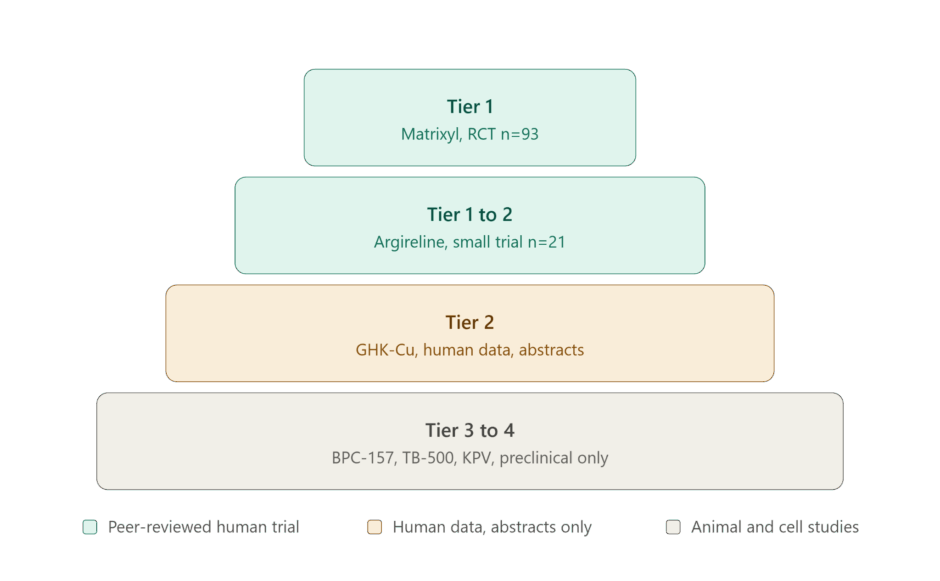
| GHK-Cu | Copper transport and gene signaling | Collagen remodeling, photoaging, wound repair | Tier 2: human data exists, landmark trials were conference abstracts | Skin regeneration, hair biology |
| BPC-157 | Cytoprotection and angiogenesis | Soft tissue and gut repair | Tier 3: animal models, no published human skin trials | Regenerative medicine |
| TB-500 | Actin binding and cell migration | Wound closure, tissue remodeling | Tier 3: animal and cell models | Wound healing research |
| KPV | Anti-inflammatory signalling | Gut and skin inflammation | Tier 3 to 4: mostly cell and rodent studies | Inflammation, barrier biology |
| Matrixyl® (Pal-KTTKS) | Collagen fragment mimicry | Fine lines, wrinkle depth | Tier 1: peer-reviewed human RCT, 93 subjects | Topical cosmetic science |
| Argireline® (Acetylhexapeptide-3) | Neurotransmitter signalling | Expression lines, crow’s feet | Tier 1 to 2: published human trial, small sample | Topical cosmetic science |
Best Peptides Being Studied for Skin Health
Six compounds account for most of the research on skin peptides: GHK-Cu, BPC-157, TB-500, KPV, Matrixyl, and Argireline. GHK-Cu has the longest research history. Matrixyl has the strongest published human trial.
GHK-Cu
GHK-Cu is a copper-binding tripeptide of glycine, histidine and lysine. Loren Pickart isolated it from human plasma in 1973, after noticing that plasma from young donors caused old liver tissue to behave differently. Fifty-plus years of research followed.
- Mechanism: GHK binds copper with high affinity to form the GHK-Cu complex. Cells take it up, and it changes gene expression across tissue repair, inflammation, and antioxidant pathways.
- Skin benefits studied: Published work reports increased synthesis of collagen types I, III, and IV, plus elastin, proteoglycans, and glycosaminoglycans in dermal fibroblasts. Studies track collagen production and controlled breakdown of damaged fibers together, the remodeling pattern described earlier.
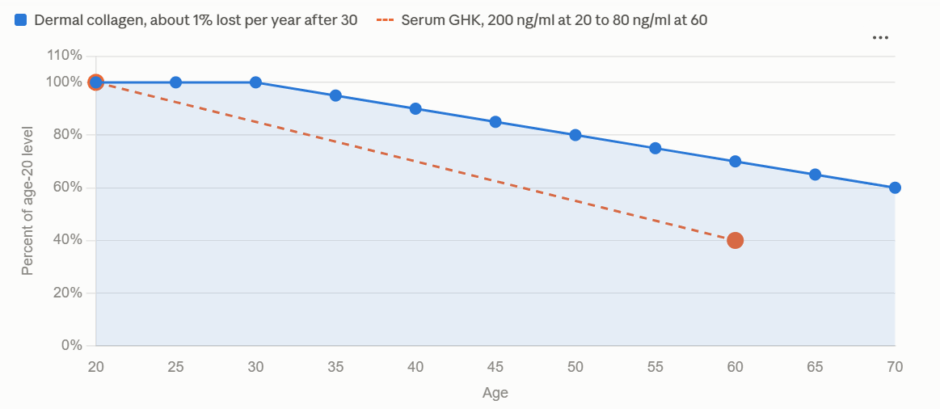
- Research summary: GHK sits naturally in human serum, averaging around 200 ng/ml at age 20 and dropping to about 80 ng/ml by age 60. The two trials people cite as proof of topical GHK-Cu include one on 71 women using a facial cream and another on 41 women using an eye cream, both presented as abstracts at the American Academy of Dermatology annual meeting in 2002.
- Best suited for: Collagen remodeling, photoaged skin, scar biology, and hair follicle research.
For a closer look at reported GHK-Cu outcomes, see our guide to the peptide’s research and results.
BPC-157
BPC-157 is a 15-amino acid sequence derived from a protein in gastric juice. Its name stands for Body Protection Compound, which already tells you much about its research scope.
- Mechanism: Research points to angiogenesis, growth factor signaling, and fibroblast migration. In wound models, it appears to speed repair cells into injured tissue.
- Skin benefits studied: Rodent wound models cover closure rate and tissue quality. Human skin trials do not exist in the published literature.
- Research summary: BPC-157 sat in FDA Category 2 for bulk drug substances, meaning compounding pharmacies could not legally prepare it. Then on July 23 and 24, 2026, the FDA’s Pharmacy Compounding Advisory Committee met at White Oak and voted to recommend BPC-157 for the 503A Bulks List, 8 to 6 with one abstention, against its own staff reviewers. Rulemaking still has to happen.
- Best suited for: Preclinical tissue repair research, and tracking US peptide regulation.
For a broader look at how BPC-157 is being studied, explore our in-depth guide covering its mechanisms and major research areas.
TB-500
TB-500 is a synthetic fragment of thymosin beta-4, a protein your body makes that is heavily involved in cell movement.
- Mechanism: Thymosin beta-4 binds actin, the protein that gives cells their scaffolding and lets them crawl. It is studied for its roles in cell migration, angiogenesis, and ECM reorganization during repair.
- Skin benefits studied: Wound healing and tissue remodeling models, again mostly animal. Also, scar remodeling because of its actin link, but published human skin data are lacking.
- Research summary: TB-500 was reviewed at the same July 2026 committee meeting and received the same 8-6 recommendation with one abstention. Its profile mirrors BPC-157: interesting mechanism, real preclinical work.
- Best suited for: Cell migration and wound closure research, and ECM reorganization studies.
KPV
KPV is the smallest peptide here: lysine, proline, and valine. It is the C-terminal fragment of alpha-melanocyte-stimulating hormone, better known as alpha-MSH.
- Mechanism: Alpha-MSH is an anti-inflammatory signaling hormone. KPV keeps much of that activity without the pigmentation effects of the full hormone. Research focuses on inflammatory signaling pathways inside cells.
- Skin benefits studied: Most KPV work focuses on gut inflammation, particularly in inflammatory bowel disease models. Skin interest comes from barrier function and inflammatory skin conditions. The evidence is early: cell and rodent studies.
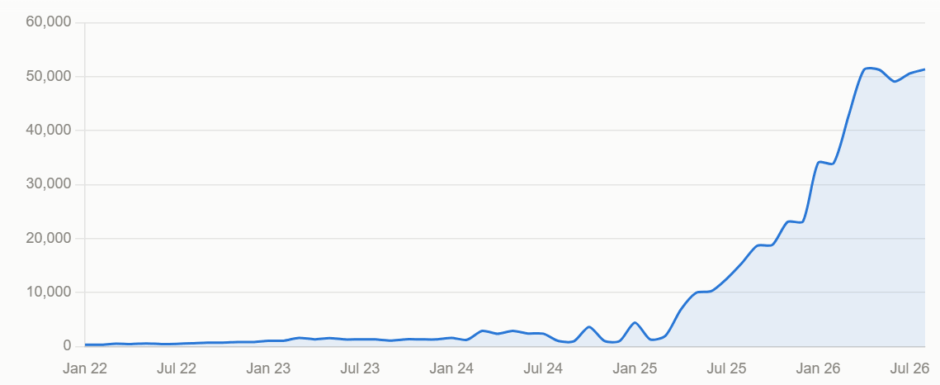
- Research summary: KPV cleared the July 2026 committee review 8 to 6 with one abstention. The bigger story is demand. KPV searches in the US grew from roughly 336 per month in January 2022 to 51,680 per month in August 2026, according to Ahrefs data. That is a 154-fold increase in four and a half years, and it now out-searches “peptides for skin” by more than fivefold.
- Best suited for: Inflammation and barrier research.
Matrixyl and Cosmetic Signal Peptides (Brief Comparison)
The cosmetic peptides have better published human evidence than the research peptides do.
Matrixyl, or palmitoyl pentapeptide-4, was tested in a 12-week double-blind, placebo-controlled, split-face trial on 93 women aged 35 to 55, published by Robinson and colleagues in the International Journal of Cosmetic Science in 2005.
One side of the face got a moisturizer with 3 ppm of the peptide; the other got the same moisturizer without it. The peptide side showed significant reduction in wrinkles and fine lines by instrument measurement and expert grading.
Argireline, or acetylhexapeptide-3, works differently. It interferes with neurotransmitter release at the neuromuscular junction, conceptually similar to botulinum toxin.
The two have been compared head-to-head exactly once. A double-blind randomized trial of 21 Indonesian women aged 26 to 55, published in the Journal of Clinical and Aesthetic Dermatology in 2023, ran three arms for eight weeks: acetylhexapeptide-3 cream, palmitoyl pentapeptide-4 cream, and placebo, applied twice daily around the eyes. Palmitoyl pentapeptide-4 came out ahead of both.
What Are Peptides?
Peptides are short chains of amino acids, the building blocks of proteins. Your body makes peptides on its own. They act as messengers. When tissue is damaged, proteins break down, releasing peptide fragments that signal nearby cells to begin repair. Synthetic peptides like GHK-Cu work on the same mechanism, complementing the natural system. In skin research, most peptides are 3-10 amino acids long. GHK-Cu is only three.
What Makes Peptides Important for Skin Health?
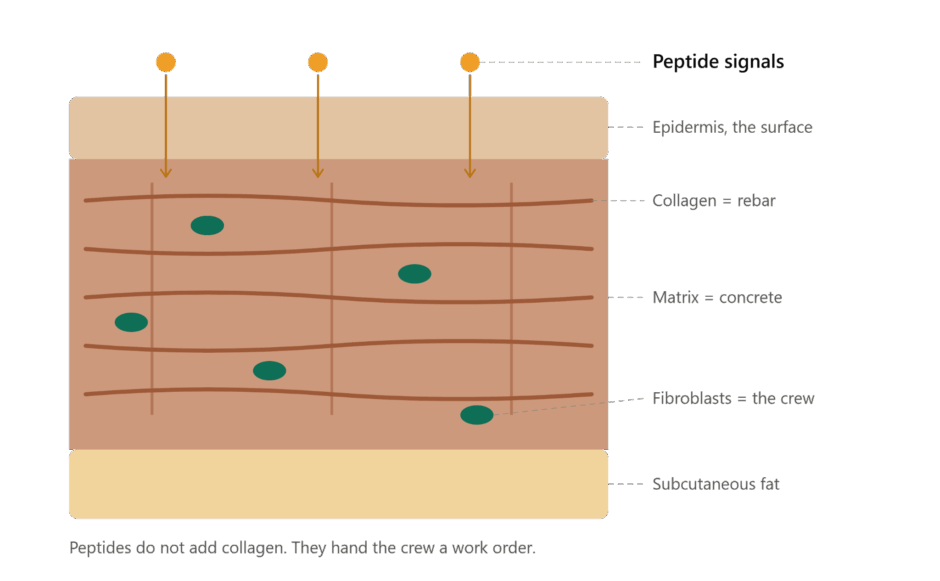
Skin loses roughly 1% of its dermal collagen every year after about age 30. Peptides sit at the control layer of that process. They do not add collagen. They signal the cells that build it.
Skin Aging and Collagen Decline
Think of your dermis like a concrete slab with rebar running through it. The rebar is collagen and elastin. You make less of both as you age, while the enzymes that break them down keep working at full speed. The resulting thinning causes fine lines and a loss of firmness.
Cellular Communication
Your skin cells wait for instructions, and peptides bring them through signals, like a work order handed to a crew already on site. A peptide binds to a receptor or enters the cell, then changes which genes switch on. Gene expression work on GHK reports shifts across a very large share of analyzed human genes, unusual breadth for a three-amino-acid molecule.
Fibroblast Activity
Fibroblasts are the maintenance crew. They sit in the dermis and make collagen, elastin, and the gels that hold water between fibers. Most skin peptide research measures whether a peptide makes them more active, because one that cannot is not doing much.
Extracellular Matrix Remodeling
The extracellular matrix, or ECM, is the concrete poured around the rebar. Concrete cracks, and fixing it means breaking out the damaged sections before pouring fresh ones. Peptides work both sides of that job. The signals they send can increase collagen synthesis and matrix metalloproteinase activity, the enzymes that clear damaged fibers.
Why Peptides Are Being Investigated in Regenerative Medicine
Regenerative medicine holds a promising future for peptides because they are small, specific, and inexpensive to produce. A three-amino-acid molecule is easier to synthesize and characterize than a growth factor protein. It explains much of the research boom after 2020.
Understanding the Different Types of Skin-Related Peptides
Peptides get grouped by what they do, not by how they look. In skin research, four functional categories exist.
Signal Peptides
Signal peptides tell fibroblasts to build. They mimic a collagen fragment, so a cell that detects them behaves as though collagen has been damaged and makes more. Matrixyl and the palmitoyl peptide family are the best-known examples, most studied for their effects on skin firmness and fine lines. The palmitoyl group is a fatty acid tail that helps the peptide cross the stratum corneum.
Carrier Peptides
Carrier peptides transport trace elements like copper. Several enzymes involved in collagen cross-linking and antioxidant defense need Copper to function. Research for GHK-Cu, the copper peptide for skin, therefore, focuses on collagen remodeling, photoaging, and tissue repair.
Regenerative Peptides
Regenerative peptides come from wound-healing research, not from cosmetics. BPC-157 and TB-500 are investigated here for their effects on angiogenesis (new blood vessel formation), fibroblast migration, and ECM remodeling. Almost all of that work is preclinical.
Immunomodulatory Peptides
Immunomodulatory peptides interact with inflammatory pathways. KPV, for instance, is a three-amino-acid fragment of alpha-MSH, a hormone your body already uses to regulate inflammation. Research interests lie in inflammatory bowel conditions and the skin barrier.
Cosmetic Bioactive Peptides vs Research Peptides
Cosmetic bioactive peptides like Matrixyl and Argireline are found in serums and creams you can buy at a pharmacy, regulated as cosmetics, tested for skin appearance, and dosed in parts per million.
Research peptides like GHK-Cu, BPC-157, TB-500, and KPV are laboratory materials sold for research use only, not cosmetics, supplements, or approved treatments. Same chemistry family, completely different regulatory category and evidence base.
Benefits
Rather than going peptide by peptide, it helps to look at the biological outcomes researchers actually measure.
| Benefit | Peptides Commonly Studied | Research Status |
| Collagen support | GHK-Cu, Matrixyl | Strongest human evidence in this group |
| Tissue remodeling | TB-500 | Mostly preclinical |
| Wound repair | BPC-157 | Mostly preclinical |
| Inflammation | KPV | Early-stage research |
Supporting Collagen and Elastin Production
Signal peptides and carrier peptides both increase collagen types I, III, and IV, as well as elastin markers, in cell culture, often at very low concentrations. What cell culture cannot tell you is whether the same thing happens through intact human skin.
Promoting Healthier Skin Remodeling
Remodeling research examines whether damaged fibers are cleared and replaced rather than simply accumulating. Studies here track matrix metalloproteinase expression alongside new collagen deposition. GHK-Cu is the most-studied peptide in this two-sided process.
Supporting Wound-Healing Pathways
Wound models are the original home of skin peptide research. BPC-157 and TB-500 both emerge from this work, measured by outcomes such as closure rate, granulation tissue quality, and new vessel formation.
Helping Maintain Skin Hydration and Barrier Integrity
Barrier research measures transepidermal water loss and the production of glycosaminoglycans and proteoglycans, which hold water between collagen fibers. Hyaluronic acid is one of those glycosaminoglycans. Peptides that increase them are studied for hydration and barrier function.
Reducing Oxidative Stress and Inflammation
Oxidative stress research measures antioxidant enzyme activity and inflammatory signaling. GHK-Cu and KPV both appear in this category, though for different reasons. GHK-Cu is studied through its copper-dependent antioxidant role, KPV, through its relationship to alpha-MSH inflammatory signaling.
Which Peptide Is Right for Your Skin Goals?
GHK-Cu and Matrixyl dominate the research on fine lines and firmness. GHK-Cu and TB-500 appear in scar-remodeling studies. BPC-157 and TB-500 sit in recovery research, and KPV in inflammation. The table maps each goal to the peptides most often studied against it.
| Skin Goal | Peptides Often Researched |
| Fine lines | GHK-Cu, Matrixyl |
| Skin firmness | GHK-Cu, Matrixyl |
| Scar remodeling | GHK-Cu, TB-500 |
| Recovery support | BPC-157, TB-500 |
| Sensitive or inflamed skin | KPV |
| Expression lines | Argireline |
Two things to analyze here:
- GHK-Cu appears in more rows, reflecting the vast breadth of its research base.
- The goals with the cleanest published human data, fine lines and expression lines, are the ones served by cosmetic peptides.
Who May Be Interested in Skin Peptides?
Skin peptide research is read mostly by laboratory researchers, wound-healing scientists, regenerative medicine professionals, and a growing group of people teaching themselves the science behind claims made about mature or aging skin.
- Researchers studying skin aging: Collagen decline, elastin degradation, and photoaging are active areas, and peptides probe the signaling side of that process.
- Scientists investigating wound-healing biology: Angiogenesis, fibroblast migration, and granulation tissue are the standard readouts, and several peptides here came from that work.
- Laboratories focused on extracellular matrix remodeling: ECM turnover research needs molecules that influence synthesis and controlled breakdown both, which is why GHK-Cu appears so often.
- Professionals working in regenerative medicine: The regulatory picture around compounding and bulk substances shifts often, and 2026 has been busy.
- People learning about emerging peptide research: The growth in compound-name searches suggests many people teaching themselves this vocabulary.
How Long Does a Peptide Typically Take to Show Biological Changes?
Published research timelines cluster around 12 weeks. Cell-level responses appear quickly in laboratory models, but structural changes in tissue take months to measure reliably. Below is the summary of what published studies have observed.
| Time | Biological Changes Observed in Research |
| 1 to 2 weeks | Early cellular responses in laboratory models, including changes in gene expression and fibroblast activity |
| 4 to 8 weeks | Collagen remodeling observed in some studies, along with early instrument-measurable changes |
| 8 to 12 weeks | Improvements in skin quality reported in selected human studies of GHK-Cu and cosmetic peptides |
| Beyond 3 months | Long-term remodeling still under investigation, with limited published data past this point |
Timelines vary a lot by peptide, formulation, and study design. However, the 12-week window keeps recurring. For instance, both the Matrixyl trial and the GHK-Cu facial cream study ran for 12 weeks, because that is roughly how long dermal remodeling takes before instruments can pick up a difference. Any compound promising visible structural changes in two weeks is describing hydration, not remodeling.
How Researchers Evaluate Peptide Quality
Verifying peptide quality does not rely on instinct. It relies on documentation. We use the following five-point verification protocol for any supplier’s material.
Purity Testing
Purity is measured by HPLC, which separates a sample into components and produces a chromatogram. The main peak is your target peptide, and its area divided by the total area of all peaks gives the purity percentage. A report claiming 99% purity without showing the chromatogram is asking you to take it on faith.
Third-Party COAs
Instead of an in-house test result, look for a COA from an independent laboratory holding ISO/IEC 17025 accreditation. The ISO mark ensures laboratory competence and a non-partisan audit.
Identity Verification
Purity indicates how much of a substance is in the vial (against impurities). Identity tells you what the substance is. It’s measured by mass spectrometry, which confirms the molecular weight of the substance matches what’s written on the label.
Stability Testing
Peptides degrade. Lyophilized powder is far more stable than material in solution, and both are sensitive to heat, light, and temperature swings. Stability data shows how long a compound holds its stated purity under defined conditions.
Storage Requirements
Lyophilized peptides are kept cold and dark. Reconstituted material has a far shorter usable window. A supplier that publishes purity but nothing about storage has handed you half a document.
How Kylo Peptides Prioritizes Research Quality
Everything in the verification protocol above is useless if the vial lot sourced does not match the lot number on the paperwork. Kylo Peptides solves that problem.
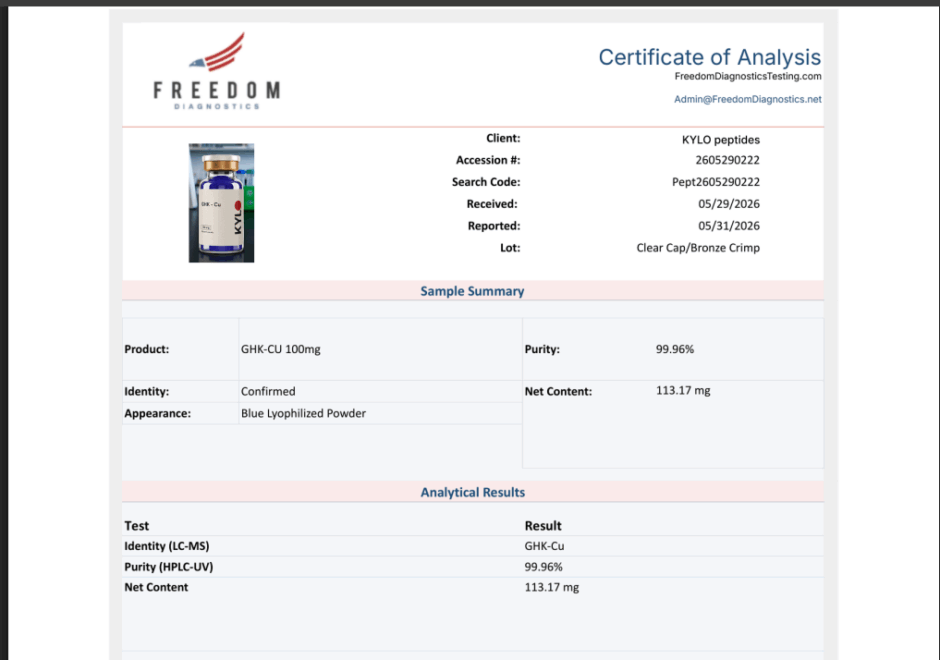
Every batch is tested by an independent ISO/IEC 17025 laboratory (Freedom Diagnostics) and ships with a public, lot-matched COA. Lot-matched means the document corresponds to the batch you have in hand.
Purity is documented at 99% or higher by HPLC. The catalog runs to 100+ compounds and blends, including the GLOW Stack and the KLOW Stack, which combines KPV, GHK-Cu, BPC-157, and TB-500 in one vial.
Kylo Labs LLC is a chemical supplier, not a compounding pharmacy under section 503A of the Federal Food, Drug, and Cosmetic Act, nor an outsourcing facility under 503B. Its materials are supplied for laboratory research use only and are not for human or veterinary use.
Research Areas Commonly Explored Alongside Skin Peptides
Peptides do not exist in isolation in skin research. Several other fields overlap with them.
Vitamin C and Collagen Synthesis Research
Vitamin C is a required cofactor for the enzymes that stabilize collagen fibers, so it appears constantly in collagen research alongside peptides. It is also the home of a persistent myth.
- Myth: You will read everywhere that copper peptides and vitamin C cancel each other out and must never be combined. The chemistry is real but narrow.
- Reality: L-ascorbic acid needs a pH near 2.5 to 3.5, and at that pH copper can break away from the GHK complex. However, no published human study has tested whether using them at different times affects any measured outcome. In fact, vitamin C derivatives such as magnesium ascorbyl phosphate work at a higher pH, where the conflict does not arise.
Hyaluronic Acid and Skin Hydration
Hyaluronic acid is a glycosaminoglycan that holds water in the extracellular matrix. Research pairs it with peptide work because hydration and structural remodeling are measured on different instruments. Some laboratory studies pair hyaluronic acid with GHK-Cu for collagen outcomes, though this stays research rather than practice.
Retinoid Biology and Extracellular Matrix Turnover
Retinoids are the most established topical anti-aging compounds in dermatology, with decades of human trial data. They come up in peptide research as a comparator, because any new molecule claiming ECM effects gets measured against what already works. Peptides generally show gentler tolerability and smaller effect sizes.
Growth Factors and Regenerative Medicine
Growth factors are full-length proteins, which makes them harder to manufacture, characterize, and deliver through the skin. They are studied for many of the same repair pathways as regenerative peptides.
Antioxidant Pathways
Oxidative stress damages collagen directly and drives inflammatory signaling that damages it further. Antioxidant research overlaps with peptide research wherever copper-dependent enzymes are involved, since copper sits at the center of several defense systems. GHK-Cu appears in both literatures.
Frequently Asked Questions
Which peptide has the strongest evidence for skin health?
Matrixyl has the strongest published human skin evidence, from a peer-reviewed 12-week randomized trial on 93 women. Among research peptides, GHK-Cu has the longest history, though its most-cited human trials were conference abstracts rather than peer-reviewed papers.
Is GHK-Cu better than BPC-157?
For skin research, GHK-Cu has far more supporting evidence: human studies, decades of published work, and direct measurements of collagen and elastin. BPC-157 has no published human skin trials, and its research base is animal wound models covering soft tissue and gut repair.
What is the difference between copper peptides and research peptides?
Copper peptides are the cosmetic term for GHK-Cu formulated into serums and creams. Research peptides are laboratory materials sold for research use only, supplied as lyophilized powder. Same molecule in some cases, entirely different regulatory category and intended use.
Are research peptides FDA-approved for cosmetic use?
No. Research peptides are not FDA-approved for cosmetic, therapeutic, or any human use. They are supplied for laboratory research only. The July 2026 advisory committee vote was a recommendation about compounding eligibility, not an approval, and rulemaking is not complete.
How long has GHK-Cu been studied?
Since 1973, when Loren Pickart isolated it from human plasma while investigating why plasma from younger donors affected liver tissue differently, that gives it more than five decades of published research, longer than any other peptide here.
Which peptide supports collagen production?
GHK-Cu and Matrixyl are the two most studied for collagen outcomes. GHK-Cu has been studied for collagen types I, III, and IV, as well as elastin and proteoglycans. Matrixyl mimics a collagen fragment, so fibroblasts respond as though repair is needed.
Can multiple peptides be studied together?
Yes, and multi-peptide research blends are common in laboratories. Combining compounds makes it harder to attribute an effect to a single molecule, so study design has to account for that. Blends suit questions about combined signaling rather than isolated mechanisms. Researchers interested in multi-peptide research blends may also explore combinations that pair compounds with different biological targets, such as the Glow Stack.
Are all peptide products the same quality?
No, and the gap is wide. Quality depends on HPLC-verified purity, independent ISO/IEC 17025 testing, mass spectrometry identity confirmation, lot-matched documentation, and storage data. A supplier publishing a purity figure without a chromatogram or identity test has given you a claim, not a lab result.
Conclusion
The best peptides for skin depend on what question you are asking. GHK-Cu carries the deepest research history and the broadest set of studied outcomes, from collagen remodeling to photoaging to hair biology.
BPC-157 and TB-500 have real preclinical work behind them. KPV sits closer to inflammation research. Matrixyl and Argireline, the cosmetic peptides most people never think of as peptides at all, hold the strongest published human evidence.
If you’re sourcing one for search, ask what tier of evidence a peptide claim rests on, then ask to see the COA. Kylo Peptides publishes lot-matched certificates from an independent ISO/IEC 17025 laboratory for every batch, which is the standard any research material should meet before it goes near an experiment.
Research Disclaimer: This article is for informational and educational purposes only. It summarizes published scientific literature and does not constitute medical advice. Research peptides discussed here are laboratory research materials. They are for research use only and are not for human or veterinary use. Nothing on this page is intended to diagnose, treat, cure, or prevent any disease. Talk to a qualified healthcare professional about your skin.
Related posts:







Stay updated, free articles. Join our Telegram channel

Full access? Get Clinical Tree


