By Janine Garcia, peptide research writer, 6+ years. Fact-checked by Limone Wilson [Editor]
The GLOW peptide stack is a research-use combination of skin and tissue peptides studied together in the lab. It pairs three repair-focused compounds, GHK-Cu, BPC-157, and TB-500. Researchers are looking at these for collagen signaling and recovery.
This guide breaks down each part of the stack, how it is studied, the protocols cited in research, reported timelines, safety profile, how to source verified material, and examples such as the GLOW peptide stack offered by Kylo Peptides.
Note: Compounds in the GLOW peptide stack can be used for research purposes only. They are not approved for cosmetic or personal use.
What Is the GLOW Peptide Stack?
The GLOW peptide stack is a group of research peptides studied together. It usually combines GHK-Cu, BPC-157, and TB-500. Researchers and biohacking groups study the mix for its effects on skin, tissue repair, and cellular energy. The stack took its name “GLOW” from wellness and longevity circles on social media.
Components of the GLOW Peptide Stack
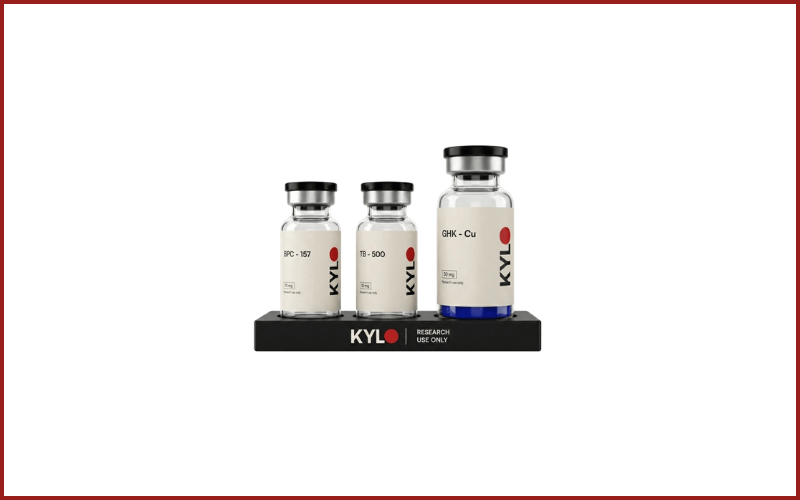
The three core peptides in the GLOW stack focus on tissue repair and skin signaling. Let’s decode their individual functions in detail.
GHK-Cu (Copper Peptide)
GHK-Cu is a natural copper-binding tripeptide. It anchors the skin side of the stack. Research treats it as a signal tied to collagen production and skin remodeling. It is the most studied of the three core peptides.
Key Features:
- What it is: glycyl-L-histidyl-L-lysine bound to copper
- Studied for: collagen and elastin signaling, skin remodeling, antioxidant activity
- Amount cited in the GLOW stack: about 50 mg (in a standard 70 mg stack)
- Form supplied: lyophilized powder for reconstitution
- Role in the stack: the skin-and-aging anchor
Readers interested in a deeper look at GHK-Cu research, including its role in skin signaling, collagen pathways, and hair-related research, can explore this detailed overview of GHK-Cu peptides.
BPC-157
BPC-157 peptide is a synthetic chain based on a protein found in gastric juice. In research models, scientists study it for tissue-repair signals, including angiogenesis, or new blood-vessel growth.
The peptide is also studied in tendons, muscle, and connective tissue, primarily examining how it affects inflammatory signaling.
Key Features:
- What it is: a 15-amino-acid gastric-derived research peptide
- Studied for: soft-tissue repair, blood-vessel formation, cytokine signaling
- Amount cited in the GLOW stack: about 10 mg (in a standard 70 mg stack)
- Form supplied: lyophilized powder for reconstitution
- Role in the stack: one half of the repair pair
TB-500
TB-500 is a synthetic fragment of thymosin beta-4, a protein involved in cell movement. Research studies its role in cell migration and tissue regeneration. It is usually paired with BPC-157 in a repair-focused study, where their combined stack is also called the Wolverine stack, named for the idea of fast healing.
Key Features:
- What it is: a synthetic thymosin beta-4 fragment
- Studied for: cell migration, flexible repair tissue, less fibrosis
- Amount cited in the GLOW stack: about 10 mg (in a standard 70 mg stack)
- Form supplied: lyophilized powder for reconstitution
- Role in the stack: the other half of the repair pair
How the GLOW Peptide Stack Works For Skin Health, Energy and Recovery?
In research models, scientists study the GLOW stack as a set of overlapping repair signals rather than a single mechanism. GHK-Cu acts on collagen and skin-remodeling pathways. The two repair peptides, BPC-157 and TB-500, are studied for soft-tissue repair and cell movement.
None of this proves a combined effect in people. The human data simply is not there yet, since the trials have not been run. The work is firmly in the research column.
GLOW Stack vs GLOW Blend: What the Terms Mean
The terms describe the same three research compounds in two different formats. GLOW stack usually refers to the do-it-yourself version: GHK-Cu, BPC-157, and TB-500, supplied as three separate lyophilized vials, each reconstituted separately. This gives a researcher full control over the amount of each compound.
GLOW blend refers to a single pre-mixed vial holding all three compounds at a fixed ratio. The configuration most often cited in supplier listings is a 70 mg vial: roughly 50 mg GHK-Cu, 10 mg BPC-157, and 10 mg TB-500. Because the ratio is set at the time of manufacture, a blend can’t be adjusted compound by compound the way separate vials can.
For research handling, separate vials allow one compound to be varied independently, while a pre-mixed vial fixes the proportions in a single reconstitution.
What Research Suggests About the GLOW Peptide Stack
GLOW stack research is still young, and most studies look at a single compound at a time rather than the combination. The themes below are those that recur in the peptide literature, and almost all of it is in laboratory and animal models, not human trials.
Skin and Collagen Signaling Research
GHK-Cu drives the skin-related research interest in the stack. The copper tripeptide was first isolated from human plasma in 1973 by Loren Pickart, and his later review with Margolina (2018) catalogs its studied activity in collagen and elastin signaling, skin remodeling, and antioxidant pathways. It is the most heavily studied of the three core compounds.
- Studied for collagen and elastin production signals
- Examined for skin remodeling and matrix signaling in research models
- Looked at for antioxidant activity in skin cells
- Researched wound-repair signaling
Tissue Recovery and Healing Research
BPC-157 and TB-500 carry the recovery research in the stack, and both are studied mainly for soft-tissue repair. Work from Sikiric and colleagues examined BPC-157 in angiogenesis (new blood vessel formation) and cytoprotection models, while TB-500 research builds on thymosin beta-4 studies (Maar and colleagues, 2021) on cell migration and tissue regeneration.
- BPC-157 was studied for tendon, muscle, and connective tissue repair signals
- TB-500 was studied for cell migration and flexible new repair tissue
- The pair is often researched together as a recovery duo (the Wolverine stack)
- Both were examined for inflammation signaling during repair
GLOW Peptide Stack Research Protocols: Reconstitution and Handling
Lab protocols for the stack describe how the material is reconstituted and handled, not how to dose it. Vials arrive freeze-dried, and researchers mix them with bacteriostatic water before the study. The amounts below are the figures cited in the widely shared GLOW protocol.
| Peptide | Amount cited in research | Research-context notes |
| GHK-Cu | about 50 mg | Skin-signaling anchor of the stack |
| BPC-157 | about 10 mg | Soft-tissue repair research |
| TB-500 | about 10 mg | Cell-migration research |
Handling follows standard lab practice across the board. Researchers keep reconstituted material refrigerated for the typical research window. Lyophilized vials stay stable longer when kept cold and sealed.
Protocols also describe cyclical study periods rather than continuous use. These run roughly 8 to 12 weeks, followed by 2- to 4-week breaks. The cycling pattern shows up across most GLOW stack peptide protocols.
None of this is dosing guidance for people. The compounds are not meant for human use, and the figures simply reflect how the material is studied. Anyone handling research peptides should follow proper lab safety steps.
Storage is as crucial as reconstitution for stacks. Reconstituted peptides can lose stability when they are left warm or exposed to light for too long. Researchers usually label each vial with its contents and the exact date it was mixed.
Why Research-Grade Purity Matters for the GLOW Stack
In peptide research, the quality of your data depends on the quality of your material. Purity checks via HPLC and batch-specific certificates of analysis distinguish usable research compounds from unverified products.
How to Source Research-Grade GLOW Stack Peptides
The checklist below covers what a transparent research vendor should provide you and the warning signs to avoid before you buy.
How to Vet a Research Peptide Vendor
Reliable vendors make their quality data easy to find. Look for documentation you can actually check yourself.
- Published HPLC purity reports for each compound
- Third-party or batch certificates of analysis
- Lyophilized presentation with clear handling guidance
- Transparent pricing on each product page
- Clear research-use-only labeling
Red Flags When Sourcing GLOW Stack Peptides
These red-flag signals suggest that a source is best skipped.
- No purity testing or COA available on request
- Human-use or dosing instructions on the listing
- Vague sourcing with no batch information
- Prices far below the verified market with no testing data
Here’s an example that shows what a transparent research vendor should look like in practice.
Where to Source Research-Grade GLOW Stack Peptides
GLOW stack is for research use only and is not cleared for human or cosmetic use. If you are sourcing material for study, prioritize HPLC-verified purity and published batch testing over price. Top vendors like Kylo Peptides publish HPLC-verified purity levels above 99% and provide third-party COAs for every stack component.
Kylo Peptides: Overall Best GLOW Stack Supplier For Research Use
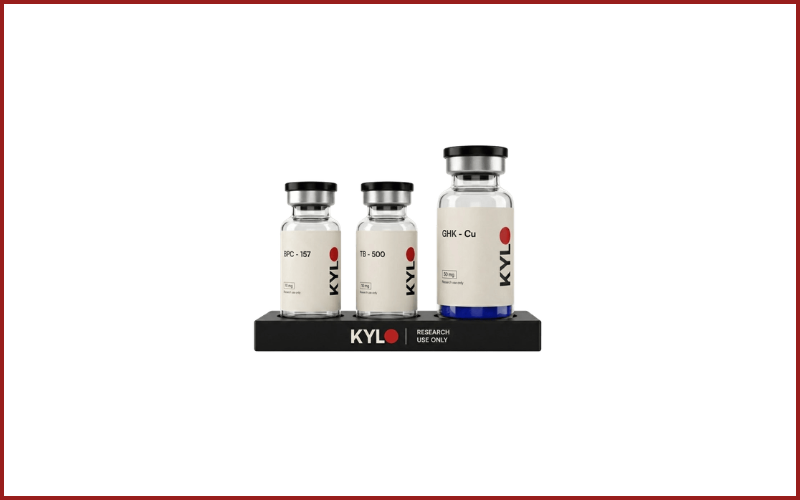
Sourcing three separate compounds for a single stack usually means checking three COAs against three different lot dates. Kylo Peptides offers the GLOW stack as a use case in its own right: the three core vials, GHK-Cu, BPC-157, and TB-500, ship from matched production runs with aligned lot dates.
Lot-specific COAs for all 3 vials are linked to the product listing on the website, confirming purity, identity, sterility, and screening for impurities such as heavy metals and endotoxins.
- Catalog: GHK-Cu, BPC-157, TB-500 available individually as GLOW stack and as a pre-mixed GLOW blend (70 mg)
- Purity: ≥99% by HPLC across all three components
- Testing: Kylo tests each batch thrice, once internally and twice at independent external labs: Janoshik and Freedom Diagnostics (ISO-accredited). The COA is published on the website.
- Made in: USA; research-only chemical supplier
- Shipping: same business day before 2 PM ET; free over $200
- COA access: public lot-matched library, batch-synchronized across stack components
- Address: Kylo Labs LLC, 30 N Gould St, Ste R, Sheridan, WY 82801
- Contact: +1 3502523314
For additional details on Kylo’s manufacturing approach, third-party testing, and commitment to research transparency, readers can explore the company’s latest quality standards announcement.
Timelines Reported in GLOW Peptide Stack Research
Timelines for the stack are based on research and practitioner reports on the individual peptides, and they vary widely. Skin-related changes are usually reported over roughly 4 to 8 weeks of study. Longer windows apply to structural changes, such as collagen and firmness.
| Time band | Reported in research |
| Weeks 1 to 4 | Early signals; little visible change reported |
| Weeks 4 to 8 | Skin smoothness and tone changes are commonly reported |
| Weeks 8 to 12 | Collagen and firmness changes reported in longer studies |
Reports differ by peptide, amount, and study design. Recovery signals from BPC-157 and TB-500 are sometimes reported sooner than skin changes. Individual GLOW stack peptide before and after results vary a lot across test subjects.
GLOW Peptide Stack Safety Profile
GLOW peptide effects in research are mild and localized. They tend to pass quickly. Reactions vary by peptide, amount, and individual setup.
Tolerability Observed in Research
Reported effects by test subjects tend to be mild and short-lived. They usually cluster around the injection site and clear on their own. Common reactions include:
- Temporary redness or irritation at the injection site
- Mild headache in some accounts
- Short-term fatigue or nausea in a minority of reports
- Brief local swelling in occasional reports
- Effects that resolve without lasting issues in most reports
Research-Context Cautions and Contraindications
These groups of individuals should generally skip any GLOW peptide study or clinical trial, even for research purposes:
- Pregnancy and breastfeeding
- Active or suspected cancer
- Wilson’s disease or other copper-handling disorders
- Autoimmune conditions or immune-affecting medications
How Much Do GLOW Stack Research Peptides Cost?
The price of GLOW stack research peptides comes down to a handful of practical factors. The main drivers include:
- Vial size (mg): Larger vials cost more to produce, so a higher-milligram vial usually carries a higher price.
- Purity and testing: HPLC-verified, third-party-tested material typically costs more than untested product, since the lab work is built into the price.
- Separate vials vs pre-mixed blend: Three single-peptide vials are priced higher than one pre-mixed Glow blend vial because a blend bundles all three compounds into a single reconstitution.
- Number of vials and lab work: The count of vials and the testing behind each one contribute to the total.
- Country and shipping: Import handling and vendor location affect the final figure, so the same compound can land at different prices from one verified source to another.
Reputable research vendors publish current pricing on each product page, making it straightforward to compare verified sources.
GLOW Stack vs Wolverine Stack vs KLOW: How the Related Blends Compare
The Wolverine stack consists of the base pair BPC-157 and TB-500, studied together for soft-tissue repair. The GLOW stack adds GHK-Cu, bringing collagen and skin-remodeling signaling into the same vial set. KLOW goes one step further and adds KPV, a tripeptide (Lys-Pro-Val) derived from the C-terminal end of alpha-MSH and studied for its anti-inflammatory and immune signaling properties. Here’s how they compare!
| Stack | Compounds | What it adds | Studied for |
| Wolverine stack | BPC-157 + TB-500 | The repair core | Soft-tissue repair, blood-vessel formation, cell migration |
| GLOW stack | GHK-Cu + BPC-157 + TB-500 | GHK-Cu | The repair core plus collagen and skin-remodeling signaling |
| KLOW | GHK-Cu + BPC-157 + TB-500 + KPV | KPV | The GLOW set plus KPV’s anti-inflammatory signaling |
In short, GLOW is the Wolverine pair plus a skin peptide, and KLOW is GLOW plus an anti-inflammatory peptide. As pre-mixed vials, the GLOW blend is commonly supplied at 70 mg (50 mg GHK-Cu, 10 mg BPC-157, 10 mg TB-500) and KLOW at 80 mg, adding 10 mg KPV to that same base.
FAQs About the GLOW Peptide Stack
Is the GLOW peptide stack approved by the FDA or legal in the US?
The peptides in the GLOW stack are not approved by the FDA for cosmetic or human use. They are sold in the US as research-use-only compounds, and regulators treat unapproved peptide products as outside legitimate human-use channels. Legitimate vendors label them for laboratory research only.
What is the difference between the GLOW stack and the Wolverine stack?
The Wolverine stack pairs BPC-157 with TB-500, two repair-focused research peptides. The GLOW stack adds GHK-Cu for skin and collagen research. So the GLOW version is basically the Wolverine pairing plus a skin-signaling peptide.
Is the GLOW peptide stack studied alongside NAD+ or other peptides?
Yes, NAD+ and precursors are a common optional add-on, studied for cellular energy rather than skin. Some research setups also examine the three core peptides with other recovery compounds. These mixes are research configurations, not recommended human regimens.
What does research say about the GLOW peptide stack and hair?
Interest in hair comes mainly from GHK-Cu and its studied role in copper signaling. Some reports examine scalp and follicular pathways, but evidence specific to the stack remains limited. It remains early research rather than a settled outcome.
How does the GLOW stack compare with other skin-focused research peptides?
The stack stands out because it pairs a skin-signaling peptide with two repair peptides, rather than a single compound. Research on GHK-Cu is more mature than research on the full mix. The fairest comparisons come from the individual peptides.
What does current research show about the GLOW peptide stack?
Nearly all the data comes from lab and animal models, not human trials. GHK-Cu has the largest research base of the three. The stack itself has far less direct study, and few results appear in registries like ClinicalTrials.gov.
The Bottom Line
The GLOW peptide stack groups GHK-Cu with two tissue-repair peptides into one research-focused stack. Researchers study it for its role in skin and tissue repair pathways, and each peptide has real research behind it. The combination itself, though, is still early-stage work.
The stack stays research-use-only and is not cleared for human or cosmetic use. If you are sourcing material for study, compare HPLC-verified purity and published batch testing first, not the vial price. Kylo Peptides, for example, offers >99% HPLC purity and third-party COAs published for every stack.
Disclaimers: The peptides discussed here are research compounds intended for laboratory research only. They are not dietary supplements, cosmetics, or drugs. They are not approved by the FDA to diagnose, treat, prevent, or cure any condition. This article is for informational purposes only. Verify the legal status of any research compound in your area before purchase. Consult a qualified professional before making health-related decisions.
Related posts:







Stay updated, free articles. Join our Telegram channel

Full access? Get Clinical Tree


