Introduction
The severity of injury and deformity from burn trauma ranges from relatively minor to severe. The psychological and social impact of sequelae do not parallel the severity of the deformity; even minor disfigurements can have severe psychological and social impacts on the patient. Fundamental concerns common to all burn patients include function, comfort, and appearance. The approach is total patient care; it must consist of all healthcare team members and is predicated on aesthetic and functional reconstruction. Burn reconstruction is a complex and lengthy process that starts when the patient is admitted in the acute phase and lasts until the patient’s expectations have been reached and/or there is nothing more to offer. It is normally a lifelong commitment, and even if there may be no other possibilities to provide at that point, the patient-surgeon relationship continues. It is preferable, although not imperative, that burn reconstruction be performed in close vicinity to the burn center and that it has the constant support of and coordinated treatment with the multidisciplinary burn team. If this is not the case, good communication with the team referring the patient is desirable.
Preventing and minimizing scarring and deformity in burn patients starts during the acute phase. Reducing the inflammatory and catabolic responses after burn injury using a team approach and early closure of the burn wound is paramount to control wound healing in these patients.
The surgeon managing the acute phase injury should be responsible for later reconstruction. If this is not the case, the reconstructive surgeon should be consulted early so the need for reconstruction enters the acute care plan.
Different procedures are necessary during the acute phase to minimize later reconstruction. Splints, face masks, silicone gel sheets, early pressure therapy, ambulation, and skeletal traction and fixation are essential to produce the best result and avoid future operations.
Burn trauma requires aggressive intervention by rehabilitation services to prevent debilitating deformities. Burn distribution, as well as burn depth, is a good predictor of rehabilitation outcomes. Prevention of burn deformities includes proper positioning with or without splints, exercise to maintain joint range of motion (ROM), maintenance of muscle strength and muscle tone, and early mobilization. All this is true not only for the acute period but also for the reconstructive period.
Burn patients tend to assume the position of comfort, which is often responsible for deformities that require reconstructive surgery later during the recovery phase. Thus positioning in bed is one of the most important ways to prevent deformities. It is not the responsibility only of rehabilitation services but of the whole burn team as well. Exercise reduces edema, maintains joint motion and strength, reduces scars, and maintains development level in the pediatric patient. Ambulation can begin when the patient is deemed medically stable, with wounds appropriately dressed and doubly wrapped lower limbs.
Prevention by positioning and splitting affects any problems in caring for burn patients. Static and dynamic splints are used for either immobilization or mobilization, respectively. Initially, splints are used at all times except for exercise and immediately post-operatively during immobilization. As active ROM increases and is maintained, the protocol changes to night-only splinting. Skeletal traction and fixation are also used on a limited basis to prevent and correct burn scar contracture formation and are always tailored to the patient’s needs.
Emergency demands: Protect vital structures
The timing of reconstruction can be tricky and is best individualized for every patient.
Early interventions are required when acute threats to function or vital structures exist. When there is no severe or functional psychological compromise, it is wise to delay reconstruction for scar tissue to mature.
When burn wounds are so severe (deep full-thickness burns) that vital structures such as tendons, bones, and joints are exposed, then early interventions to protect these structures are important. It may not be feasible to do complex flaps initially. Alternatively, more straightforward cover options include dermal substitutes (Pelnac, Integra, BTM, Kerecis) with or without vacuum-assisted closure devices. Without dermal substitutes, cost-effective alternatives could be Vaseline gauze with or without hydrogels or selective chemical debridement agents. Where there are severe resource constraints, it can help to use gauze or bandages that are kept moist with saline or sterile water.
Wound contractures are complications of burn injuries, and the early involvement of physiotherapists best avoids it. Occupational and physical therapists should be involved early for optimal rehabilitation outcomes.
Timing of reconstruction
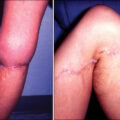
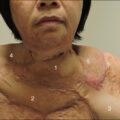
It has been advocated that definitive correction of burn scarring should be delayed for 1 year or longer after healing in the acute period. Unaesthetic and ugly scars mature over time, and with pressure and splints many do not require surgery once the acute phase of scar maturation has occurred. Patience is often the best tool for the reconstructive surgeon. However, some problems encountered early during the recovery phase must be dealt with and operated on before the golden period of scar maturation is over. In these circumstances it is important to ensure that an operation is needed to correct the deformity. Urgent procedures must be planned to fix functions not amenable to other treatments often because time is of the essence. An eyelid release to protect an exposed cornea, correction of distracted or entrapped neurovascular bundles, severe fourth-degree contractures, and severe microstomia fall into this group. Intense rehabilitation, splinting, and pressure therapy are mandatory after correction of these deformities. In some patients, deformity may be addressed nonoperatively, but an operation should be considered if this approach does not lead to appropriate results promptly. Indications include all burn scar contractures that prevent the patient from eating, bathing, moving, and performing activities of daily living.
Most of the problems that patients may present are aesthetic ones and scar contractures that, although not prominent, produce great discomfort. Many of these problems disappear in the first 2 years postburn with appropriate care, and these problems benefit most from patience and time. Many significant deformities seen a few months postburn improve with time and can be treated with simple or less extensive procedures later.
However, many factors other than scar maturation affect whether to operate on burn scars. Psychological and socioeconomic factors are critical when making this decision. The patient’s mood plays a vital role because a patient who is unmotivated or depressed will not appreciate the procedure as much as a healthy patient. Moreover, operating on such a patient may produce discomfort and discouragement that, eventually, can jeopardize the patient’s compliance and prevent further reconstruction. The social status of the patient is also of great relevance, as is the patient’s economic status and emotional support from friends, family, and co-workers. When making a treatment plan, all these particular circumstances need to be considered, including time, family, support in the recovery phase, and what is to be done first.
Patient-surgeon relationship
Burn patients require an intense and good relationship with their surgeon. The relationship usually is long lasting, many times extending into a lifetime. Patients need a surgeon’s professional expertise but also the surgeon’s time, optimism, and compassion. The initial meeting is one of the most critical events in burn reconstruction. A patient presents with a set of complaints that must be evaluated together with the patient’s motivation for surgery and psychological status. Chief complaints, patient motivation, and expectations are evaluated. Limitations of surgery and any relevant technique are explained, together with the master plan for reconstruction and the order of the reconstructive priorities. A photographic workup is essential to plan the case, assist in definitive preoperative decision-making, and for documentation. When dealing with long-term scars and burn deformities, different problems may be encountered intraoperatively that may require a complementary technique. These specific burn reconstructive surgery issues must be explained in detail to the patient, and the surgeon needs to foresee and include them in the preoperative planning and informed consent meetings so that unpleasant surprises are not encountered later.
Patients need to be reassured frequently. A burn reconstruction project involves several operations, many clinic visits, and often a long time to make a final assessment. The patient’s feelings and impressions must be addressed continuously, and any trouble, minor disappointment, or depression detected early on must be treated as needed.
Develop a plan with a timeline
One of the drawbacks of early reconstructions is that problems like contractures may recur. Although a late reconstruction may have a smaller chance of contracture recurrence, it does not exclude other problems. Late reconstructions may be easier because all the wounds have healed, and scar tissue may be mature. Multiple reconstructive operations may sometimes be necessary for an excellent functional cosmetic outcome. Therefore the surgeon must develop a thorough plan of what needs to be done with timelines in mind.
Pre- and postoperative care in burn reconstruction
A complete record of all encountered problems must be performed during the initial and follow-up visits before surgery. Quality and color of the skin in the affected areas must be noted, including abnormal scars, hyper- or hypopigmentation, contractures, atrophy, and open wounds. Function has to be addressed next: all involved joints are explored, ROM noted, and skeletal deformities addressed. Often, scar contractures distract joints, and the body maintains an abnormal position to overcome the deformity. A complete x-ray workup must be obtained to explore the status of bones and joints. In severe restriction of function, good radiologic imaging must be obtained to rule out heterotopic calcification.
The needs for physiotherapy, occupational therapy, and pressure garments must be considered now. The patient is referred to the rehabilitation department for consideration. Finally, an inventory of all possible sites for donor tissue is made.
All reconstructive possibilities are discussed with the patient, and the timing and order of such procedures are outlined. All critical points and pitfalls are explained to the patient. The patient must first understand the importance of explaining all urgent, essential, and functional problems. This is essential because the patient can become extremely upset when significant cosmetic problems are disregarded initially while other not-so-obvious problems (to them) are addressed first.
Finally, it is also essential for children to perform as many procedures as possible during preschool and offer the patient multiple, simultaneous processes. Time, effort, and money are then best invested.
Pre-, intra-, and postoperative care of burn reconstructive patients include all techniques and special treatments of general plastic surgery and any state-of-the-art special plastic surgery techniques. The scope of procedures performed in burn reconstructive surgery ranges from split-thickness skin grafts to tissue expansion and microsurgery. Composite vascularized allotransplantation has recently emerged as a new technique for catastrophic burn deformities.
The plastic surgeon operating on burn patients often works with scarred or injured skin. In this particular setting, handling all tissues with extreme care is very important because vascularization in the area is usually altered. Patients are instructed to stop smoking at least 3 weeks before surgery. All meals and drinks containing active vascular substances need to be tapered and any medications noted so that all unnecessary drugs can be stopped. The patient is also instructed to avoid medications such as aspirin that may increase intra- and postoperative bleeding. Uncontrolled hypertension, cough, nausea, and disorders of coagulation need to be known by the surgeon and treated as required because they are known to increase the risk for hematoma. It is always advisable that the patient presents for surgery with a responsible adult to provide care postsurgery.
The evening before surgery, the patient is instructed to clean the skin with bacteria-reducing soap, and a light dinner is advised. Burn patients typically have hypertrophic scarring, seams, and intradermal cysts that are prone to a high bacterial load. Including the perioperative use of antistaphylococcal agents in the operative planning is also advisable. If a skin flap or introduction of alloplastic material is to be performed, antibiotics should be continued in the postoperative period for at least two more doses.
Probiotics are also advised to avoid any antibiotic side effects. Intraoperatively, large doses of local anesthetics are to be avoided, and the extensive use of electric coagulation is minimized because it increases the risk of necrosis of scarred skin. Similarly, the use of subcutaneous epinephrine is limited because of the same risks.
A smooth emergence from general anesthesia, one free of coughing and vomiting, is essential in burn reconstructive surgery because it controls high or low blood pressure episodes, nausea, and vomiting. Hyperactive and anxious patients may benefit from anxiolytic medication to avoid sudden and uncontrolled movements in the immediate postoperative period. Light dressings are applied after surgery, and high pressure is avoided because it can injure burned tissue. When aesthetic procedures are planned (such as fat grafting, CO 2 laser therapy, chemical peels, and aesthetic surgery), patients are left without dressings to allow accurate and correct wound healing. Immobilization is kept to a minimum, and passive and active ROM are started as soon as possible in the postoperative period. Movement helps avoid edema formation, congestion, and recurrence of contractures. Splints, prostheses, and pressure garments must be used immediately or soon after the operation. Rehabilitation is usually part of the reconstructive master plan, so it must be included and started after surgery. Silicone inserts in grafted areas have helped control the early phase of scar maturation by applying gentle and uniform pressure to the wounds and correctly positioning joints.
It is also essential to administer reasonable pain control because having a comfortable and cooperative patient helps with positioning, rehabilitation, and the success of any operation. Patient-assisted analgesia is the best option if the patient can use it. Other than that, scheduled hydrocodone and morphine are good alternatives. Anxiolytics must always be considered as part of the pain control program, and the addition of antiitch medications and antiemetics such as diphenhydramine and droperidol is beneficial.
Finally, providing the patient and family with a cozy and relaxing environment helps them and the burn reconstructive team cope better with periodic admissions. It decreases fear and anxiety before every step in the progress of the reconstructive plan.
Aim for beauty
One should try to achieve a functional and aesthetic result. The goal of burn reconstruction should not be personal gratification for the reconstructive surgeon’s advanced technical expertise at the expense of the patient.
The patient will have to live with the result of the reconstruction. It is important to consider what effect the result of the reconstruction will have on the patient’s personal identity and psychological well-being. It is important to envision the end result. The amount of secondary surgery for refinement of the result must be considered. In addition, scar modulation and resurfacing techniques (laser/chemical peels/dermabrasion/adipose-derived stem cells/platelet-rich plasma/other growth factors) should be considered to refine the result.
Color and texture matches are important for a beautiful result. Local unburned areas can provide beautiful tissue for reconstruction. It is possible to use a technique such as tissue expansion to substantially increase the color and texture of local tissues required for reconstruction.
It is an error to think that a free flap or face transplant is the best reconstruction for a defect or a face. Any flap has the potential to be the worst choice. With careful consideration and thinking about beautiful outcomes, finding the best reconstruction plan for the patient is possible. It is important to share the plan with the patient and have the patient’s input and commitment.
Related posts:

Stay updated, free articles. Join our Telegram channel

Full access? Get Clinical Tree


