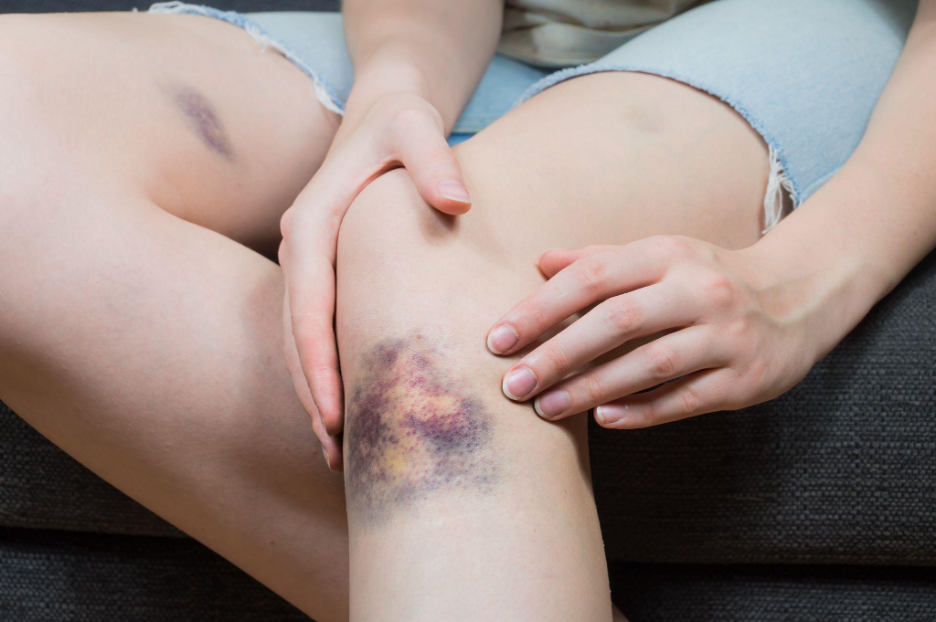
You knock your shin on the coffee table. Bruise appears. You forget about it within a week. That’s the version nobody thinks about twice. Then something different happens. A bruise shows up, and you genuinely can’t remember hitting anything. Or there’s a mark near your ankle that wasn’t there last spring. Or a vein on your calf that looks different from the others, raised slightly, visible in a way it didn’t use to be. And the question starts forming, slowly, in the back of your mind.
Should I actually be looking at this more carefully? Most of the time, no. Most bruises are just bruises. Most visible veins are just visible veins. But the lower leg in particular has a way of telegraphing information about what’s happening inside the venous system, and learning to read that information saves people from either panicking unnecessarily or ignoring something real for too long. A popped blood vein is a good example. It looks alarming. It usually isn’t serious. But context matters, and sometimes the context changes everything.
The Bruise That Should Have Faded by Now
Bruising is simple enough in concept. A vessel breaks. Blood escapes into surrounding tissue. The body breaks it down and reabsorbs it, which is why the color shifts from purple toward yellow before it disappears. Standard timeline: a week to start fading, two weeks to clear.
Most bruises follow this script perfectly. They’re forgettable by design.
The interesting cases are the ones that don’t. A bruise that keeps spreading after the initial injury suggests something is still bleeding beneath the surface, which isn’t how normal bruising works. A bruise that appears without any identifiable cause is worth noting, especially if it keeps happening. One unexplained bruise over twelve months is unremarkable. Six unexplained bruises over three months is a pattern, and patterns deserve investigation.
Then there’s the healing question. Poor circulation makes tissue slow to repair. People with venous insufficiency in the legs often notice that bruising near the ankle takes dramatically longer to resolve than bruising on the arm or thigh, even when the injuries are similar. The circulatory environment of the tissue drives healing. When that environment is compromised, everything heals on a different clock.
Bruises worth paying closer attention to:
- Spontaneous bruising that appears without a recalled impact
- Bruises that keep growing larger after appearing
- Any bruise taking longer than three weeks to meaningfully fade
- Recurrent bruising in the same general area, especially the lower leg
- Bruising accompanied by swelling that wasn’t there before the bruise appeared
Visible Veins: Reading What’s There
Veins become visible for boring reasons. Thin skin. Low body fat. Genetics. Age. None of this means anything is wrong. Half the people who worry about visible hand veins are just noticing something that was always there. The leg is a different environment. Venous disease concentrates there because of gravity, and visible changes on legs carry more information than the same findings elsewhere.
Spider veins come first in most people’s experience. Small, branching surface vessels appearing in red or purple networks on the calves or thighs. The question isn’t whether they’re there. It’s what comes with them.
Spider veins alone, on skin that feels normal, no swelling, no heaviness. Probably cosmetic. Worth monitoring but not urgent. Spider veins alongside legs that feel heavy by afternoon, ankles that swell consistently by evening, skin that’s changed around the lower leg. Different category entirely.
Varicose veins communicate more directly. Enlarged, tortuous, pushing visibly against the skin. They’re not something the body produces by accident. Their presence indicates structural compromise, not surface variation. Some cause no symptoms. Others ache, bleed with minor trauma, or create visible skin changes around them.
Signs in visible veins that warrant evaluation:
- Varicose veins appearing rapidly or becoming suddenly symptomatic
- Any surface vein developing warmth, redness, or tenderness along its length
- A vein that felt soft yesterday and feels hard today
- Spider veins spreading visibly month over month alongside leg symptoms
- Visible vein changes in one leg only, especially with accompanying swelling
The Skin Changes Nobody Expects
The skin around the lower leg keeps a running record of what the venous system has been doing for years. Most people don’t read that record until a doctor points it out.
Hemosiderin staining is the brownish discoloration that develops around the ankle in people with chronic venous insufficiency. When venous pressure stays elevated long enough, red blood cells leak through weakened vessel walls into surrounding tissue. The iron deposits in the skin and stays there. Not a bruise that fades. A structural change reflecting months or years of venous congestion that doesn’t reverse on its own.
Lipodermatosclerosis is less common but more significant. The skin of the lower leg thickens, hardens, and takes on a quality that feels different from surrounding tissue. People sometimes describe their lower leg as feeling like it has a bandage wrapped around it tightly. There’s no bandage.
Stasis dermatitis is the eczema-like change that develops in the same territory. Red, itchy, sometimes weeping. People treat it with steroid cream. It comes back. It will keep coming back until the venous pressure driving it is addressed, because the problem isn’t the skin.
Skin changes that should prompt evaluation:
- A brownish staining around the ankle that hasn’t been explained
- Skin on the lower leg that feels noticeably different in texture from a year ago
- Recurring dermatitis that responds poorly to topical treatment
- Any wound near the ankle that isn’t healing on a normal timeline
- Skin that weeps fluid without a clear cause
When Single Findings Become a Pattern
A single bruise. A single visible vein. A patch of discoloration. Each alone is often explainable.
The picture changes when they arrive together. A person with ankle staining, visible spider veins, legs that swell by evening, and bruises that take three weeks to fade isn’t dealing with four separate findings. They’re dealing with one venous system expressing itself across multiple visible channels simultaneously.
Combination signals worth acting on:
- Bruising plus swelling plus visible veins concentrated in the lower leg
- Skin color changes plus slow wound healing plus recurrent dermatitis
- Rapid onset of varicose veins alongside new leg heaviness or pain
- Any cluster of lower leg findings worsening over several months
Conclusion
Knowing when to worry comes down to reading the whole picture rather than reacting to individual findings in isolation. Most skin marks don’t mean much. Most visible veins don’t either. But the lower leg has a particular relationship with the venous system, and the marks that appear there sometimes carry real information worth acting on while options are still straightforward.
If findings are piling up and the pattern is recognizable, a vascular ultrasound takes less than half an hour and shows exactly what’s happening beneath all those surface signals. Most people find the results considerably less alarming than the accumulation of unexplained findings they’d been living with.
FAQs
Is it normal to bruise more easily as you get older?
Yes, though the degree matters. Skin thins and vessels become more fragile with age. A noticeable increase in bruising frequency or bruises appearing without impact is worth a conversation with a doctor.
When should a visible vein actually prompt a doctor visit?
When it’s accompanied by tenderness, warmth, or hardness. When it appeared suddenly alongside new swelling. When it’s a varicose vein causing symptoms or skin changes around it.
What causes that brownish skin staining near the ankle?
Usually chronic venous insufficiency. Iron from leaked red blood cells deposits in the skin over time. It doesn’t fade on its own and indicates the venous pressure causing it needs to be addressed.
Can a bruise signal a vascular problem?
In the lower leg, especially when healing is unusually slow, or bruising recurs in the same area without clear cause, it can. Poor venous circulation affects how tissue heals and how the body reabsorbs leaked blood.
Related posts:



Stay updated, free articles. Join our Telegram channel

Full access? Get Clinical Tree


