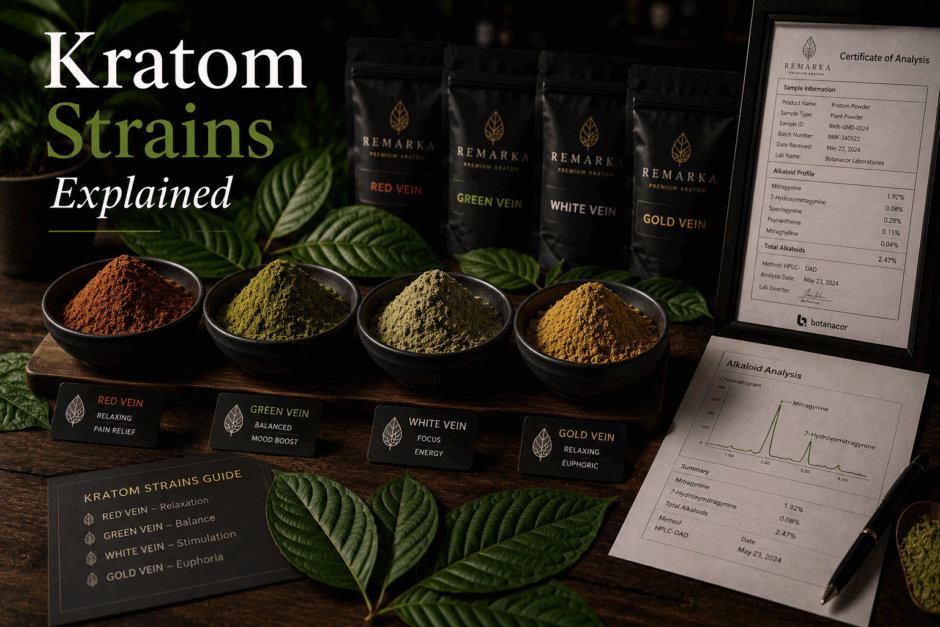
Kratom has crept out of the herbal underground and into the mainstream wellness debate, and the industry has exploded along with it.
Step into any conversation regarding botanical supplements nowadays and you’ll hear about kratom strains before long.
It’s not about access any more.
The difficulty is that most customers are shopping in a market overloaded with vaguely defined strain names, variable lab standards, and suppliers who use “premium” as a marketing term rather than a quantifiable standard of quality.
Especially as the American Kratom Association continues to tighten its GMP certification requirements and third-party testing expectations continue to rise across the market, knowing how to tell the difference between actual botanical quality and innovative packaging matters a lot in 2026.
We explore the strain structure that really counts, how alkaloid content impacts the changes you perceive, and what distinguishes trustworthy providers from those cruising on aesthetics.
Buy Premium Kratom Strains from Jack Botanicals
AKA Certified | 9+ Lab Tests/Batch | 30% Off with Code “Jack30”
What Kratom Strains Actually Are — And Where the Naming Goes Wrong
The regular customer expects that kratom strain names work the same way as cannabis cultivar names — separate genetic variants with consistently varied chemical fingerprints.
That assumption needs a bit of tweaking.
Mitragyna speciosa is a single species of tree endemic to Southeast Asia and is cultivated commercially mainly in Indonesia, Malaysia, Thailand and Papua New Guinea.
The names of strains that customers see—Red Bali, Maeng Da, White Borneo, Green Malay—have to do mostly with where they are harvested and how they are processed, not with genetically different botanical types.
There are real changes in alkaloid content from batch to batch, but those differences are driven by leaf maturity at harvest, soil composition, regional climate conditions, post-harvest drying techniques and fermenting methods, not by the strain labels themselves.
The two major alkaloids responsible for the actions of kratom are mitragynine and 7-hydroxymitragynine (7-OH).
Published studies in the Journal of Medicinal Chemistry show that mitragynine normally constitutes about 66% of the total alkaloid content of mature kratom leaves, but this varies considerably with harvest and growing region.
This inherent fluctuation is exactly why lab documentation on a per-batch basis counts more than brand narrative.
The Most Functionally Reliable Vein Color Differentiator Still
Vein color is the most reliable indicator of effect profile across all labeling schemes in the kratom market.
As the plant matures, the center vein running through each leaf of kratom changes color – from white to green to red.
This stage of development is marked by significant changes in alkaloid balance, and specifically in the ratio of mitragynine to 7-hydroxymitragynine.
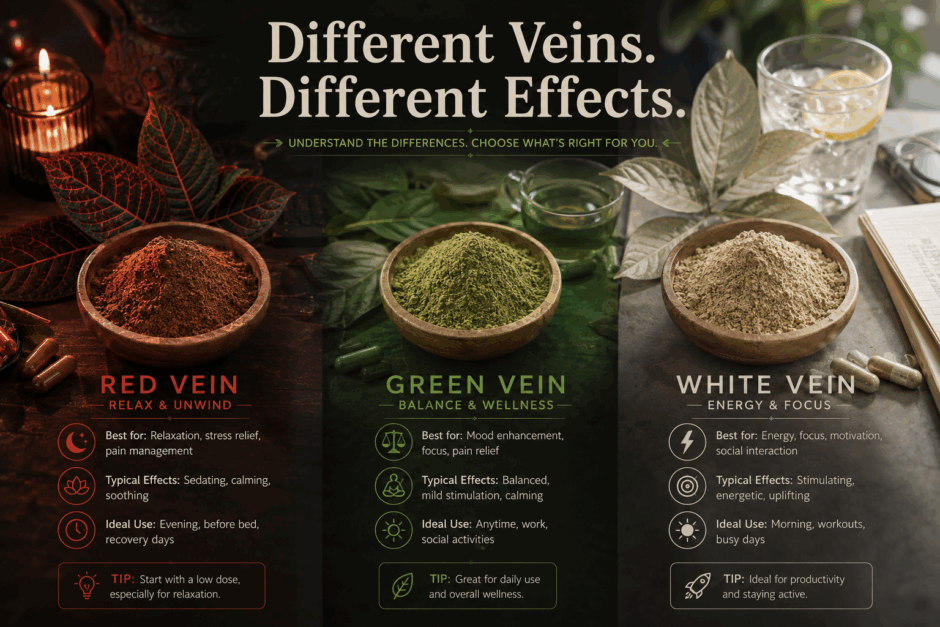
| Vein Color | Harvest Stage | General Alkaloid Tendency | Common Use Pattern |
| White Vein | Early harvest | Higher mitragynine dominance | Daytime, mental focus, energy |
| Green Vein | Mid-maturity | Balanced alkaloid spectrum | Versatile, mild energy + ease |
| Red Vein | Full maturity | Elevated 7-OH expression | Evening, relaxation, comfort |
| Yellow/Gold | Fermented or blended | Variable, mellower profile | Smooth energy, moderate effects |
Yellow and gold kratom aren’t botanically distinct vein colors.
They’re the product of extended drying processes or controlled blending that creates a mellowed alkaloid character — useful for users who find standard reds too heavy or whites too sharp.
The Core Kratom Strain Categories and Their Distinctive Profiles
Red Vein Kratom: Full-Spectrum Alkaloid Maturity
Red vein types are consistently the top selling varieties in the U.S. market.
According to a 2026 industry analysis by the Botanical Education Alliance, red vein products comprise about 45% of domestic kratom sales, a figure that has been largely consistent throughout several years.
It is often said that the reason red vein is popular for nighttime and comfort applications is due to the higher 7-hydroxymitragynine ratio in fully grown leaves.
Red Bali is one of the most purchased strains in the world.
It is grown in Indonesia and is known for a smooth, well-rounded alkaloid expression and superior consistency from batch to batch than many other cultivars, a quality prized by repeat consumers.
Red Borneo has a little earthier character.
It is typically described by experienced users as having a more slow onset than Bali, giving it a choice for individuals who find faster acting reds too abrupt.
Red Maeng Da holds a more potent position in the red vein category.
Traditionally the Maeng Da moniker was associated with selective grafting procedures pioneered in the Surat Thani region of Thailand but since then the tag has been bandied about very liberally across the marketplace sometimes as a true nod to Thai cultivar heritage and sometimes as simple marketing.
With Maeng Da, transparency is more important than most other strains, due of how loosely the term is utilized.
Green Vein Kratom: The Balanced Option Gaining Market Share
Green vein kratom has seen an incredible surge in popularity, especially amongst beginning users or those looking for a less polarizing everyday experience.
The alkaloid balance creates effects that fall between the white and red vein profiles – mild energy without the strong stimulation of whites, coupled with comfortable ease without heavier sedation.
Green Malay is commonly listed in consumer communities as one of the more long-lasting green types.
Consumer feedback data indicates reported effect windows averaging 4–6 hours, adding to its attractiveness for consumers seeking prolonged utility without the need for frequent redosing.
Green Borneo and Green Indo will be more moderate introductions to the category.
They are often recommended as a first anchor point for people who are still calibrating their own sensitivity to varied alkaloid profiles.
Green Maeng Da is a little bit more potent in the green spectrum. More energetic than regular greens, but without the harsh edge of white Maeng Da.
White Vein Kratom: Clarity, Focus, and Daytime Utility
White vein kratom is harvested at the earliest point of leaf development possible, before the shift in alkaloids to 7-OH-dominant profiles has occurred to any appreciable degree.
This produces a greater mitragynine to 7-OH ratio, which most users correlate with alertness, mental clarity, and prolonged attention.
White Maeng Da is among the most popular white vein items, especially in productivity-oriented wellness communities.
White Borneo is a little more subdued, with less of the harsh stimulation edge some describe with more potent white veins – giving it a reasonable halfway ground for users interested in white vein effects without intensity.
White Thai has a distinctive essence, and is frequently said to be more uplifting in tone than whites of Indonesian origin, although real Thai origin stuff is still pushing its way into wider commercial availability in the wake of Thailand’s 2022 kratom legalization.
Experienced users tend to ingest white vein variants in lesser amounts than reds, not only because they are normally more stimulating per gram, but also because the variance in individual sensitivity is greater in this group.
Where Freshness Separates Premium Kratom From Average Inventory
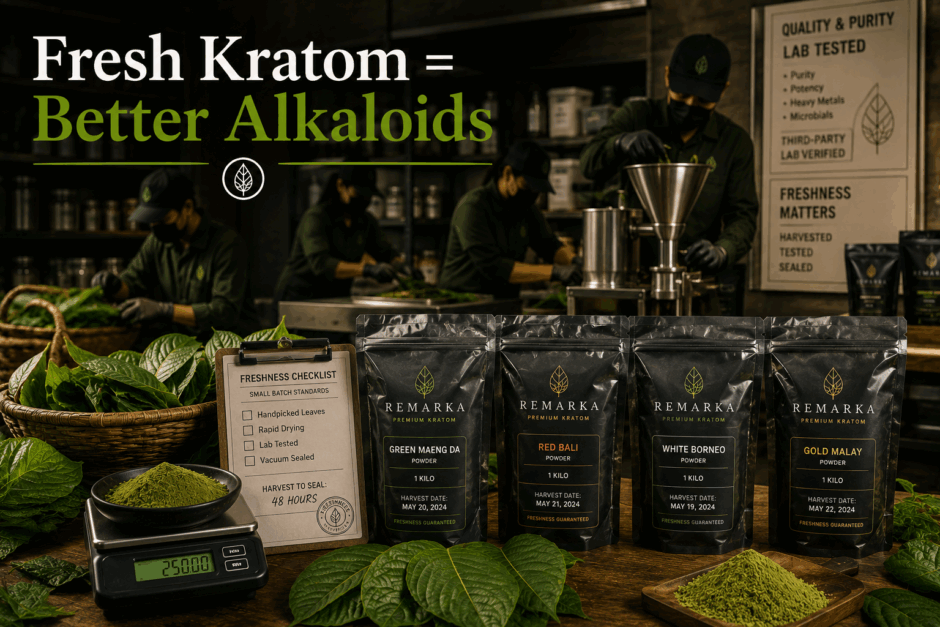
Freshness is one of the most underrated quality elements in the kratom industry.
It’s also one of the trickiest to judge based on product listing alone.
Mitragynine degrades through exposure to light, oxygen and heat over time.
A lot of red Bali that has been stored in a distribution warehouse for seven or eight months is not going to have the same concentration of alkaloids as a fresh batch that was processed and sold within weeks after harvest.
Some top tier suppliers are now disclosing harvest dates as well as lot numbers, a differentiating technique between real quality-focused enterprises and those just re-selling aged inventory from bulk importers.
This is especially true for white vein kratom which has a more volatile alkaloid profile than the more chemically stable red vein leaves.
Packaging properly makes a measurable difference.
Effective shelf life can be greatly extended using airtight, opaque containers stored below 75°F.
It does matter what comes to your door . Quality vendors ship in nitrogen-flushed or vacuum-sealed packaging .
Higher order volume vendors also tend to have fresher inventory turnover – meaning the product is less likely to have sat for months before shipping vs lower volume businesses with slower stock rotation.
Order Lab Tested Kratom Strains from Jack Botanicals
AKA Verified | 9+ Lab Tests/Batch | Save 30% with Code “Jack30”
Third-Party Lab Testing Reshaped What Informed Buyers Expect
The AKA’s GMP certification program has materially changed buyer expectations in the domestic market.
Certified vendors must maintain documented quality control procedures, accurate labeling, and verifiable third-party testing — but AKA certification is a floor, not a ceiling.
The volume and scope of testing varies considerably across certified vendors, and those differences directly affect the confidence buyers can reasonably have in what they’re purchasing.
| Testing Dimension | Basic Certified Vendor | Premium Vendor Standard |
| Tests conducted per batch | 1–3 | 9+ |
| Alkaloid quantification | Rarely included | Standard practice |
| Heavy metal screening | Inconsistent | Every batch |
| Microbial contamination testing | Inconsistent | Every batch |
| Pesticide residue screening | Rare | Included |
| Batch-specific CoA availability | Often absent | Publicly accessible |
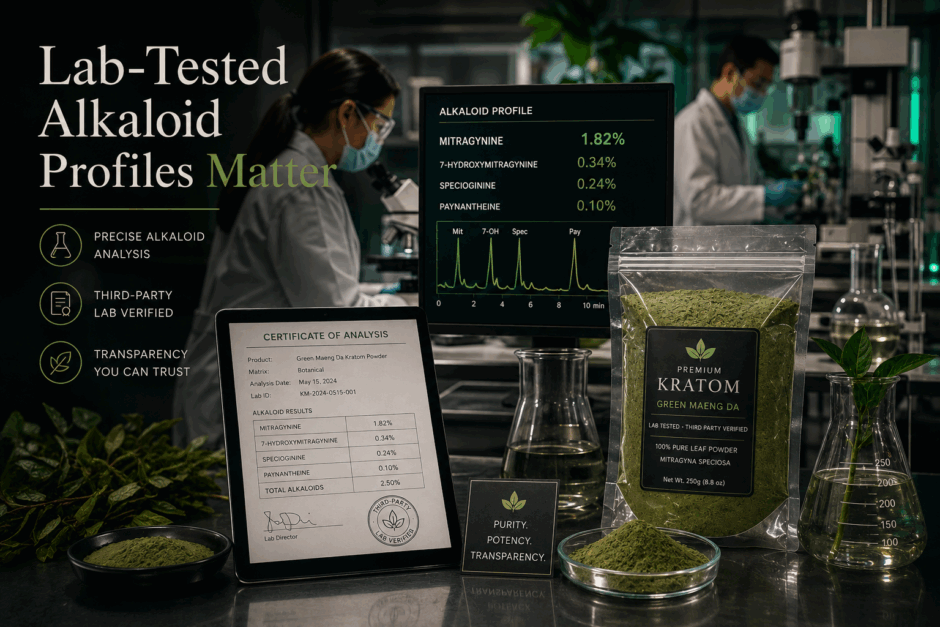
The highest level of market transparency is vendors who are testing 9+ times each batch for alkaloid content, heavy metals, microbiological safety, and pesticide residue.
Certificate of Analysis paperwork should be public by default and not behind a request form.
Usually, such friction comes from a vendor forcing buyers to ask for their lab tests.
Jack Botanicals
Jack Botanicals is on the high end of that testing standard.
It has 9+ lab tests per batch, public CoAs, and active AKA GMP accreditation and is among a very limited set of vendors who actually put analytical accountability before marketing spend.
The strain selection includes main red, green and white vein types, with batch-specific alkaloid data – a detail experienced buyers have increasingly rendered non-negotiable in their purchase selections.
Third party program validation in the form of AKA certification serves as an addition to the vendor’s own internal testing documents.
How Regional Origin Influences Kratom Alkaloid Expression
While vein color offers the most robust structure for effect profiles, true labeling of geographical origin, not just cosmetic labeling, nevertheless has a significant part in alkaloid expression.
Indonesia controls the global supply of kratom.
Together, the Bali, Borneo and Sumatra varieties account for the highest share of goods in the U.S. market.
Researchers at the University of Mississippi noticed that Indonesia’s tropical climate, volcanic soil composition and steady humidity generate growing circumstances that produce some of the most alkaloid-consistent commercial material in the world supply chain.
Thai kratom has a long history of the specific strains grown in the Surat Thani and Nakhon Si Thammarat provinces of Thailand.
The legalization of kratom cultivation in Thailand in 2022 has also brought authentically Thai-origin material into increased economic accessibility, adding actual regional variation to an almost solely Indonesia-dominated U.S. supply picture.
Independent analyses have given Malaysian kratom a reputation among the research community for having slightly increased mitragynine contents.
Genuine Malaysian material has historically been limited in market availability due to import restrictions, hence the “Malay” name is sometimes used to goods that is not genuinely from there.
Papua New Guinea kratom is still a specialist tier product – mostly wild collected, small scale commercial, and truly different in alkaloid profile from Indonesian commercial stuff.
| Regional Origin | Key Growing Characteristics | U.S. Market Availability |
| Indonesia (Borneo, Bali, Sumatra) | Volcanic soil, humid equatorial climate, mature tree stock | High — majority of domestic supply |
| Thailand | Selective cultivation heritage, legal since 2022 | Growing — increasingly available |
| Malaysia | High-altitude regions, distinct alkaloid expression noted in research | Limited — import restrictions persist |
| Papua New Guinea | Wild-harvested, small commercial scale | Rare — specialty market only |
Dosage Sensitivity Differs Significantly Across Vein Types
This is a trend that happens all the time in the pharmaceutical research and consumer response data . The quantity vs . impact profile changes significantly from vein color to vein color .
For instance, white vein kratom is known for its stimulating effects at lower dosages, but the strain becomes more relaxing at higher doses, a behavior consistent with the well-documented dose-dependent receptor action of mitragynine.
Red vein kratom usually keeps its comfort-seeking profile across a wider range of doses (which helps explain its popularity), but it also means it’s especially vital to manage quantities carefully for regular users.
This is partly why they are usually recommended as a calibration-friendly entry category . Green vein types tend to maintain their balanced nature throughout a larger range of doses than either whites or reds .
Consumer surveys published by the American Kratom Association show that most regular kratom users take between 2–6 grams per dose, with more experienced users often leaning toward the lower end of the spectrum as they learn how to gauge their personal sensitivity to the effects over time.
Reading a Kratom Lab Report: What the Numbers Actually Tell You
Most purchasers do not obtain the full amount of actionable information from a Certificate of Analysis from an approved third-party laboratory.
Knowing what to look for changes a CoA from a generic trust signal into a true quality assessment tool.
The main alkaloid marker to look for is the proportion of Mitragynine.
Premium quality kratom powder usually has mitragynine levels ranging from 1.2% to 1.8%.
Anything less than 0.8% indicates poor quality leaf material, substantial post-harvest alkaloid degradation or both.
7-Hydroxymitragynine is found in substantially lower amounts, approximately 0.02%–0.05% in ordinary unfermented material.
Sometimes red vein cultivars treated with conventional fermentation processes are slightly increased in 7-OH values, consistent with their claimed effect profiles.
For heavy metal panels, the allowable levels should be far lower than FDA action levels:
- Lead: below 0.5 ppm
- Arsenic: below 2 ppm
- Cadmium: below 0.5 ppm
- Mercury: below 0.1 ppm
Microbial testing should confirm the absence of Salmonella and E. coli, with yeast and mold counts within recognized safety limits.
A lab report missing any of these panels isn’t a complete document — and partial testing is a quality signal in itself.
Kratom Blends and Enhanced Products: What Distinguishes Each Category
There is more to kratom than just single strain products, kratom mixes have become a big market area with their own quality concerns.
Blending is the mixing of two or more strains of plant, usually a red with a green or a white with a green, to generate a more rounded alkaloid profile.
Blending does smooth the harsher edges of each vein type if properly proportioned and with per-blend alkaloid testing.
The result can be more flexible than a single-strain solution for users who have varied needs at different times of the day.
Enhanced kratom is in a whole separate class.
These products are a blend of conventional kratom powder with separated alkaloid extract, considerably increasing the potency per gram.
For naive users, the risk profile is notably higher than for ordinary items, and the margin of error on quantity is considerably smaller.
Vendors that are selling improved products with alkaloid concentration per gram properly labeled are doing the right thing.
Skepticism is warranted for products labeled “enhanced” without detailed alkaloid measurement — “enhanced” without numbers is a marketing claim, not a quality descriptor.
How Shipping Practices Affect the Kratom You Actually Receive
Quality starts at the farm but it ends at your doorstep — and what happens in between is more than most shoppers consider when making their shopping decisions.
Vendors who factor climate into transit – such as not leaving shipments out in the heat too long in the summer – maintain alkaloid integrity in ways that don’t appear on the product label, but do appear in the experience.
Small enterprises often compromise on packaging, utilizing non-sealed, light-permeable pouches that hasten alkaloid breakdown in transit and on the shelf.
Established vendors with higher order volume often have better inventory turnover, meaning the product you receive has not been lying in warehouse conditions for long periods of time.
Dispatch speed is also a question of practicality.
A same day dispatch policy with 2-3 business day delivery is a significantly fresher product situation than a 5-7 day shipping window for a plant with established light and moisture sensitivity.
Comparing Top Kratom Vendors by Key Quality Indicators in 2026
The domestic kratom vendor landscape has consolidated somewhat around recognizable quality tiers over recent years.
AKA certification remains the baseline qualifier, but the performance gap between certified vendors is substantial enough that certification status alone provides incomplete guidance.
| Vendor | AKA Certified | Tests Per Batch | Public CoAs | Strain Variety | Freshness Practices |
| Jack Botanicals | Yes | 9+ | Yes — publicly listed | Broad | Yes |
| Kona Kratom | Yes | 5–7 | Partial | Moderate | Partial |
| Super Speciosa | Yes | 4–6 | Partial | Moderate | Partial |
| MIT45 | Yes | 5–6 | Partial | Limited | No |
| Star Kratom | Yes | 3–5 | On request only | Limited | No |
Testing volume and CoA accessibility remain the most practically meaningful differentiators.
Vendors who publish batch-specific documentation remove the buyer’s dependence on brand trust alone — which is exactly the direction a maturing regulated market should move.
What Experienced Kratom Buyers Actually Prioritize
The criteria of evaluation among users with a year or more of experience in purchase move significantly away from marketing language and toward verified data elements.
The best correlation with brand loyalty in this category is batch-to-batch uniformity of alkaloids.
A red Bali that provides the same experience from one order to the next develops more durable repeat purchase behavior than a vendor with an impressive first product and uneven follow-up batches.
Informed purchasers demand a minimum standard of packaging integrity, strain identification, net weight labeling and accessible lab evidence.
Vendors who have maintained their AKA certification throughout numerous renewal cycles have demonstrated an operational discipline that can’t be conveyed by one impressive batch alone.
Pricing indications are interesting too.
When the prices are consistently rock-bottom, it usually means corners are cut somewhere in the sourcing, testing, or processing chain.
Vendors that pass examination tend to cluster in a fair premium cost range that matches proven quality standards—not the cheapest option in the market, but not priced beyond what the category warrants.
How the Kratom Market Has Evolved and Where It’s Heading
The domestic kratom business has evolved quite a bit from its early days as a mainly unregulated market.
Now several states – Nevada, Utah, Arizona, Georgia, Colorado and Oklahoma – have passed state-level Kratom Consumer Protection Acts (KCPAs) formalizing what responsible vendors were already doing voluntarily with age restrictions, labeling requirements and product safety standards.
As regulatory frameworks grow and the customer demand for lab documentation increases, industry analysts watching the botanical supplement space foresee more consolidation around quality-focused vendors.
The vendors most likely to succeed in this landscape are those already committed to transparent testing, accurate labeling and true source accountability, which satisfy regulatory demands without the need for operational overhauls.
Meanwhile, suppliers who rely heavily on price competition and testing at a minimum are coming under increased strain from regulatory scrutiny and a buyer base that has become much more savvy about what valid quality documentation looks like.
Practical Guidance for First-Time Kratom Strain Buyers
There are a few obvious frameworks which really help you navigate the strain landscape for the first time.
Do vein color first, not regional names.
White, green and red provide you with dependable directional guidance on effect profile that strain marketing names rarely do with equal accuracy.
First, look for providers who have CoAs available in a batch-specific and publicly accessible format.
The lab docs are the most objective quality signal on the market, better than reviews, branding or price positioning.
If you are unsure about your own alkaloid sensitivity, you might choose to begin with a green vein type.
The balanced profile is more forgiving across dosage ranges than whites or reds, offering a useful foundation before narrowing toward more specialized strain-types.
Always test with a new seller by ordering a modest quantity first before ordering huge amounts.
It is more important to get consistent outcomes from the same provider across numerous batches than to get spectacular results from a single transaction.
FAQ: Kratom Strains
What is the difference between red, green, and white kratom strains?
The vein color reflects the leaf’s maturity stage at harvest. White vein is harvested earliest and typically produces more energizing, focus-oriented effects due to higher mitragynine dominance. Green vein is mid-maturity with a balanced alkaloid spectrum suited to versatile daily use. Red vein is harvested at full maturity, with elevated 7-hydroxymitragynine expression associated with relaxation and comfort-focused applications. Yellow and gold varieties result from processing techniques rather than a distinct botanical vein color.
Which kratom strain is best for beginners?
Green vein varieties are the most consistently recommended starting point. Green Malay and Green Borneo in particular offer balanced, manageable profiles that allow new users to calibrate individual sensitivity without the sharper edges of white vein stimulation or the heavier relaxation character of fully mature red veins. Starting with quantities toward the lower end of the 2–4 gram range and adjusting incrementally gives the most useful calibration data.
How do I verify that a kratom vendor’s lab results are genuine?
Legitimate Certificates of Analysis are issued by accredited third-party laboratories — not produced in-house. A credible CoA includes the testing lab’s name and accreditation number, the specific batch identifier matching the product label, quantified alkaloid results, and panels for heavy metals and microbial contamination. Vendors who publish CoAs proactively on their website, searchable by batch number, demonstrate a transparency standard that request-only documentation cannot match.
Does regional kratom origin genuinely affect quality?
Regional origin contributes to alkaloid expression when the sourcing is authentic, but it isn’t the primary quality driver. Leaf maturity at harvest, post-harvest drying and fermentation techniques, storage conditions, and freshness at delivery collectively have more practical impact on what you receive than regional name labels. Genuine Indonesian, Thai, or Malaysian origin adds authentic botanical variety; loosely applied regional marketing labels on generically sourced material add very little.
What is the shelf life of kratom powder and how should it be stored?
Properly stored kratom powder — sealed in an airtight, opaque container, kept dry and below 75°F — retains meaningful alkaloid potency for approximately 1–3 years from the harvest date. Light, moisture, and heat are the primary degradation factors. Vendors shipping in nitrogen-flushed or vacuum-sealed packaging significantly extend effective shelf life compared to standard open-weave or light-permeable poly bags. Purchasing from vendors with documented freshness practices and active inventory turnover reduces the likelihood of receiving product already well into its alkaloid decline window.
Related posts:







Stay updated, free articles. Join our Telegram channel

Full access? Get Clinical Tree


