By the Peptide Research Desk. Reviewed for research-use accuracy. All information here is for research use only.
Interest in research peptides has grown unprecedentedly in 2026. Scientists study them for pathways tied to muscle growth, recovery, body composition, and aging. Growth hormone peptides draw a large share of this study, leading more laboratories to seek research-grade materials from suppliers such as Kylo Peptides for experimental applications.
Because the two peptides are almost always obtained as separate vials, the sourcing decision is effectively made twice, and each compound needs its own paperwork. Researchers assembling that pair can review CJC-1295 from NextGenPeps, which publishes a lot-specific third-party certificate of analysis per listing rather than a single site-wide purity claim. Holding a documented second source for either compound also keeps a protocol running if one lot becomes unavailable mid-study.
The CJC-1295 and Ipamorelin combination is one of the most discussed growth hormone peptide stacks in research today. The two are paired because they act on different parts of the same system. That is the whole idea behind the stack.
Here is the short version. CJC-1295 is a growth hormone-releasing hormone (GHRH) analog. Ipamorelin is a growth hormone secretagogue. Each one targets a different pathway that signals for growth hormone.
CJC-1295 helps build the signal; Ipamorelin helps trigger the release. Together, they are studied to explore natural growth hormone patterns in research models.
Research on this stack is still ongoing. This guide explains the science in plain terms. It also covers the limits and safety notes to consider. These peptides are research compounds and are not for human use.
Documentation has to be checked on each compound separately, since a well-documented GHRH analog says nothing about the purity of the ghrelin mimetic paired with it. NextGenPeps lists Ipamorelin with its own per-lot mass-spectrometry and HPLC report, which lets each half of the combination be verified independently before the two are used together. Where only one of the two carries current documentation, that mismatch is worth resolving before the material enters a study.
What Is the CJC-1295 + Ipamorelin Stack?
The stack is a research pairing of two peptides. Both connect to how the body makes growth hormones. One shapes the signal that starts the process, while the other prompts the pituitary gland to release growth hormone.
The two are studied together because they line up well. Each acts at a different point in the growth hormone chain. The result is a pairing that researchers can study as a single approach.
Understanding CJC-1295
CJC-1295 is a synthetic peptide. It is based on growth hormone-releasing hormone, often shortened to GHRH. Its role in research is simple to state. It stimulates the pituitary gland to release growth hormone.
There are two forms of CJC-1295. One is with DAC. One is without DAC.
- CJC-1295 with DAC lasts longer. The DAC part is designed to extend the time the peptide remains stable and active. This gives a longer signaling window in research.
- CJC-1295 without DAC has a shorter duration. Researchers often study it in relation to more frequent, pulse-like growth hormone signaling. Its short action lines up with how the body normally releases growth hormone.
Understanding Ipamorelin
Ipamorelin is a growth hormone secretagogue. That word means it prompts the release of growth hormone. It works through growth hormone secretagogue receptors. These sit on the pituitary gland. When Ipamorelin binds to them, it encourages a growth hormone release.
Ipamorelin is often paired with CJC-1295 for one reason. The two do different jobs. CJC-1295 supports the growth hormone signal. Ipamorelin promotes the release of growth hormone in pulses. The two roles fit together in research protocols.
Why Are CJC-1295 and Ipamorelin Combined?
The two peptides are combined because they act through separate pathways. This lets researchers study a fuller growth hormone signal than either peptide alone can provide.
The Role of Growth Hormone-Releasing Hormone (GHRH)
Growth hormone production is a natural process. It starts in the brain. The hypothalamus secretes signaling hormones that act on the pituitary gland. GHRH is one of these signals. It tells the pituitary to release growth hormone. This signal comes and goes in a rhythm. The body does not release growth hormone in a flat line, but in bursts across the day and night.
CJC-1295 copies this GHRH signal. That is why it sits at the start of the pathway. It works on the same receptor the natural signal uses. One animal study in GHRH knockout mice reported that a long-acting GHRH analog helped normalize growth.
The Role of Growth Hormone Secretagogues
Secretagogues are compounds that prompt a gland to release a hormone. Ipamorelin is one of them. Ipamorelin works differently from a GHRH analog. It uses a separate receptor known as the ghrelin receptor. This gives it a distinct way to encourage growth hormone release.
Because the route is different, it adds to the GHRH signal rather than repeating it. That is the point of studying both.
How Both Peptides Create a Combined GH Signal
Each peptide uses its own mechanism. CJC-1295 acts on the GHRH pathway. Ipamorelin acts on the ghrelin receptor pathway. Researchers study combinations because two pathways can produce a fuller response. The body normally releases growth hormone in pulses. The pairing is studied to determine how well it fits this natural pulsatile release pattern.
Here is a simple way to picture it. One peptide helps create the signal, while the other helps amplify the release pathway. Two levers moving together give a clearer picture of the research than a single lever.
How Does the CJC-1295 + Ipamorelin Stack Work in the Body?
This is the core of science. The stack connects to a chain of steps known as the growth hormone pathway. Everything below describes this pathway as it is studied in research.
The Growth Hormone Pathway Explained
The pathway runs in a set order. Each step feeds the next. The hypothalamus releases signaling hormones. The pituitary gland then produces growth hormone. That subsequently influences IGF-1 production. IGF-1 then acts on many tissues throughout the body.
This chain is the framework for the whole topic. When you read about growth hormone peptides, they connect to one or more steps in this chain.
CJC-1295 and the GH/IGF-1 Axis
Growth hormone and IGF-1 are closely linked. Growth hormone helps drive IGF-1 output.
IGF-1 is often measured in research. It gives a readable marker for growth hormone activity. Growth hormone itself rises and falls quickly, so IGF-1 gives a steadier reading.
CJC-1295 acts upstream in this chain. It influences the early signaling that leads to growth hormone and, in turn, IGF-1. That upstream position is what researchers track. In one human trial of CJC-1295, a single injection raised growth hormone and IGF-1 levels for several days.
Ipamorelin’s Role in Growth Hormone Release
Ipamorelin works through the ghrelin receptor pathway. This is a separate route from GHRH.
It is known for selectively stimulating growth hormone release.
Older growth hormone secretagogues could also stimulate other hormones. They sometimes affected cortisol and prolactin in studies. The study that first described Ipamorelin reported growth hormone release without a matching rise in ACTH or cortisol. This selectivity is a big reason it stays in current research.
Potential Benefits Associated With CJC-1295 + Ipamorelin Research
Research examines several areas related to growth hormone. These are observed in research, and by no means promise results. The outcomes are still being studied.
Muscle Growth and Lean Body Composition
Growth hormone pathways frequently appear in research on muscle physiology. Growth hormone and IGF-1 both connect to muscle tissue. IGF-1 in particular is studied for its role in muscle cell activity. This is why the axis draws interest in this field.
Athletes and fitness communities follow this area closely. Evidence from studies here is still developing. Body composition findings vary from study to study.
Recovery and Tissue Repair Research
Growth hormone is involved in tissue regeneration pathways. Recovery is a large field of peptide research. The interest is easy to understand. Faster or fuller repair has value in many research settings.
There is a clear point to keep in mind. A biological mechanism is not the same as a proven outcome. Research is still mapping how these pathways behave.
Fat Metabolism and Body Composition
Growth hormone plays a part in lipid metabolism. That is why growth hormone signaling is studied in relation to body composition. Lipid metabolism covers how the body handles fats. Growth hormone touches this process at several points.
Research interest does not equal a direct fat-loss finding. The evidence stays in the study stage. Any figure you see should be read as research data, not a claim.
Sleep and Growth Hormone Patterns
Natural growth hormone release rises during deep sleep. This is a well-known pattern, described in research on GH secretion during sleep. The largest pulses often come at night.
Because of this link, sleep patterns often come up in studies on growth hormone peptides. Poor sleep can lower natural growth hormone output.
Healthy Aging and Longevity Research
Growth hormone levels tend to decline with age. This decline in the GH/IGF-1 axis with aging is documented in the research literature. Some research explores whether more youthful hormone patterns can be studied and understood.
This decline is a normal part of aging. It draws interest from longevity researchers. This area is of interest, but research is limited. Long-term data is still thin. Firm conclusions are not yet available.
CJC-1295 vs Ipamorelin: Understanding the Difference
The two peptides are easy to mix up. Let’s lay out the difference.
| Feature | CJC-1295 | Ipamorelin |
|---|---|---|
| Category | GHRH analog | Growth hormone secretagogue |
| Main role | Supports GH signaling | Stimulates GH release |
| Target pathway | GHRH receptor | Ghrelin receptor |
| Common pairing | Frequently combined with Ipamorelin | Frequently combined with CJC-1295 |
The table shows why the two work well together in research. They exist in different categories, use different receptors, and cover different parts of the same job.
Which One Is More Commonly Used in Research?
The combination is more common in research than either peptide on its own. The reason is the split in roles. CJC-1295 shapes the signal. Ipamorelin drives the release. Their mechanisms complement each other, so researchers tend to study them as a pair.
Using one alone gives a narrower view. Using both gives a fuller picture of the growth hormone response. That is why the stack appears more often than single peptides.
CJC-1295 With DAC vs Without DAC + Ipamorelin
The DAC choice changes how long CJC-1295 stays active. This affects how it is paired with Ipamorelin in research.
CJC-1295 DAC Version
The DAC version lasts longer, so it gives extended growth hormone signaling. That longer window means fewer signaling events over time, with one signal staying active across a longer stretch.
This form suits studies that want a steady, drawn-out signal, since it reduces how often the peptide has to be applied in a research protocol.
CJC-1295 No DAC Version
The no-DAC version has shorter activity. It is studied more in the context of pulse-based approaches. Its shorter action lines up with the body’s natural pulse pattern. Growth hormone normally moves in short bursts.
This form suits studies that want to mimic those natural pulses. It gives a sharper, shorter signal each time.
Researchers who want the shorter-acting profile described here generally source it as a separate item, and CJC-1295 no DAC is listed with a lot-matched third-party analysis that identifies the modified GRF 1-29 sequence specifically. Confirming which version a vial actually contains matters here, since the two are frequently labelled interchangeably.
Which Version Is Studied More Frequently?
Both versions appear in research, and the choice often comes down to duration. Researchers weigh duration because it shapes the signaling pattern. Some studies favor a longer, steady signal. Others favor short, pulse-like signaling.
The research goal decides the form. There is no single correct pick across all studies.
CJC-1295 + Ipamorelin Stack Research Overview
Research on this stack centers on growth hormone activity. Studies track hormone changes rather than fixed outcomes.
Early Research on Growth Hormone Release
Early work examined changes in growth hormone and IGF-1. These markers show whether the pathway responded. Hormone measurements are the backbone of this research. They give clear, readable data points. A change in the markers signals a change in the pathway.
This measurement-first approach keeps early studies grounded. It focuses on what can be tested in a lab.
Current Areas Being Investigated
Several fields are active right now. Each connects to growth hormone in some way.
- Muscle physiology
- Aging research
- Metabolism
- Recovery pathways
These areas share a common thread. They all tie back to the growth hormone-IGF-1 axis.
Limitations of Current Research
The research base has real gaps. Long-term studies are limited, and more controlled clinical research is still needed. Many findings come from short studies or lab models.
Laboratory findings do not always align with broader outcomes. This gap between the lab and real settings is a key limit. It is the reason firm claims are hard to make.
CJC-1295 + Ipamorelin Stack Dosage and Protocol Discussions
Research protocols vary considerably, and no single standardized approach exists. Several factors account for this variation. The form of the peptide can alter the protocol, the study design refines it further, and model-specific factors introduce additional variability.
For these reasons, a universal protocol has not been established. Each research setting defines its own methodology, and a protocol developed for one study may not translate to another.
Factors Researchers Consider
Researchers weigh several factors when designing a study. These help set the frame for the work.
- Baseline hormone levels
- Age of the research model
- Health status of the model
- Research goals
Each factor can shift the design. A study on aging looks different from a study on metabolism. The goal of the research guides every other choice.
CJC-1295 + Ipamorelin Legal Status and Regulatory Overview
CJC-1295 and Ipamorelin are research compounds. The FDA does not approve them for human use. They are sold for laboratory and research purposes only and never as supplements or medicines.
Regulations vary by country and region, with some jurisdictions treating these peptides more strictly than others. Anyone handling them is responsible for checking the rules currently in effect.
Sourcing warrants the same diligence. A clear research-use label is part of proper documentation, and the purchase and storage of these compounds should always follow the local regulations in force.
Possible Side Effects and Safety Considerations
Safety notes below reflect what is discussed in the research literature. They describe a research-context safety profile, not effects from human use.
Commonly Discussed Side Effects
A few effects recur frequently in the literature. They are noted here for awareness within a research context.
- Injection-site reactions
- Water retention
- Tingling sensations
- Changes in glucose regulation
These are discussion points from research, not certainties. Their presence and strength can vary between studies. Careful monitoring is part of any responsible research setting.
Hormonal Considerations
Because these peptides act on growth hormone and IGF-1, hormone regulation becomes a key area to monitor in research. Tracking hormone markers is common in studies, as it shows how the pathway is responding and flags any shift that warrants attention.
Who Should Be Cautious?
Certain research contexts call for added care, particularly work that touches hormone-related conditions or any protocol layered onto existing health variables in a model. In these settings, the variables are greater, which raises the value of expert oversight.
Proper oversight is essential to any peptide research, and a qualified professional can review both the study design and the associated risk. These compounds are intended for research use only and are not for personal use.
How Long Does the CJC-1295 + Ipamorelin Stack Take to Work?
Timing depends on what a study measures. Hormone markers move faster than tissue-level changes.
Short-Term Changes
Short-term effects show up in hormonal markers. Growth hormone and IGF-1 can change fairly quickly in research settings.
Study measurements capture these early changes. They are read through lab values. This is where the first signals appear.
Longer-Term Observations
Changes in body composition take longer to appear in research models. Tissue and metabolism respond over weeks and months. Many variables shape these longer-term observations. Nutrition, activity, and sleep patterns all contribute to the picture in a study.
No single factor works on its own here. The peptide signal falls within a broader set of study conditions. This is why timelines vary so much between studies.
CJC-1295 + Ipamorelin vs Other Peptide Stacks
The CJC-1295 + Ipamorelin stack is often compared with other combinations in research, and each pairing has its own focus.
CJC-1295 + Ipamorelin vs BPC-157 + TB-500
These stacks study different things, so the comparison is really about goals. CJC-1295 and Ipamorelin center on growth hormone signaling, while BPC-157 and TB-500 have been studied more for their roles in tissue repair pathways.
That split shapes the research itself. One pairing sits on the growth hormone axis, and the other sits on repair and recovery mechanisms, so each answers a different question.
CJC-1295 + Ipamorelin vs Sermorelin
Sermorelin is also a GHRH-based peptide, so it shares the focus on growth hormone release. The main difference comes down to signaling duration, because CJC-1295 options, especially the DAC form, can extend the signal window well beyond Sermorelin.
Duration is the deciding factor between them, and it points each peptide toward a different study design.
CJC-1295 + Ipamorelin vs MK-677
MK-677 is an oral growth hormone secretagogue, whereas the stack uses injectable research peptides. That gives them separate mechanisms, since MK-677 is taken by its own oral route while the peptide stack works through two peptide pathways.
The delivery route differs as much as the mechanism, and that shapes how each one is studied and compared.
How to Evaluate CJC-1295 + Ipamorelin Peptide Quality
Quality is a core concern in peptide research, because poorly documented material can quietly skew a whole study. A few simple checks help you judge a product before you rely on it.
Importance of Third-Party Testing
Independent testing is one of the strongest quality signals, since it confirms what is actually in the vial. Good testing looks at two things above all: purity and identity. Purity shows how clean the compound is, and identity confirms it is the peptide the label claims.
The value of a third party comes from its distance. An outside lab has no stake in the outcome, so its numbers carry more weight than the seller’s own word.
Understanding Research-Grade Peptide Documentation
Documentation is how that quality gets proven, and the Certificate of Analysis, or COA, is the key record. A COA reports the test results for one specific lot, tying those numbers to a batch you can identify.
Batch testing means each lot is checked on its own, rather than assumed from an earlier run. Paired with an open COA, that lets a researcher verify the exact material in hand before any work begins.
Where to Source Research-Grade CJC-1295 + Ipamorelin Peptides
Where you source from shapes the quality of the whole study, since the material sets the baseline everything else builds on. Verified peptides give cleaner, more repeatable data.
Why Peptide Quality Matters in Research
Verified material protects the integrity of your research, because the compound in the vial has to match what the label claims. When it does not, the trouble is easy to miss and hard to undo.
Inconsistent or poorly documented compounds carry real risk. Unknown purity can quietly skew results, and missing paperwork makes any finding hard to trust or repeat. Solid quality control removes that variable, so the focus stays on the study rather than the material.
Kylo Peptides: Transparency and Quality Testing for Research Peptides
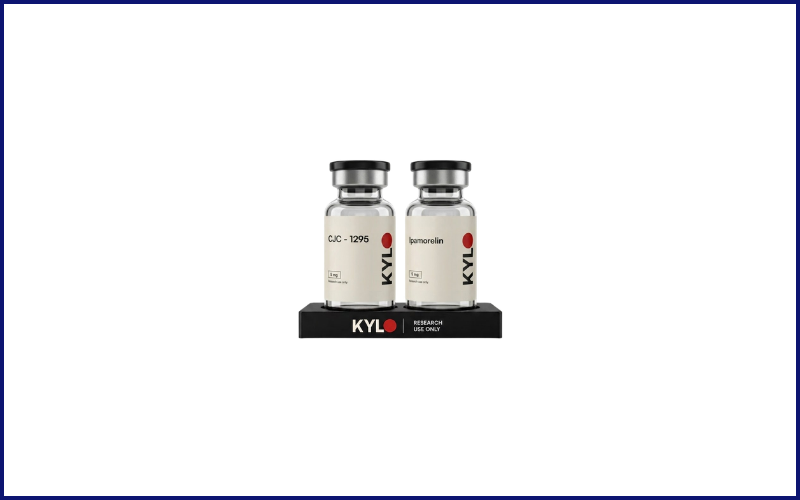
Kylo Peptides supplies research-grade peptide materials for laboratory use, with testing and transparency at the center of how it works. Released lots target 99% or higher HPLC purity, and the running average sits at 99.6%.
Kylo focuses on providing 100% transparency with well-documented, up-to-date COAs and independent testing by an ISO-certified lab for high-quality research peptides.
HEEZ Research: The Expensive/Premium Option for CJC-1295 + Ipamorelin
[EXPENSIVE/PREMIUM]
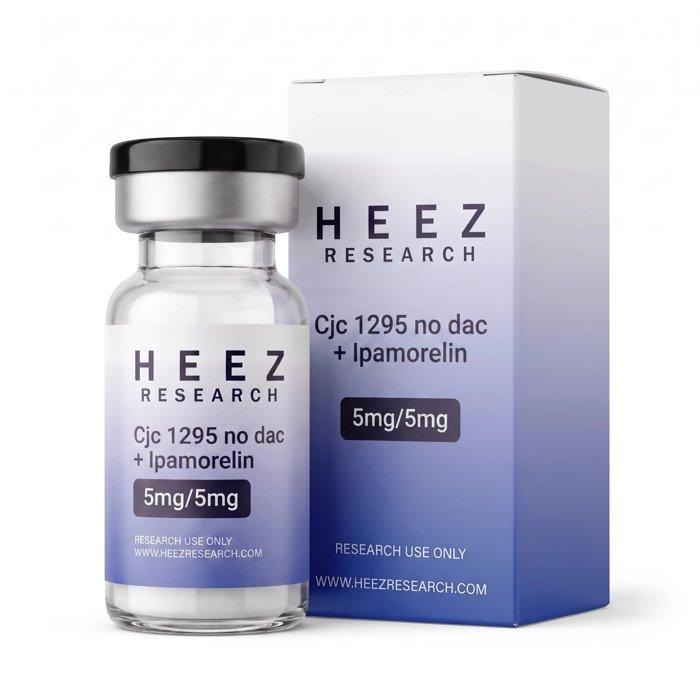
HEEZ Research offers CJC-1295 Ipamorelin as a single pre-blended vial: 5mg of CJC-1295 without DAC and 5mg of Ipamorelin, lyophilized together, at $80. It is priced as a premium option and suits researchers who want both compounds in one documented product instead of sourcing and combining two separate vials.
Every lot of the CJC-1295 No DAC + Ipamorelin blend is tested by an independent third-party laboratory against a 99%+ purity standard, with the Certificate of Analysis published on the product page. Because the two peptides are blended at a fixed 1:1 ratio, every sample drawn from a vial carries the same proportion, which keeps a variable out of the study design.
Orders placed before the daily cutoff ship the same day. Researchers who plan to buy CJC-1295 Ipamorelin can check the published COA against the documentation criteria described in the next section before ordering. All HEEZ Research products are sold for laboratory research use only.
Studies that need Ipamorelin without the GHRH analog can source research-grade Ipamorelin separately from the same catalog at $55 for a 10mg vial, with its own published Certificate of Analysis.
What Researchers Should Look for When Selecting a Peptide Supplier
You can judge a supplier on a few clear points, and together they separate research-grade sources from the rest:
- Testing documentation, including a lot-matched COA
- Clear product information
- Consistent quality standards
- Research-use labeling
A supplier that covers all four is far easier to trust, since each point fills in another part of the same quality picture.
FAQs About CJC-1295 + Ipamorelin Stack
What is the CJC-1295 and Ipamorelin stack?
It is a research pairing of two growth hormone peptides. CJC-1295 is a GHRH analog. Ipamorelin is a growth hormone secretagogue. Together, they are studied for how they support the body’s growth hormone signal.
Why are CJC-1295 and Ipamorelin combined?
They act through different pathways. CJC-1295 supports the growth hormone signal. Ipamorelin promotes the release of growth hormone in pulses. The pairing lets researchers study a fuller response than either peptide alone.
Does CJC-1295 increase growth hormone?
CJC-1295 is studied for its role in stimulating growth hormone release. It copies the GHRH signal that tells the pituitary gland to act. Research measures this through growth hormone and IGF-1 markers.
Does Ipamorelin work differently from CJC-1295?
Yes. Ipamorelin works through the ghrelin receptor pathway. CJC-1295 works through the GHRH pathway. This is why the two are often paired.
What is the difference between CJC-1295 DAC and No DAC?
The DAC version lasts longer and provides extended signal duration. The No DAC version has a shorter duration and is discussed in terms of pulse-based approaches. Researchers pick a version based on the signaling pattern they want to study.
Is the CJC-1295 + Ipamorelin stack safe?
These are research compounds, not approved for human use. Commonly discussed effects include injection-site reactions, water retention, tingling, and changes in blood glucose. Any peptide research should be run under proper professional oversight.
How does this stack compare with other peptide combinations?
It focuses on growth hormone signaling. BPC-157 and TB-500 focus more on tissue repair. Sermorelin is a related GHRH peptide with a different duration of action. MK-677 is an oral secretagogue with its own route of administration.
What research is available on CJC-1295 and Ipamorelin?
Research covers changes in growth hormone and IGF-1, muscle physiology, aging, metabolism, and recovery pathways. Long-term studies are still limited. More controlled clinical research is needed.
Where can researchers buy CJC-1295 and Ipamorelin?
Research suppliers sell the two compounds as separate vials or as one pre-blended vial. HEEZ Research supplies a pre-blended CJC-1295 + Ipamorelin peptide (No DAC, 5mg/5mg) with third-party testing and a published Certificate of Analysis. Whichever supplier is used, check the DAC status, the vial contents and the lot number on the COA before ordering.
Conclusion
The CJC-1295 and Ipamorelin stack remains one of the most studied growth hormone peptide pairings in research, largely because each peptide serves a distinct role. CJC-1295 shapes the growth hormone signal, while Ipamorelin drives its release in pulses.
Current research spans muscle physiology, recovery, metabolism, sleep patterns, and aging. The underlying mechanisms are well characterized in the laboratory, yet the wider outcomes are still being established.
Quality remains central to any peptide research. Independent testing, a lot-matched COA, and clear research-use labeling are the signals worth prioritizing, since verified material is what makes results reliable and repeatable.
The science, its limitations, and the safety considerations should all be understood at the outset. These peptides are intended for research use only, and all work with them should be conducted under proper oversight and in accordance with applicable regulations.
Disclaimers
CJC-1295 and Ipamorelin are research compounds. They are not for human or veterinary use. They are not approved by the FDA, and nothing here is intended to diagnose, treat, cure, or prevent any disease. This article is educational and written for a research audience. It is not guidance for personal use of any kind. Laws covering research peptides differ by country and region. Confirm the rules that apply to you before sourcing or handling these compounds.
Related posts:







Stay updated, free articles. Join our Telegram channel

Full access? Get Clinical Tree


