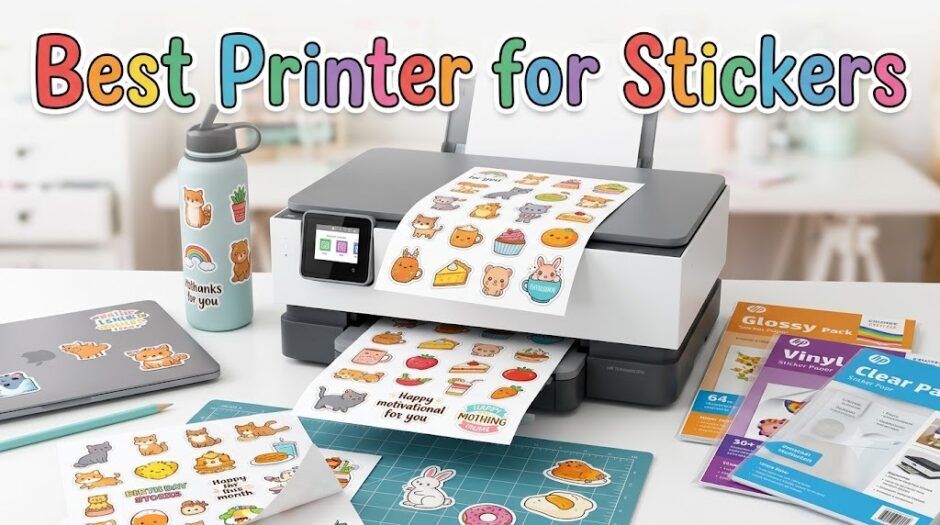
Sticker-making has moved well past the school-project stage. Small shop owners print labels for candles and skincare lines, Etsy sellers churn out die-cut designs by the hundred, and hobbyists cover laptops and water bottles with their own artwork. The one thing all of these people have in common is a printer that either makes the whole process easy or turns it into a headache. Color that looks muted on vinyl, ink that smears the second it gets wet, or a machine that chokes on thick label stock — these are the problems that separate a good sticker setup from a frustrating one.
Finding the best printer for stickers comes down to matching print technology and ink type to what you’re actually making — a single sheet of glossy vinyl or a few hundred waterproof labels a week. This guide breaks down the printer types that actually work for stickers and five specific machines worth buying, all built to hold up under regular sticker output rather than occasional light use.
Quick answer: for most home users and small sellers, a pigment-ink inkjet printer like the Epson EcoTank ET-2800 hits the best balance of print quality, cost per sheet, and ease of setup. Businesses printing in volume should look at a color laser printer instead, since toner resists water and sun fading far better than standard inkjet ink.
Quick Picks Table
| Printer | Best For | Type |
| Epson EcoTank ET-2800 | Best all-around pick | Inkjet |
| Canon MegaTank MAXIFY GX2020 | Best for waterproof/outdoor stickers | Inkjet (pigment) |
| Brother HL-L3220CDW | Best for small business/bulk printing | Laser |
| Xerox C235dni | Best commercial laser option | Laser |
| Cricut Joy Xtra | Best print-and-cut | Print-and-cut |
How We Chose These Printers
Every printer for stickers on this list was evaluated against five practical measures: print quality on vinyl and label stock, color accuracy against the original design file, compatibility with waterproof or laminate finishes, cost per printed sheet, and how much of a learning curve a first-time user faces. Print samples and scoring notes come from navosupplies.
The list is limited to machines built for regular, repeat sticker production rather than occasional light use. Specs were pulled from manufacturer documentation and cross-checked against print samples on common sticker paper brands, since a printer’s rated DPI on plain paper doesn’t always translate to a clean result on glossy or matte label sheets.
Inkjet vs Laser vs Sublimation for Stickers
Picking the right print technology matters more than picking a specific model. Each type handles ink, color, and paper differently, and that changes what kind of sticker it’s suited for.
When inkjet wins
Inkjet printers lay down liquid ink in tiny droplets, which gives them an edge in color range and gradient smoothness. For stickers with photos, shading, or complex artwork, inkjet almost always produces a richer, more accurate result than laser. Pigment-based inkjet ink also holds up reasonably well against light and moisture, especially once a design is laminated. The tradeoff is that most consumer inkjet printers use dye-based ink by default, which fades faster and smears if it gets wet before it’s sealed.
When laser wins
Laser printers fuse toner powder onto the page using heat, and that toner is naturally water-resistant and far more fade-resistant than dye-based ink. For flat-color designs — logos, text-heavy labels, simple icons — laser output looks sharp and holds up outdoors without lamination. The downside is that laser printers struggle with the smooth gradients and photo-quality color blends that inkjet handles easily, and toner has a slightly raised, glossy texture that some designers don’t like on fine detail work.
When sublimation makes sense
Sublimation isn’t really a sticker technology on its own — it’s built for transferring designs onto fabric, mugs, and hard-coated surfaces using heat. It comes up in sticker conversations because a few crossover machines can print onto specialty transfer paper that’s then applied to rigid surfaces. Unless you’re already running a sublimation setup for other products, it’s not worth buying one specifically for stickers; a pigment inkjet will get you closer to what most sticker sellers actually need.
Print-and-cut vs standalone printers
A standalone printer only prints — cutting individual sticker shapes out of a sheet is a separate manual step with scissors, a craft knife, or a die-cut machine. Print-and-cut machines like the Cricut line combine both steps: the printer lays down the design, then the machine reads registration marks and cuts around each shape automatically. This matters a lot for anyone selling individually die-cut stickers rather than full sheets, since manual cutting doesn’t scale past a hobby-level volume.
5 Best Printers for Stickers
1. Epson EcoTank ET-2800 — Best All-Around Pick
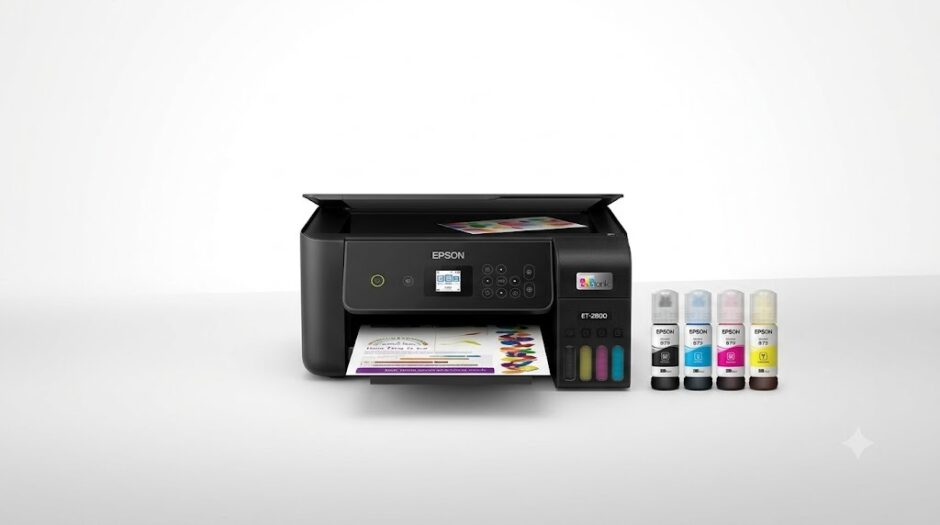
The ET-2800 uses refillable ink tanks instead of cartridges, which brings the cost per sticker down dramatically over time — a real advantage for anyone printing regularly. Color output on glossy sticker paper is vivid without looking oversaturated, and the printer handles label-weight cardstock without jamming, which trips up a lot of cheaper inkjets. Setup is simple enough for a first-time buyer, and the ink tanks are transparent, so it’s easy to see when a refill is coming up.
- Pros: low cost per print, strong color accuracy, handles thicker paper well
- Cons: higher upfront cost than cartridge printers, slower print speed than laser
- Best for: anyone printing stickers regularly who wants to avoid replacing cartridges
Click here to check the latest deals on EcoTank ET-2800
2. Canon MegaTank MAXIFY GX2020 — Best for Waterproof/Outdoor Stickers
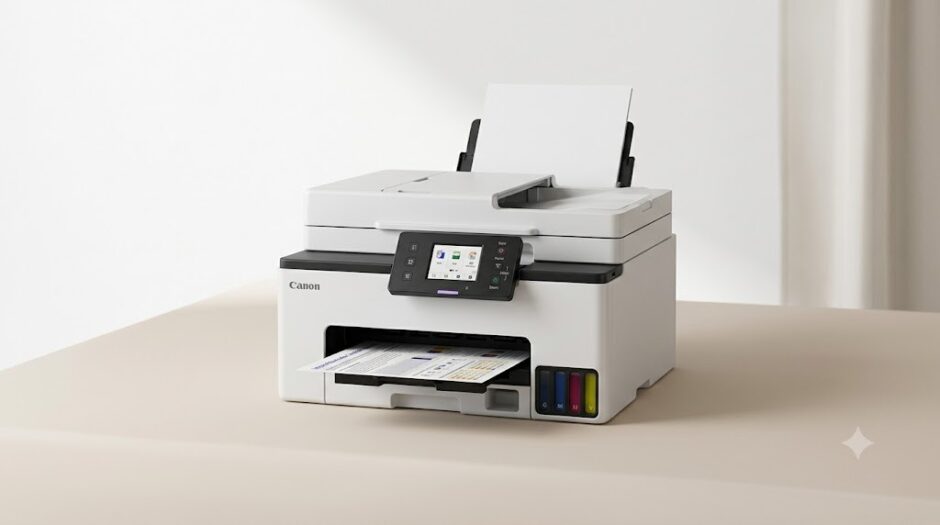
This all-in-one runs on Canon’s pigment ink system rather than the dye-based ink found in most consumer inkjets, and that’s exactly why it holds up well on outdoor and waterproof sticker projects. Pigment ink sits closer to the surface of the paper rather than soaking in, which makes it noticeably more resistant to water and fading than standard dye ink, even before lamination. It also includes a 250-sheet main tray and auto document feeder, so it doubles as a general home-office printer rather than a single-purpose machine.
- Pros: pigment ink resists water and fading, large paper capacity, low cost per print with refillable tanks
- Cons: print resolution is lower than dedicated photo printers, mid-range color depth on complex gradients
- Best for: sellers producing outdoor or weatherproof sticker lines on a moderate budget
Click here to buy Canon MegaTank GX2020
3. Brother HL-L3220CDW — Best for Small Business/Bulk Printing
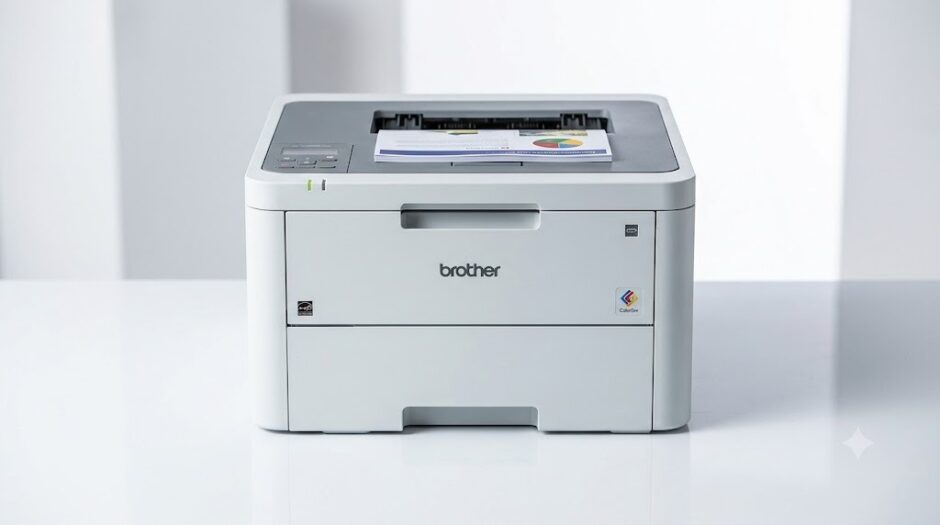
Laser printers make sense once volume climbs, and this Brother model is built for exactly that. Toner cost per page is significantly lower than inkjet ink once you’re printing in the hundreds or thousands, and the fused toner resists smudging and water without needing lamination for basic use. Print speed is also notably faster than any inkjet on this list, which matters when a shop needs to turn around a large order quickly.
- Pros: low cost per page at volume, fast print speed, water-resistant toner
- Cons: weaker on photo-quality gradients compared to inkjet
- Best for: small businesses printing labels or flat-color designs in bulk
4. Xerox C235dni — Best Commercial Laser Option
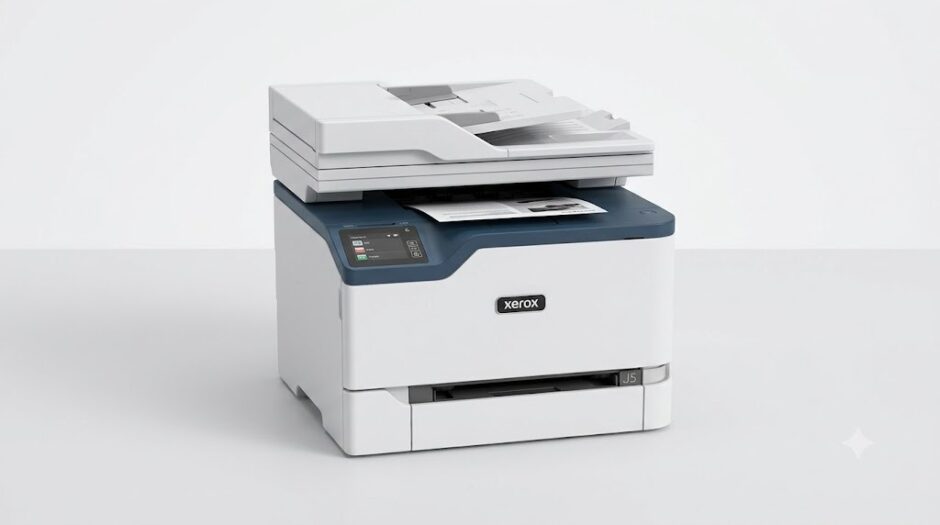
This is a step up from the Brother in both speed and paper handling, built for small offices or shops that print heavier daily volumes. It includes a 250-sheet tray, a 50-sheet automatic document feeder, and automatic two-sided printing, and it accepts noticeably heavier paper stock than most desktop inkjets. It’s bulkier and pricier than a home printer, but for a shop already running color print jobs daily, the toner cost per page and reliability make up the difference over time.
- Pros: fast print speed, handles heavier paper stock, low per-page toner cost at volume
- Cons: higher upfront cost than home inkjets, large footprint
- Best for: small businesses or print shops with steady daily sticker or label orders
5. Cricut Joy Xtra — Best Print-and-Cut
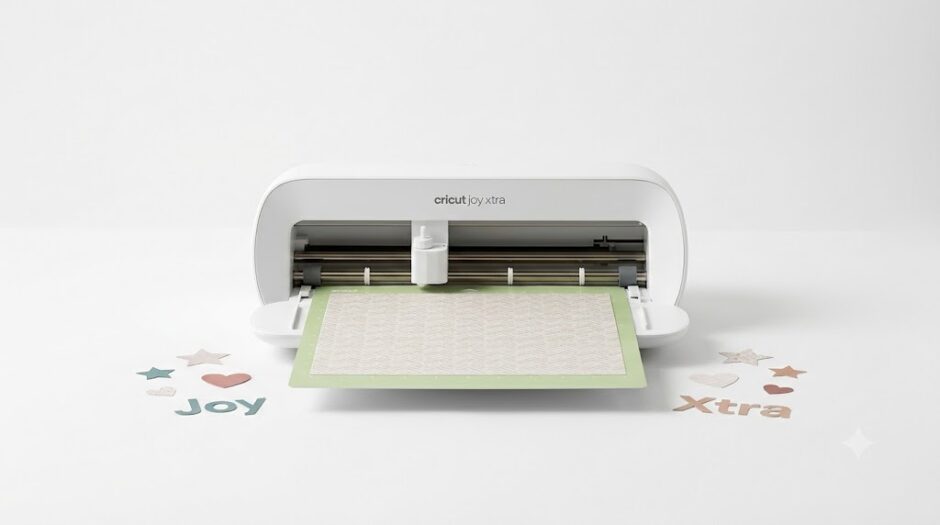
For anyone selling individually shaped stickers rather than full sheets, this machine removes the manual cutting step entirely. It reads registration marks on a printed sheet and cuts precisely around each design, which is a major time-saver at any real volume. Print quality depends on which printer you pair it with, since the Joy Xtra itself is a cutting machine rather than a printer, but the combination of the two is what most small sticker shops actually run.
- Pros: automates cutting, precise on detailed shapes, works with sticker vinyl and label paper
- Cons: requires a separate printer, added cost on top of that printer
- Best for: sellers producing individually die-cut stickers at scale
What to Look for in a Sticker Printer
Print resolution (DPI)
Higher DPI means finer detail and smoother gradients. For most sticker work, 1200 x 1200 DPI or higher is enough to keep text crisp and color transitions clean. Anything below that starts to show visible dot patterns on close inspection, especially on small text or fine linework.
Ink type (pigment vs dye)
Dye-based ink produces slightly brighter color but fades faster and runs if it gets wet. Pigment ink is more muted out of the printer but holds up far better against sunlight and moisture, which matters a lot if the stickers are going anywhere outside or on something that gets handled a lot.
Compatible sticker paper and vinyl
Not every printer plays well with every sticker paper. Inkjet printers need inkjet-compatible sticker sheets, and laser printers need laser-safe sheets, since laser toner is heat-fused and standard inkjet paper coatings can melt or jam a laser printer’s rollers. Always check the sticker paper’s packaging for which printer type it’s rated for before buying in bulk.
Print-and-cut capability
If a printer can connect to a compatible cutting machine or has built-in cutting support, it removes a manual step that otherwise limits how much volume a single person can realistically produce.
Cost per print
A cheap printer with expensive cartridges can end up costing more over a year than a pricier tank-based or laser printer. It’s worth calculating cost per printed sheet, not just the upfront price, especially for anyone printing regularly.
Best Sticker Paper to Pair With Your Printer
The printer only does half the work — paper choice affects color, durability, and finish just as much. Glossy vinyl sticker paper gives the most vibrant color and a professional look, and it works well with both dye and pigment inkjet printers. Matte sticker paper is better for text-heavy or minimalist designs where glare would be distracting. For anything that needs to survive water exposure, look for waterproof vinyl specifically labeled for outdoor use, and pair it with pigment ink or laser toner rather than dye-based inkjet ink. Laminate sheets add another layer of protection on top of any of these, and they’re worth the extra step for stickers going on water bottles, laptops, or car exteriors.
How to Print Stickers at Home (Quick Steps)
1. Design your artwork
Use a program that supports high-resolution export, at least 300 DPI, sized to match your paper.
2. Choose the right sticker paper
Match it to your printer type — inkjet-rated for inkjet printers, laser-rated for laser printers.
3. Adjust print settings
Match the setting to the paper type (glossy, matte, or vinyl) in your printer’s driver menu, since this changes how much ink or toner is applied.
4. Print a test sheet
Print on plain paper first to check alignment and color before using your actual sticker stock.
5. Print the final sheet
Let dye-based ink dry fully before handling.
6. Laminate or seal
Do this if the stickers need water or scratch resistance beyond what the paper itself offers.
7. Cut
Cut by hand, with a craft knife, or with a print-and-cut machine, depending on your setup.
FAQs About Sticker Printers
Q. What is the best printer for stickers?
For most home users and small sellers, a pigment-ink inkjet printer like the Epson EcoTank ET-2800 is the best printer for stickers, balancing color quality, cost per sheet, and ease of setup. Businesses printing in higher volume typically get more value from a color laser printer like the Brother HL-L3220CDW, since toner resists water and fading better than standard inkjet ink.
Q. Can a regular printer print stickers?
Yes, as long as it can handle the weight of sticker paper without jamming. Most inkjet and laser printers can print on sticker sheets, but results vary a lot in color accuracy and durability depending on the ink or toner type.
Q. Do you need a special printer for vinyl stickers?
Not necessarily. A standard inkjet or laser printer can print on vinyl sticker sheets designed for that printer type. What matters more is matching the paper to the printer — laser-rated vinyl for laser printers, inkjet-rated for inkjet printers — rather than buying a dedicated machine.
Q. Is inkjet or laser better for stickers?
Inkjet generally produces better color depth and smoother gradients, making it the better choice for photo-style or colorful designs. Laser is better for flat-color, text-heavy designs that need water and fade resistance without lamination, and it’s typically cheaper per page at higher volumes.
Q. How much does it cost to print your own stickers?
Cost depends heavily on printer type and paper. Inkjet cartridge printers can run anywhere from $0.15 to $0.50 per sheet depending on ink usage, while tank-based inkjet and laser printers can bring that down closer to $0.05 to $0.15 per sheet at volume. Paper cost adds on top of that, typically $0.20 to $0.50 per sheet for quality vinyl stock.
Q. Can you make waterproof stickers with a home printer?
Yes, using pigment-based inkjet ink or laser toner on waterproof vinyl paper, then optionally sealing with a laminate layer for extra protection. Dye-based ink on standard paper will smear or run if it gets wet, so it’s not a good match for anything meant to handle moisture.
Which is the best Printer for Stickers
For most people making stickers at home or running a small shop, the Epson EcoTank ET-2800 offers the best mix of color quality, running cost, and ease of use, making it the best printer for stickers for regular, everyday use. Anyone printing outdoor or weatherproof designs should look at the Canon MegaTank MAXIFY GX2020 for its pigment ink advantage. Businesses printing in real volume should move to a laser printer like the Brother HL-L3220CDW, or the Xerox C235dni for heavier daily loads, and sellers doing individually shaped stickers will save the most time by pairing any of these with a print-and-cut machine like the Cricut Joy Xtra. Match the printer to how often you’re printing and what the stickers need to survive, and the right pick becomes a lot clearer.
Related posts:




Stay updated, free articles. Join our Telegram channel

Full access? Get Clinical Tree


