
Written by Jack Martin, Research Writer | Medically reviewed by Stephen Wise, PharmD.
Search for the best peptides for weight loss and you will find a confusing mix: prescription medications with years of trial data, experimental compounds still in clinical trials, and “research-grade” vials sold online with no proof they are safe or effective. They are all called peptides, but they are not remotely equal.
This guide separates them clearly. You will learn what peptides are, which ones are FDA-approved for weight management, which promising compounds are still being tested, which popular “fat-loss peptides” do not actually cause weight loss, and how to choose a safe, evidence-based path.
Quick Answer: What Are the Best Peptides for Weight Loss?
The best peptides for weight loss are the GLP-1-based medications, because they are the only peptides with large, rigorous trials behind them:
- Tirzepatide (Zepbound): the largest average weight loss among approved options, around 21% of body weight at the highest dose over 72 weeks.
- Semaglutide (Wegovy): about 15% over 68 weeks at the standard 2.4 mg dose, with the deepest evidence base. A higher 7.2 mg dose reached about 19% at 72 weeks.
- Retatrutide: up to about 24% at 48 weeks in a phase 2 trial, but still investigational and not approved anywhere.
- Liraglutide (Saxenda): about 8% over 56 weeks. Effective, but largely overtaken by weekly options.
Peptides such as tesamorelin, sermorelin, and MOTS-c are often marketed for fat loss, but they do not work like weight-loss drugs. We explain the difference below.
What Are Peptides and How Do They Work for Weight Loss?
Peptides are short chains of amino acids, the building blocks of proteins. In your body, many act as chemical messengers that tell cells what to do. Insulin is a peptide. So is GLP-1 (glucagon-like peptide-1), a gut hormone released after you eat. Not all peptides act on appetite, though: others, such as the so-called muscle growth peptides, signal the pituitary gland to release growth hormone and are studied for lean mass and recovery rather than for weight loss itself.
Peptides for weight loss work by changing signals that control:
- Appetite and fullness. GLP-1 receptors in the brain and gut tell the hypothalamus you are satisfied, so hunger drops and meals feel complete sooner.
- Digestion speed. Gastric emptying slows, so you stay full longer and blood sugar rises more gradually after meals.
- Blood sugar and insulin. These medications prompt insulin release only when glucose is elevated, which helps smooth out spikes.
- Energy use and fat handling. Some newer peptides, such as those that also activate the glucagon receptor, may raise energy expenditure.
Natural GLP-1 is broken down within minutes. Medication versions are engineered to last far longer, which is why one weekly injection can steadily lower appetite. Most peptide drugs are injected because the digestive system breaks them down; the oral semaglutide tablet uses an absorption enhancer to get around this.
Best Peptides for Weight Loss Compared
| Peptide | Type | Average weight loss in trials | Status |
| Tirzepatide (Zepbound) | GLP-1 + GIP dual agonist | ~21% at 72 weeks | FDA-approved |
| Semaglutide (Wegovy) | GLP-1 agonist | ~15% at 68 weeks (2.4 mg); ~19% at 72 weeks (7.2 mg) | FDA-approved |
| Retatrutide | GLP-1 + GIP + glucagon triple agonist | Up to ~24% at 48 weeks (phase 2) | Investigational |
| Liraglutide (Saxenda) | GLP-1 agonist | ~8% at 56 weeks | FDA-approved |
| Survodutide | GLP-1 + glucagon dual agonist | ~19% at 46 weeks (early trials) | Investigational |
Cross-trial comparisons are imperfect. Trials differ in participants, duration, and design, so treat these figures as general benchmarks rather than head-to-head results.
Peptides vs. Weight Loss Supplements
| Approved peptide medications | Typical weight loss supplements | |
| How they work | Bind specific receptors that control appetite and metabolism | General “metabolic support” ingredients |
| Evidence | Randomized trials with thousands of participants over 1+ years | Variable, often weak or absent |
| Oversight | FDA-reviewed for safety and effectiveness | Not reviewed for effectiveness before sale |
| Access | Prescription from a licensed provider | Over the counter |
FDA-Approved Peptides for Weight Loss
Four peptide-based medications are FDA-approved for chronic weight management: tirzepatide, semaglutide (injection and pill), and liraglutide. All require a prescription and are meant to be used alongside a reduced-calorie diet and increased physical activity.
Tirzepatide: The Strongest Approved Option
Tirzepatide is a once-weekly injection that activates two receptors, GLP-1 and GIP, in a single molecule. GIP is a second gut hormone involved in insulin secretion and fat metabolism, and combining the two appears to produce additive effects.
In the SURMOUNT-1 trial, adults with obesity taking the highest dose lost an average of around 21% of their body weight over 72 weeks. That is the largest average reduction of any currently approved weight-loss peptide.
Beyond the scale, tirzepatide was the first medication approved to treat moderate-to-severe obstructive sleep apnea in adults with obesity. It is sold as Zepbound for weight management and as Mounjaro for type 2 diabetes, and is started at a low dose and increased gradually to limit side effects.
Semaglutide (Wegovy): The Deepest Evidence Base
Semaglutide is a once-weekly GLP-1 receptor agonist. In the STEP-1 trial of 1,961 adults with overweight or obesity, people taking 2.4 mg weekly lost an average of 14.9% of body weight over 68 weeks, compared with 2.4% on placebo. About half (50.5%) lost 15% or more, versus under 5% on placebo.
Participants also saw improvements in blood pressure, cholesterol, physical function, and inflammation markers. Semaglutide has proven cardiovascular benefits for certain people and is also used to treat type 2 diabetes (as Ozempic and Rybelsus).
Higher-dose Wegovy. A 7.2 mg dose of Wegovy, three times the standard dose, has been approved. In the STEP UP trial, people on this dose lost about 19% of their body weight at 72 weeks on average, narrowing the gap with tirzepatide.
The Wegovy pill. For adults who dislike injections, semaglutide is available as a once-daily pill taken first thing in the morning on an empty stomach. In trials, people lost roughly 14% of their body weight at 64 weeks. It is a real option, though the timing rules matter for absorption.
Liraglutide (Saxenda): The Original
Liraglutide was the first GLP-1 agonist approved for chronic weight management in adults and adolescents 12 and older. It is injected daily. In a 56-week trial, the highest dose produced an average loss of about 8% of starting body weight.
That result is meaningful, but weekly semaglutide and tirzepatide have largely replaced it. Liraglutide still matters as proof of concept: it showed that a GLP-1 drug could produce clinically significant weight loss in people without diabetes, paving the way for stronger options.
A Note on Non-Peptide Options
Not every new weight-loss medication is a peptide. The FDA recently approved Foundayo (orforglipron), a small-molecule pill that acts on the GLP-1 receptor but is not a peptide. This is a useful reminder that “GLP-1 medication” and “peptide” overlap but are not identical, and that more oral options are arriving.
Promising Peptides Still in Clinical Trials
Several peptides show striking early results but are not approved. Treat their numbers as encouraging signals, not guarantees.
Retatrutide: The Triple Agonist
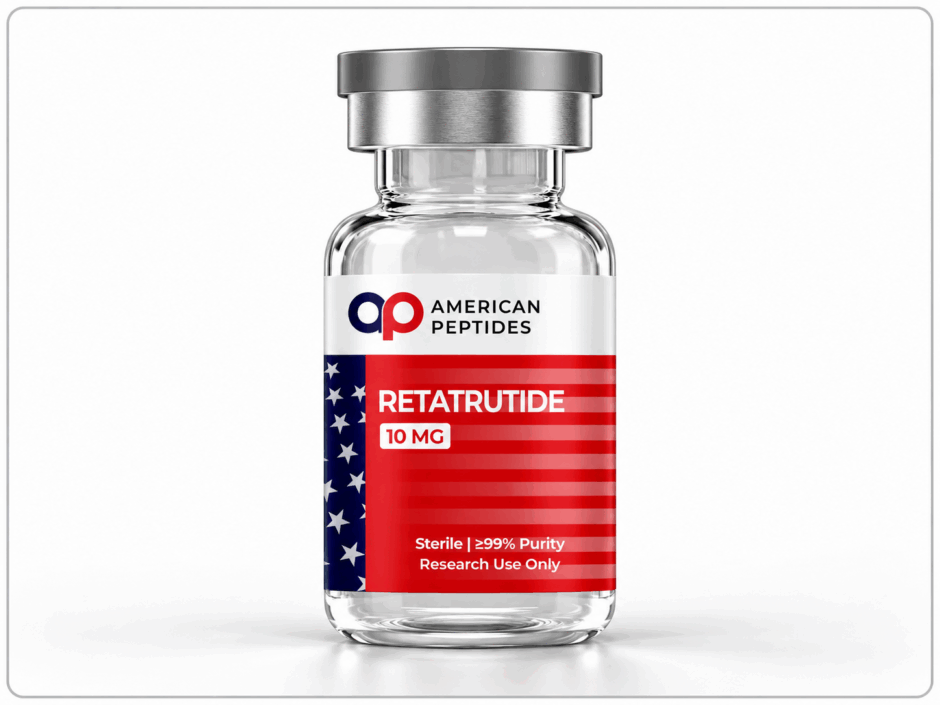
Retatrutide activates GLP-1, GIP, and glucagon receptors. Glucagon adds an energy-expenditure angle: it can increase calories burned and promote fat breakdown, while the GLP-1 and GIP effects offset glucagon’s tendency to raise blood sugar.
In a phase 2 trial published in the New England Journal of Medicine, participants on the top dose lost up to about 24% of body weight at 48 weeks. Phase 3 trials, including a head-to-head comparison with tirzepatide, are underway.
The key point for readers: retatrutide is not FDA-approved, has no established dose outside a clinical trial, and cannot legally be compounded in the U.S. Vials sold online under its name are unregulated.
Survodutide
Survodutide is a once-weekly dual agonist targeting GLP-1 and glucagon. Early trials showed average weight loss near 19% at 46 weeks, and it is also being studied for MASH, a form of fatty liver disease, where a phase 2 trial showed improved liver inflammation without worsening scarring. Phase 3 weight-loss trials are in progress.
VK2735
VK2735 is a GLP-1/GIP dual agonist being developed as both a weekly injection and a daily pill. In a 13-week phase 2 study, the highest injected dose produced nearly 15% average weight loss, and the oral version about 12%. Phase 3 trials are expected to finish in 2027.
Eloralintide
Eloralintide mimics amylin, a hormone that helps regulate appetite and slows digestion. In a 48-week phase 2 trial, the highest dose led to about 20% average weight loss. Because it works through a different pathway than GLP-1, it is of particular interest as a future option or combination partner. Phase 3 results are likely a few years away.
Peptides Marketed for Weight Loss That Don’t Actually Cause It
This is where most of the confusion, and wasted money, lives. A number of peptides appear on “fat loss” lists even though the evidence points elsewhere.
Tesamorelin
Tesamorelin is a growth hormone-releasing hormone analog. It is FDA-approved (since 2010) to reduce excess abdominal fat in people with HIV-associated lipodystrophy. It acts on visceral fat, the deep abdominal fat linked to metabolic risk, but it is not approved or proven as a general weight-loss drug.
Sermorelin
Sermorelin stimulates the pituitary to release growth hormone. It is sometimes used to support sleep, recovery, and lean body composition, but it does not produce fat loss on its own. Clinics that pair it with a GLP-1 plan are using it as a supporting tool, not a weight-loss engine.
MOTS-c
MOTS-c is a small peptide encoded in mitochondrial DNA. Animal studies suggest it activates AMPK, an energy-sensing enzyme that exercise also switches on, which is why it is called exercise-mimetic. But human evidence for weight loss is lacking, and it is not approved for any use. The research is preclinical.
Other “Wellness” Peptides
Compounds such as BPC-157 and AOD-9604 are sold with fat-loss or recovery claims. AOD-9604 did not show meaningful weight loss in human trials, and BPC-157 lacks the rigorous human data needed to support weight-loss claims. If a product promises dramatic fat loss without a documented clinical trial, treat that as a red flag.
Which Peptide Is Best for Weight Loss? It Depends on Your Goal
There is no single winner for everyone. Here is how the evidence maps to common situations:
- Largest average weight loss from an approved drug: tirzepatide.
- Longest track record and cardiovascular evidence: semaglutide.
- A strong option without needles: the Wegovy pill (or non-peptide Foundayo).
- Obesity with sleep apnea: tirzepatide has an approved indication for this combination.
- Targeted visceral fat in HIV-associated lipodystrophy: tesamorelin.
- Cutting-edge options: retatrutide, survodutide, VK2735, and eloralintide are only available through clinical trials for now.
Your best choice also depends on medical history, other medications, tolerance, cost, and insurance coverage. That is a conversation for a prescriber, not a ranking list.
Semaglutide vs. Tirzepatide vs. Retatrutide
| Semaglutide | Tirzepatide | Retatrutide | |
| GLP-1 receptor | Yes | Yes | Yes |
| GIP receptor | No | Yes | Yes |
| Glucagon receptor | No | No | Yes |
| Average loss in trials | ~15% (2.4 mg), ~19% (7.2 mg) | ~21% | Up to ~24% (phase 2) |
| Dosing | Weekly injection or daily pill | Weekly injection | Weekly injection (trial only) |
| Status | Approved | Approved | Investigational |
In head-to-head evidence, tirzepatide has outperformed standard-dose semaglutide for average weight loss, though it can come with more gastrointestinal side effects at higher doses. Retatrutide’s results are exciting, but phase 3 data will show whether they hold in larger, more varied groups.
How Long Do Weight Loss Peptides Take to Work?
Appetite changes often appear within the first one to two weeks, sometimes after the first few doses. Measurable weight loss builds over months, and the headline trial numbers are reported at 56 to 72 weeks.
- First weeks: meals feel finished sooner, and hunger returns more slowly. Nausea is most common during this window, especially as doses increase.
- Months 2 to 6: steady weight loss as the dose is titrated upward under medical guidance.
- Months 6 to 18: weight loss tends to plateau as the body reaches a new balance.
Individual response varies widely. In every major trial, the medication was paired with a reduced-calorie diet and more physical activity, so nutrition and movement still matter.
Weight Loss vs. Fat Loss: Why Muscle Matters
The scale combines fat, water, and lean mass. Early drops are often water and stored glycogen; fat comes off more gradually. Significant weight loss by any method, including medication, can also reduce lean mass, which may slow metabolism and weaken long-term results.
No approved weight-loss peptide protects muscle on its own. In fact, reduced appetite can make hitting protein goals harder. You can limit lean mass loss by:
- Prioritizing protein at each meal, even when appetite is low.
- Doing resistance training two to three times per week so muscles keep getting a reason to stay.
- Tracking body composition, not just weight, using waist measurements, strength levels, or a body scan.
- Getting enough sleep and recovery.
Ask your care team for protein and activity targets that fit your health status, especially if you have kidney disease or other conditions.
What Happens When You Stop?
Weight regain after stopping is well documented. In the SURMOUNT-4 trial, people who switched from tirzepatide to placebo after 36 weeks regained about 14% of their body weight over the next year, while those who continued lost roughly another 5.5%.
This suggests obesity behaves like a chronic condition for many people. Plan with your prescriber for the long term: how to maintain results, whether to adjust the dose, and how to build habits that persist.
Side Effects and Safety
The most common side effects of GLP-1 and dual agonist medications are gastrointestinal:
- Nausea and vomiting
- Diarrhea or constipation
- Abdominal pain and bloating
- Acid reflux and burping
They are usually mild to moderate, tend to be worst during dose increases, and often ease over time. Slow dose escalation is the main strategy for reducing them.
Less common but important risks include gallbladder problems, pancreatitis, dehydration that can strain the kidneys, and low blood sugar when combined with certain diabetes drugs. Slower stomach emptying can also affect how some oral medications are absorbed.
Semaglutide, liraglutide, and tirzepatide carry a boxed warning about thyroid C-cell tumors seen in rodents. They should not be used by people with a personal or family history of medullary thyroid carcinoma or Multiple Endocrine Neoplasia syndrome type 2, and they are not recommended during pregnancy. Eating too little for extended periods can also lead to protein and micronutrient shortfalls.
Get help promptly if you have severe or persistent abdominal pain, repeated vomiting, signs of dehydration, or an allergic reaction.
The Risks of Grey Market and Research-Grade Peptides
Grey market peptides are sold outside the regular healthcare system, often online or through wellness outlets. Many are labeled “for research use only” or “not for human consumption,” yet marketed with the names semaglutide, tirzepatide, or retatrutide.
The problems are practical and serious:
- No guarantee of what is inside. Strength, purity, and sterility can vary, and products may be mislabeled or contaminated.
- Impurities can trigger immune reactions, including allergic responses.
- No clinical oversight. Dosing mistakes are easy with vials that need reconstitution, and nobody screens for contraindications.
- No safety or efficacy data for the product you are actually injecting.
A certificate of analysis can show what a lab found in one batch, but it does not make a research chemical a medicine. Research material is not manufactured, formulated, or labeled for human use, and it is a different thing from a prescription drug even when the amino acid sequence matches.
What About Compounded Peptides?
Compounded medications are made by licensed pharmacies and are distinct from grey market products. However, regulations limit compounding of commercially available drugs, generally allowing it only when there is a medical need such as an official shortage. Certain peptides are barred from compounding because of safety concerns, and retatrutide cannot be compounded under federal law. The FDA has also received hundreds of adverse event reports linked to compounded GLP-1 products, including cases tied to dosing errors. If you are offered a compounded product, ask about the pharmacy’s licensing and why it is being used instead of an approved version.
What Do Weight Loss Peptides Cost, and How Can You Access Them?
Costs vary by drug, dose, insurance coverage, and pharmacy. Manufacturers and pharmacy discount programs offer cash-price options, and some employer or insurance plans cover obesity medications while others do not. Prices change often, so check current offers directly with the manufacturer, your pharmacy, or a discount tool rather than relying on a figure printed in an article.
You can access FDA-approved peptide medications through your primary care provider, an obesity medicine specialist, or a reputable telehealth service that uses licensed prescribers and state-licensed pharmacies. Be cautious of any provider that skips medical screening or sells “research” vials.
How to Choose a Safe Weight Loss Peptide Plan
Use this checklist:
- Start with a licensed clinician. They will review your health history, current medications, and goals.
- Prefer FDA-approved options. Tirzepatide, semaglutide, and liraglutide are the evidence-backed peptides.
- Ask about realistic expectations. Trial averages are not guarantees; some people lose more and some lose less.
- Plan for nutrition and strength training from day one.
- Clarify cost and coverage before you start, including what happens if prices or supply change.
- Discuss the long term, including maintenance and what to expect if you stop.
- Avoid unregulated sources, and be skeptical of anything promising rapid results without trial data.
Questions to Ask Your Healthcare Provider
- Which FDA-approved weight-loss medications fit my health history?
- What results can I realistically expect, and over what timeframe?
- What side effects should I watch for, and when should I call you?
- How will this interact with my other medications?
- What are lower-cost or insurance-covered options?
- What is the plan for maintaining my weight long term?
Common Mistakes When Researching Peptides for Weight Loss
- Treating every peptide as a weight-loss drug. Tesamorelin, sermorelin, and MOTS-c work through different systems and are not proven for general weight loss.
- Confusing research chemicals with medicines. A matching sequence does not mean matching quality, formulation, or safety.
- Expecting overnight results. Headline numbers come from 48 to 72 weeks of use. Fast early changes are mostly water.
- Ignoring muscles. Chasing the scale without protein and resistance training can cost lean mass.
- Stopping abruptly with no plan. Regain is common, so plan maintenance in advance.
- Skipping medical supervision. Screening, titration, and follow-up are part of what makes these drugs safe.
FAQs About Best Peptides For Losing Weight
What is the strongest peptide for weight loss?
Among approved options, tirzepatide produces the largest average reduction, about 21% over 72 weeks at the highest dose. Retatrutide reported up to about 24% in a phase 2 trial but is not approved and cannot be prescribed.
Are peptides better than weight loss supplements?
Approved peptide medications have randomized trial evidence that most supplements lack. The FDA does not review supplements for effectiveness before they are sold.
How do GLP-1 peptides reduce appetite?
They bind GLP-1 receptors in the brain and gut, mimicking the fullness signal released after eating. They also slow stomach emptying, so you feel full longer and tend to eat less without constant restriction.
What is the difference between semaglutide and tirzepatide?
Semaglutide activates the GLP-1 receptor. Tirzepatide activates both GLP-1 and GIP receptors. On average, tirzepatide has produced larger weight loss in trials, about 21% versus about 15% for standard-dose semaglutide.
Do peptides like sermorelin or tesamorelin cause weight loss?
Not as primary weight-loss drugs. Sermorelin may support sleep, recovery, and lean mass. Tesamorelin is approved for visceral fat reduction in HIV-associated lipodystrophy, not general weight loss.
Is retatrutide available?
Not as an approved treatment. It is in phase 3 trials, has no approval in any country, and the FDA states it cannot be compounded. Products sold online under that name are unregulated research chemicals.
Are research peptides the same as prescription medications?
No. Prescription drugs are made under quality standards, formulated for human use, and dispensed after medical screening. Research peptides are laboratory chemicals not intended for human use.
Can I lose weight with peptides without losing muscle?
You can limit muscle loss, though some is normal with significant weight loss. Adequate protein, resistance training, and tracking body composition help.
Are weight loss peptides safe?
FDA-approved GLP-1 medications have well-studied safety profiles when used under medical supervision. Common side effects are digestive and usually ease with gradual dose increases. They are not suitable for everyone, so screening matters.
Will I regain weight if I stop?
Many people do. In one trial, people who stopped tirzepatide regained about 14% of their body weight over the following year. Ask your provider about a long-term maintenance plan.
Final Thoughts: Choosing the Best Peptide for Weight Loss
The best peptides for weight loss are the ones backed by evidence and delivered through safe, supervised channels. Right now, that means tirzepatide for the largest average results, semaglutide for the deepest research record and flexible formats (including a pill), and liraglutide as the earlier daily option. Retatrutide, survodutide, VK2735, and eloralintide are exciting but still experimental. Tesamorelin, sermorelin, and MOTS-c serve different purposes and should not be mistaken for weight-loss drugs.
Whichever route you consider, pair it with protein, strength training, and a plan for maintaining results, and talk to a licensed healthcare professional before starting, changing, or stopping any medication.
Medical disclaimer: This article is for informational purposes only and does not constitute medical advice. Prescription weight management medications require a licensed prescriber. Talk to a healthcare professional before starting, stopping, or changing any medication.
Related posts:




Stay updated, free articles. Join our Telegram channel

Full access? Get Clinical Tree


