By Lyla Walsh, Regenerative Peptide Researcher · Scientifically reviewed by Dr. Rachel Simmons, PharmD · Updated September 2026 · For educational and research purposes · 18+
Quick answer. TB-500 is a synthetic peptide, a short fragment modeled on the natural protein thymosin β4. Here is the catch most pages skip: nearly all the research people cite for “TB-500” was run on the full thymosin β4 protein, a different molecule. TB-500 is studied for cell migration and tissue repair, is not FDA-approved, and human data on the fragment itself is thin. This guide separates what research shows from what gets claimed. Research use only; not for human use.
Key Takeaways
- TB-500 is a synthetic fragment of thymosin β4, a small piece of a 43-amino-acid protein.
- Most “TB-500” evidence belongs to full thymosin β4, so identity is the whole game.
- It is studied for cell migration and tissue repair, and the data is mostly preclinical.
- TB-500 is not FDA-approved; a July 2026 advisory panel recommended it 8 to 6, a non-binding vote.
- Because of the identity confusion, mass-spec identity testing on the COA is the check that counts, and Cellugenix Peptides is one source that runs it.
What Is TB-500?
TB-500 is a lab-made peptide built to copy the active part of a natural protein. Researchers use it as a stand-in for that protein’s tissue-repair activity, which is where its interest comes from.
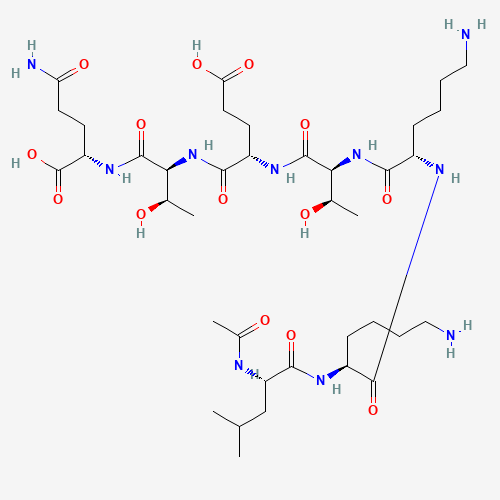
TB-500 Chemical Structure – PubChem
A synthetic fragment of thymosin β4
TB-500 is the short actin-binding piece of thymosin β4, commonly given as the seven-residue sequence Ac-LKKTETQ. The parent protein is larger: Low, Hu, and Goldstein showed in 1981 that thymosin β4 runs 43 amino acids, with a molecular weight of 4982 and an acetyl-blocked start. TB-500 carries only that active fragment.
Naturally occurring thymosin β4 vs the synthetic fragment
Thymosin β4 occurs in nearly every human and animal cell, where it helps organize the protein actin. TB-500 does not occur on its own in the body; it is manufactured to reproduce the fragment thought to drive repair. Same lineage, different molecule.
Why it’s studied
TB-500 draws research attention for one reason: actin. By binding actin, thymosin β4 and its fragment influence how cells move, which is central to how tissue repairs itself. That single mechanism explains most of the studies you will find.
What You’re Really Buying: TB-500 vs Thymosin β4
The following core concept fundamentally changes how the rest of this information should be understood. A vial labeled TB-500 and the studies used to sell it often describe two different molecules, and telling them apart is the first job for any serious buyer.
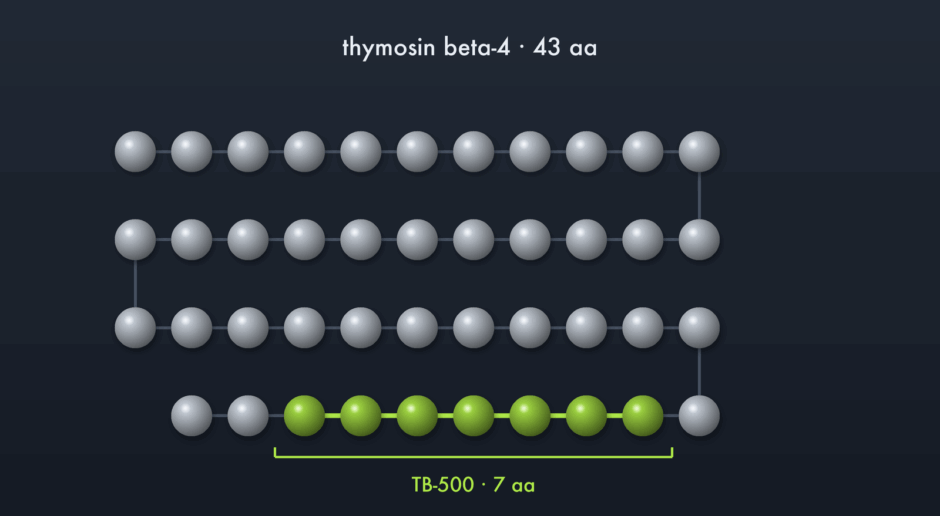
Figure 1. The identity gap: TB-500 is a 7-amino-acid fragment of the 43-amino-acid thymosin beta-4 protein.
The identity issue
The recurring critique in research forums is blunt: much of what is sold as TB-500 is discussed as though it were full thymosin β4. What a vial actually contains, the 7-residue fragment or the 43-amino-acid protein, depends entirely on the manufacturer and can only be settled by testing. The label alone cannot tell you.
Why most “TB-500 research” is actually thymosin β4 research
The 2026 scoping review in Applied Sciences makes the gap plain: effects attributed to TB-500 are often extrapolated from thymosin β4 research, which is not the same molecule. The wound-healing and cell-migration studies people quote were mostly run on the full protein, then applied to the fragment by assumption.
Why this changes research validity
For a research setting, that gap is the whole ballgame. If a study used full thymosin β4 and the vial holds a fragment of uncertain identity, the results may not carry over. This is exactly why the certificate of analysis, and specifically its identity test, becomes the document that decides whether your material means anything.
How TB-500 Works (Research Mechanisms)
TB-500’s proposed mechanisms all trace back to actin and cell movement. The picture below comes from preclinical and lab work, and no step has been confirmed in humans for the fragment.
Actin sequestration and cell migration
Thymosin β4 binds and stores actin, the protein cells use to build the internal scaffolding that lets them move. Releasing that stored actin on demand helps cells migrate toward an injury, which is the core mechanism researchers study for repair. Think of it as the cell keeping a reserve of building blocks and drawing on them the moment it needs to move, a housekeeping role that turns out to be central to how wounds close.
Angiogenesis and tissue remodeling
Beyond cell movement, thymosin β4 has been studied for a role in angiogenesis, the growth of new blood vessels, and in the remodeling that follows tissue damage. These are the pathways behind the wound-healing interest, again mostly documented for the full protein.
Why no mechanism is confirmed in humans
Every mechanism here comes from cell cultures and animal models. No controlled human study has confirmed how the TB-500 fragment behaves in people, so the mechanism is a research hypothesis with preclinical support, and not an established human effect.
What Research Actually Shows vs What’s Claimed
The distance between the science and the sales copy is wide. The thymosin β4 literature is genuinely interesting, the TB-500-specific human record is small, and “benefits” lists tend to borrow from the former to describe the latter.
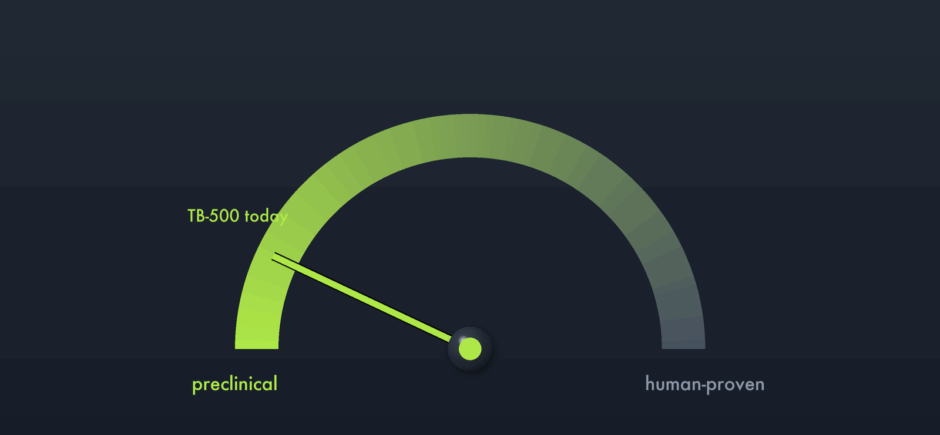
Figure 2. Where the evidence stands: TB-500 remains near the preclinical end of the scale.
What the thymosin β4 literature supports
Research on full thymosin β4 supports roles in wound healing, cell migration, and tissue repair across preclinical models, with some early clinical work in specific settings. That body of work is real and is what gives the whole category its promise. Early clinical trials of thymosin β4 in areas such as dry-eye and skin wounds have run, which is more than the fragment can claim, and even those fall short of the large controlled trials that would settle the question.
What TB-500-specific research shows
Direct evidence on the TB-500 fragment itself is limited. The scoping review notes that most of the literature runs on the parent protein, leaving the fragment thinly studied on its own. So the confident claims outrun the fragment-specific data by a wide margin.
Why “TB-500 benefits” lists overreach
A typical benefits list reads like established fact. In practice it stacks thymosin β4 findings, animal data, and user reports into one confident column. Reading those claims next to the actual evidence is the fastest way to see the overreach for what it is.
TB-500 and BPC-157: Studied Together (The Wolverine Stack)
TB-500 rarely appears in research on its own; it usually travels with BPC-157 in what the community calls the Wolverine stack. The pairing has a logic, and it also has a thin evidence base.
Why they’re paired
The two are combined for coverage. BPC-157 is studied for localized repair and blood-vessel support, while TB-500 is studied for systemic cell migration. Together they are meant to address repair from two directions, which is the rationale behind the stack.
TB-500 alongside BPC-157, not alone
In practice, the human reports that exist place TB-500 alongside BPC-157, seldom by itself. That makes it hard to attribute any observed change to TB-500 specifically, since the fragment is almost never studied as a solo variable in people.
The 4-patient combination data
The human record here is small and worth stating precisely. A retrospective review of 12 patients given BPC-157 for knee pain included four who also received TB-500 (thymosin β4), and the combination itself has no controlled human trials. That is the full extent of the current human evidence.
| TB-500 | BPC-157 | |
| Origin | Thymosin β4 fragment | Gastric peptide (BPC) |
| Studied for | Systemic cell migration | Localized tissue repair |
| Main mechanism | Actin regulation | Angiogenesis, gut/soft-tissue |
| Human data | Minimal, mostly combined | A few small pilot reports |
TB-500 vs BPC-157: Which Is Which?
These two get bundled so often that people forget they are different tools with different research stories. The useful question is what each one is studied for, not which is “better.”
Different mechanisms
BPC-157 centers on angiogenesis and local tissue and gut repair. TB-500 centers on actin and the cell migration that supports systemic repair. They approach healing through separate pathways, which is precisely why researchers pair them.
Different evidence bases
BPC-157 has a deeper animal literature and a handful of small human pilots. TB-500’s record leans even harder on its parent protein. Neither has the controlled human trials that would settle efficacy, so both stay research compounds short of proven options.
TB-500 Side Effects & Safety Research
Formal human safety data for the TB-500 fragment is absent, so the safety picture rests on anecdote and, more practically, on what is actually in the vial.
Reported effects
User reports mention mild, local effects such as injection-site irritation, and occasionally fatigue or nausea. These come from personal accounts rather than monitored trials, so they describe experience without confirming a safety profile.
Unknown long-term safety
No long-term human study has followed the fragment, so effects over months or years are genuinely unknown. The FDA has pointed to a lack of human exposure data for TB-500 specifically, which is part of why it stays outside approved use.
Product-quality risk
The most immediate risk is the product itself. Given the identity confusion, an unverified vial might hold the wrong molecule, an impure fragment, or an inaccurate amount. A batch-specific COA with identity testing is the practical safeguard, which the sourcing section covers.
The balanced view
Set against the hype, the fair summary is modest. Human evidence is limited to small pilot reports and anecdotes, reported effects are mild and unverified, and long-term safety is unstudied. The compound is interesting in the lab; the human safety case is early.
Is TB-500 FDA-Approved? (2026 Regulatory Status)
No, TB-500 is not an FDA-approved drug, and the 2026 regulatory picture is more nuanced than the headlines suggest.
Not FDA-approved
TB-500 is classified as a research chemical, with no FDA approval for any medical use. That status has held throughout the 2026 review activity.
The July 2026 PCAC 503A vote
On July 23 and 24, 2026, the FDA’s Pharmacy Compounding Advisory Committee reviewed TB-500 and recommended it for 503A compounding by a vote of 8 to 6, with one abstention. The vote is advisory and non-binding, and the FDA’s own briefing documents had recommended against adding it. A formal rulemaking process still stands between that vote and any approval.
What “Category 1 vs Category 2” speculation actually means
Online debate treats the category labels like a verdict. In plain terms, they describe where a substance stands in the FDA’s compounding review, and movement between them does not equal approval. Reading a category change as a green light overstates what happened. A recommendation to review, a removal from one list, and a formal approval are three separate events, and only the last one lets a product reach patients through legal channels.
Research-use designation
Sold as a research chemical, TB-500 stays outside the compounding pathway entirely. It is labeled for laboratory research use only and is not intended for human or veterinary use.
WADA (prohibited in sport)
For tested athletes, TB-500 is banned. The WADA Prohibited List covers thymosin β4 and its derivatives, including TB-500, under category S2. This is factual context, not legal advice.
TB-500 Dosage: What Research Reports
There is no established human dose for TB-500, and this guide gives none. The only dosing figures in the literature come from animal models.
Animal research dosages
Published TB-500 and thymosin β4 dosing appears in animal studies, expressed per kilogram of body weight for a specific model. Those numbers answer a research question in that model and carry no therapeutic meaning for people.
Why no standardized human dosing exists
No controlled human trials have set a safe or effective dose for the fragment. Without that work, any human protocol, daily or otherwise, is unsupported guesswork, so dosing advice belongs nowhere on this page.
Does TB-500 Affect Hair or Testosterone?
Two questions come up often, and both deserve a straight, claim-free answer.
Hair
Interest in TB-500 and hair traces to thymosin β4’s role in cell migration and follicle biology in animal work. For the TB-500 fragment in humans, the evidence is limited and anecdotal, and no established effect on hair growth has been shown.
Testosterone
Testosterone is not a pathway TB-500 is known to act on. Its studied mechanism runs through actin and cell migration, not hormone production, so claims tying it to testosterone lack a mechanistic or clinical basis.
Oral vs Injectable TB-500
Research-grade TB-500 comes as a lyophilized powder, and the format shapes what a study can measure.
Injectable (research standard)
The reconstituted injectable vial is the research standard, since it delivers a known quantity and matches how the underlying peptide work was done. Most of the actin and repair literature used injectable administration.
Oral
Oral versions raise a sharp absorption question. Peptides face digestive breakdown, and that problem grows with molecule size, so an oral peptide has a harder path to the bloodstream than an injectable one. For research, the injectable format keeps the variables cleaner.
How to Read a TB-500 COA (Purity + Identity)
For most peptides, purity leads the COA. For TB-500, identity leads, because the whole market runs on a molecule that is easy to confuse with its parent protein. This is where sourcing earns its keep.
Why identity testing comes first for TB-500
Given the thymosin β4 confusion, the certificate’s identity test is the line that answers the real question: is this the fragment you paid for? A high purity figure means little if the identity is wrong, so mass-spec identity confirmation carries more weight here than anywhere else. This is the practical half of the Same-Molecule Test: trust a claim only when the COA confirms the molecule.
HPLC purity, LC-MS identity, batch match
A sound TB-500 certificate shows three things: an HPLC purity figure, an LC-MS identity confirmation of the correct fragment, and a lot number that matches the vial.
Storage
Store the lyophilized powder at minus 20°C for the long term, and keep a reconstituted vial at 2 to 8°C for short-term use, away from light and repeated temperature swings.
One supplier that answers the identity question directly is Cellugenix Peptides. Its TB-500 is tested by the independent lab Testides to 99% HPLC purity with mass-spec identity confirmation, plus endotoxin and sterility results, and every certificate is published in a browsable public COA library. The material is US-made, shipping is cold-chain and tracked, the labeling is research-use-only throughout, and the TB-500 vial is priced at $38.54. For a buyer worried about the fragment-versus-protein question, that mass-spec confirmation is the reassurance to look for.
TB-500 Price & What Drives It
Research-grade TB-500 generally runs from about $30 to $70 a vial, with the number tracking testing depth more than anything else.
Typical research-grade range
Most tested TB-500 vials land in that $30 to $70 band. Where a listing falls depends on the supplier, the purity standard, and whether independent identity testing backs the label.
Why testing and identity verification is worth paying for
For TB-500 more than most peptides, the testing is the product. A vial that skips mass-spec identity might contain the wrong molecule entirely, so a slightly higher price with a full COA buys the one thing that makes the material usable. Cheap and unverified is the expensive option here.
What Reddit & Researchers Say
Community discussion on TB-500 has shifted, and reading it well means catching both the long-running critique and the newer regulatory mood.
The “most TB500 is TB4” critique
The single most repeated point in research forums is that a lot of “TB-500” is really full thymosin β4, sold under the more familiar name. It is the community version of the identity issue this guide opened with, and it is why experienced buyers lead with identity testing.
The skeptical and regulatory turn in 2026
Through 2026, the conversation grew more cautious, tracking the FDA review and a wave of skeptical explainers. The tone moved from enthusiasm toward questions about evidence and legality, which is the healthier place for a research audience to stand.
Frequently Asked Questions
What is TB-500, and what is it used for?
TB-500 is a synthetic fragment of thymosin β4, studied in research for cell migration and tissue repair. It is a laboratory research material, not an approved treatment, and most of the evidence people cite actually comes from the full thymosin β4 protein.
Is TB-500 the same as thymosin β4?
No. Thymosin β4 is a 43-amino-acid natural protein; TB-500 is a short synthetic fragment of it, often the sequence Ac-LKKTETQ. They share a lineage, but a vial may contain either one, which is why identity testing on the COA is the deciding check.
What is better, TB-500 or BPC-157?
Neither is “better,” because they are studied for different things. BPC-157 centers on localized repair and blood-vessel support; TB-500 centers on actin and systemic cell migration. Both lack controlled human trials, so each stays a research compound rather than a proven option.
Is TB-500 FDA-approved?
No, TB-500 has no FDA approval. In July 2026 an FDA advisory committee recommended it for 503A compounding by an 8 to 6 vote with one abstention, but that vote is non-binding and a formal rulemaking process is still pending.
Does TB-500 have side effects?
Human safety data is limited. User reports mention mild, local effects such as injection-site irritation, and sometimes fatigue or nausea. Long-term safety is unstudied, and the largest practical risk is product quality, which a COA with identity testing addresses.
Does TB-500 increase hair growth?
The evidence for the TB-500 fragment and hair is limited and anecdotal. Interest comes from thymosin β4’s role in cell migration in animal work, but no established effect on human hair growth has been shown, so it should be read as unproven.
Does TB-500 affect testosterone?
Testosterone is not a mechanism TB-500 is known to act on. Its studied activity runs through actin and cell migration, not hormone production, so claims linking TB-500 to testosterone have no mechanistic or clinical support.
Can you take TB-500 with BPC-157?
The two are commonly studied together as the Wolverine stack, pairing systemic and localized repair research. Human data on the combination is limited to small reports, such as a 12-patient BPC-157 review in which four also received TB-500, and no controlled trial has tested the pair.
Can I take TB-500 every day?
This guide gives no dosing schedule. No controlled human trials have set a safe or effective dose or frequency for TB-500, so any daily protocol is unsupported. It is a research material handled under a study design.
Is TB-500 safe for human use?
No, TB-500 is supplied for laboratory research only. It is not for human or veterinary use, holds no FDA approval, and every listing should carry research-use-only labeling. The human safety case has not been established.
The Bottom Line
TB-500 is a case where the name outruns the molecule. The promise comes from thymosin β4, a genuinely interesting 43-amino-acid protein with real preclinical support for repair; the fragment sold as TB-500 is thinly studied on its own, and its human record is a handful of small combined reports. The 2026 FDA vote moved the regulatory conversation without approving anything.
For a research buyer, the decision comes down to one thing: proof of identity. Read the COA for a mass-spec confirmation before you read the marketing, keep the material in the research setting it belongs to, and treat every benefit claim as a question until the evidence catches up.
Sources
- Low, Hu & Goldstein 1981 thymosin β4 sequence (PNAS)
- Thymosin β4 / TB-500 scoping review 2026 (Applied Sciences)
- Injectable Peptide Therapy Primer (PubMed)
- FDA Section 503A
- WADA Prohibited List
Disclaimer
This guide is for educational and research purposes and reflects information current as of September 2026. TB-500 is supplied strictly for laboratory research use only. It is not FDA-approved, is not a licensed medicine, and is not for human or veterinary use. TB-500 and thymosin β4 fall under the WADA Prohibited List for tested sport. For qualified researchers aged 18 and over. Nothing here is medical or legal advice.
Related posts:


Stay updated, free articles. Join our Telegram channel

Full access? Get Clinical Tree


