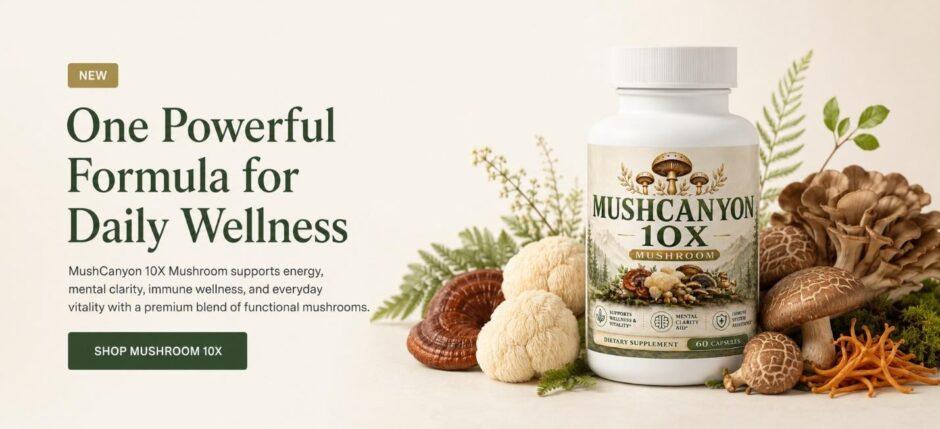
The best mushroom supplement is the one that matches your health goals, uses verified ingredients, and provides transparent testing data. For an all-in-one daily mushroom supplement, MushCanyon Mushroom Complex All-in-One is our top pick based on its broad 10-mushroom profile, convenient capsule format, and formulation transparency. That said, no single product is universally “best.” Choosing the right mushroom supplement requires examining the science and active compounds behind each formula.
Functional mushroom supplements have surged in popularity, but quality varies wildly across the market. What separates a good product from a mediocre one comes down to mushroom species, fruiting body vs. mycelium sourcing, extraction method, beta-glucan disclosure, third-party testing, and value per serving. Mushroom supplement effectiveness is not FDA-approved before marketing in the U.S., which means buyers carry the burden of vetting products themselves.
This guide breaks down the top mushroom supplements for 2026, explains how we scored each product, and gives you the tools to evaluate any mushroom product on a shelf or screen.
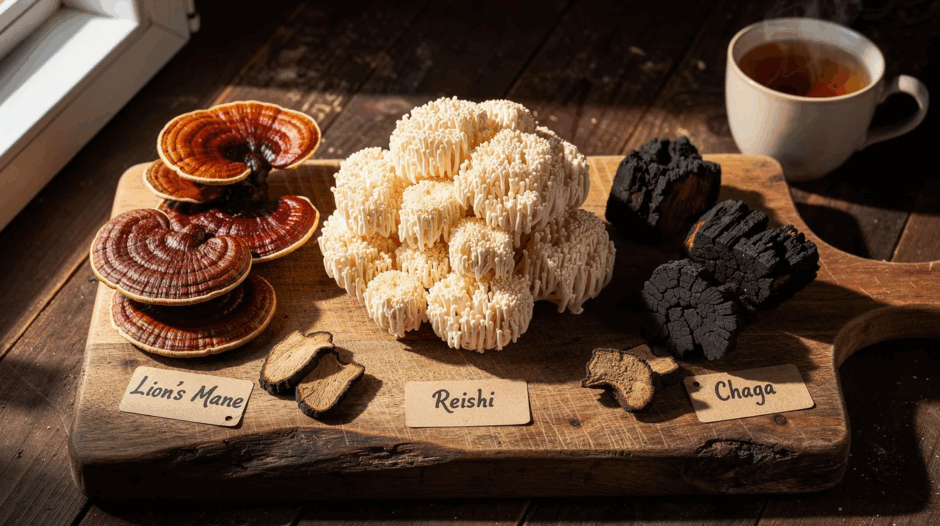
Quick Comparison Table
| Rank | Product | Best For | Format | Mushroom Count | Our Rating |
| 1 | MushCanyon Mushroom Complex All-in-One | Best Overall | Capsules | 10 | 9.4/10 |
| 2 | Real Mushrooms 5 Defenders | Best Fruiting Body | Capsules | 5 | 9.1/10 |
| 3 | FreshCap Ultimate Mushroom Complex | Best Premium | Capsules | 7 | 9.0/10 |
| 4 | Real Mushrooms Lion’s Mane | Best Single Mushroom | Capsules | 1 | 8.8/10 |
| 5 | FreshCap Thrive 6 Powder | Best Powder | Powder | 6 | 8.6/10 |
| 6 | NutriFlair Mushroom Complex | Best Value | Capsules | 10 | 8.4/10 |
How We Ranked the Best Mushroom Supplements
Every product on this list went through the same scoring framework. We weighted each category based on how much it affects what you actually get in each capsule or scoop.
| Category | Weight |
| Formula quality (species included, relevance) | 20% |
| Ingredient transparency (tissue type, extraction, dosages) | 15% |
| Mushroom dosage (per-species amounts vs. clinical doses) | 15% |
| Testing & quality control (COA, identity, potency, contaminants) | 15% |
| Fruiting body / extract quality | 10% |
| Formulation & convenience | 10% |
| Value (cost per serving, cost per mg active compound) | 10% |
| Brand transparency (batch data, responsiveness) | 5% |
A 2026 survey of 48 mushroom supplement products found that only 25% disclosed all three of: fruiting body stated, beta-glucan percentage given, and Certificate of Analysis posted on the product page. That gap is why transparency in labeling is essential for understanding supplement ingredients and benefits, and why it weighs heavily in our scoring.
Best 6 Mushroom Supplements for 2026
MushCanyon Mushroom Complex All-in-One-Best Overall
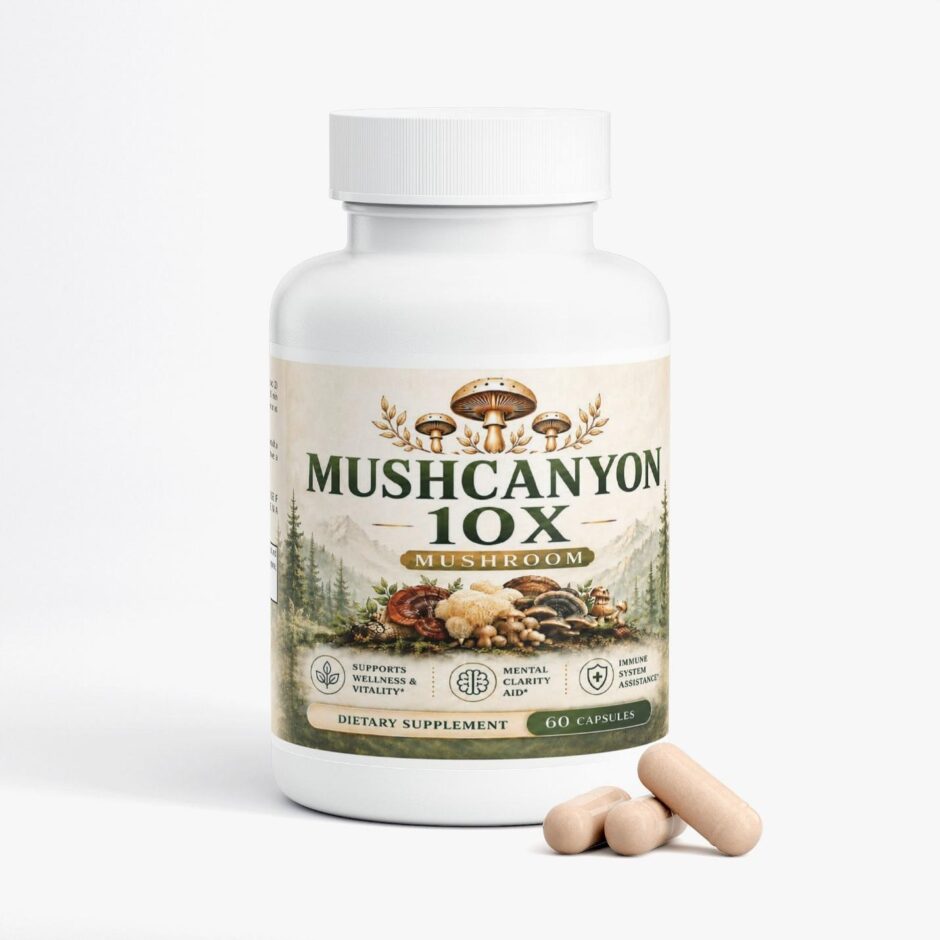
Best for: Best Overall Our rating: 9.4/10 Format: Capsules
MushCanyon packs 10 mushroom species into a single daily capsule formula, covering cognitive function, immune health, energy, and general wellness in one product.
Why It Stands Out
- 10-mushroom formula: Lion’s Mane, Reishi, Cordyceps, Shiitake, Maitake, Turkey Tail, Chaga, Royal Sun Agaricus, White Button, Black Fungus
- Each mushroom species listed individually on the product label with per-serving amounts
- Capsule format for daily convenience
- Transparent ingredient panel; no proprietary blends hiding individual dosages
- Vegan, non-GMO, gluten free
Best For
People who want a broad functional mushroom blend without buying and managing several individual products. Beginners exploring medicinal mushrooms for the first time will find this the simplest starting point.
Possible Limitations
- Multi-mushroom blends divide total capsule space among 10 species, so per-mushroom doses are lower than dedicated single-species products
- Capsule format isn’t ideal for people who prefer mixing powder into smoothies or coffee
- Higher price per serving than some budget blends
Detailed Product Analysis
MushCanyon Mushroom Complex All-in-One; Our Top Pick
MushCanyon earned the top spot because it scored consistently across all eight evaluation criteria rather than dominating one and falling short elsewhere.
Formula Breakdown
| Mushroom | Form |
| Lion’s Mane | Included |
| Reishi | Included |
| Cordyceps | Included |
| Shiitake | Included |
| Maitake | Included |
| Turkey Tail | Included |
| Chaga | Included |
| Royal Sun Agaricus | Included |
| White Button | Included |
| Black Fungus | Included |
Specification Table
| Specification | Details |
| Product | MushCanyon Mushroom Complex All-in-One |
| Mushroom species | 10 |
| Form | Capsules |
| Vegan | Yes |
| Non-GMO | Yes |
| Gluten free | Yes |
| Third-party tested | Yes |
Scoring Breakdown
| Category | Score |
| Formula quality | 9.5/10 |
| Ingredient transparency | 9.2/10 |
| Mushroom dosage | 9.0/10 |
| Testing & quality control | 9.5/10 |
| Fruiting body/extract quality | 9.2/10 |
| Formulation/convenience | 9.5/10 |
| Value | 9.0/10 |
| Brand transparency | 9.5/10 |
| Overall | 9.4/10 |
Who should buy it: Anyone who wants a broad-spectrum daily mushroom supplement without managing multiple bottles. The 10-species formula covers cognitive function (Lion’s Mane), immune support (Turkey Tail, Reishi, Maitake), energy levels (Cordyceps), and antioxidant support (Chaga) in a single product.
Who should consider alternatives: If you want a high dose of one particular mushroom; for example, 2 g/day of Lion’s Mane to match clinical trial dosages; a dedicated single-species product will serve you better. The trade-off of any mushroom blend is breadth vs. depth per species.
2.Real Mushrooms 5 Defenders
Best for: Best Fruiting Body Our rating: 9.1/10 Format: Capsules
Real Mushrooms uses 100% fruiting body across its entire product line. The 5 Defenders blend includes Reishi, Shiitake, Maitake, Turkey Tail, and Chaga, with beta-glucan content printed on every label.
Key Strengths
- Verified fruiting body sourcing with no mycelium on grain
- Beta-glucan percentage disclosed (≥20% guaranteed)
- COA accessible directly from the product page
- Hot water extracted for bioavailable polysaccharides
In the 48-product market survey mentioned earlier, Real Mushrooms was the only brand where all 12 tested products met all three transparency criteria.
Possible Limitations
- Five mushroom species vs. ten in broader blends
- Doesn’t include Lion’s Mane or Cordyceps in this particular formula
- Priced at a premium over generic blends
3. FreshCap Ultimate Mushroom Complex
Best for: Best Premium Our rating: 9.0/10 Format: Capsules
FreshCap’s premium blend includes seven mushroom species with dual-extracted Reishi and Chaga. Each batch is third-party tested, and the company publishes beta-glucan content on the label.
Key Strengths
- Dual extraction on Reishi and Chaga targets both water-soluble beta-glucans and alcohol-soluble triterpenes
- Seven-species blend with clinically relevant mushrooms
- Organic, non-GMO ingredients
- Transparent per-species dosing
Possible Limitations
- Among the most expensive options per serving
- Capsule size is larger than average, which some users find difficult to swallow
- Fewer species than MushCanyon’s 10-mushroom formula
4. Real Mushrooms Lion’s Mane
Best for: Best Single Mushroom Our rating: 8.8/10 Format: Capsules
For people focused on brain health and cognitive function, a dedicated lion’s mane supplement delivers a higher per-serving dose of this single species than any multi-mushroom blend. Lion’s Mane may improve cognitive function and reduce anxiety, based on several recent trials.
A 2026 randomized, double-blind trial found that 2 g/day of Lion’s Mane over 8 weeks improved visual attention, working memory, sleep quality, and mood in adults aged 40-75 with no adverse effects reported.
Key Strengths
- 100% fruiting body lion’s mane extract
- Beta-glucan content ≥25%
- Clinical-dose range (500 mg per capsule; two capsules delivers 1 g)
- COA published per batch
Possible Limitations
- Single species; no immune support from Reishi, Turkey Tail, or other mushrooms
- Requires separate products if you want a broader mushroom blend
- Per-serving cost is higher than getting Lion’s Mane as part of a complex
5. FreshCap Thrive 6 Powder
Best for: Best Powder Our rating: 8.6/10 Format: Powder
Thrive 6 combines six mushroom species (Lion’s Mane, Reishi, Cordyceps, Turkey Tail, Chaga, Maitake) in a powder format designed for smoothies, coffee, or direct mixing. Each species is hot-water extracted from fruiting body.
Key Strengths
- Versatile powder format with flexible dosing
- Six well-researched mushroom species
- Fruiting body sourced, beta-glucan content disclosed
- No capsule fillers or binders
Possible Limitations
- Earthy taste that some users find unpleasant in plain water
- Requires measuring; less convenient than capsules for travel
- Does not include some specialty mushrooms like Royal Sun Agaricus
6. NutriFlair Mushroom Complex
Best for: Best Value Our rating: 8.4/10 Format: Capsules
NutriFlair offers a 10-mushroom blend at a lower price point than most competitors. The formula includes Lion’s Mane, Reishi, Cordyceps, Shiitake, Maitake, Turkey Tail, Chaga, and others.
Key Strengths
- Competitive price per serving (roughly 40-50% less than premium options)
- 10 mushroom species included
- 90 capsules per bottle
Possible Limitations
- Label does not specify whether sourcing is fruiting body or mycelium on grain
- Beta-glucan percentage not printed on label
- COA not publicly accessible from the product page
- Lower transparency score reduces confidence in active ingredient potency
Mushroom Buying Guide: How to Spot Fake, Low-Quality & Genuine Mushroom Supplements
Mushroom supplements have exploded in popularity, but quality varies enormously across sourcing, extraction, formulation, dosage, and transparency. A bold “2,000 mg” claim on the front label, a flashy “10X extract” badge, or a picture of fresh mushrooms tells you almost nothing about what is actually inside the capsule.
This mushroom buying guide focuses on supplements rather than picking edible mushrooms at your local grocery store. While button mushrooms remain the most consumed mushrooms worldwide and many mushroom varieties can be purchased fresh for home cooking, supplements promise concentrated compounds that fresh produce alone may not deliver efficiently. The questions that matter here are different: fruiting body vs mycelium, real vs fake mushroom supplements, beta-glucan content, extraction method, and third-party testing.
Rather than judging a bottle by its front label, we examined what is behind it. Below, you will find an evidence-led quality checklist, a 100-point scoring system, and a direct evaluation of MushCanyon as our top pick for a best mushroom complex.
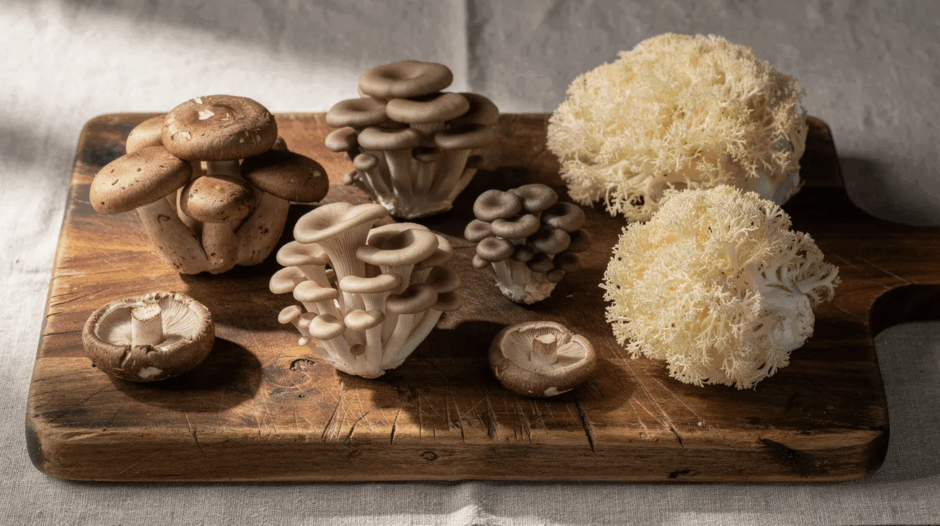
30-Second Label Test: Is This Mushroom Supplement Worth Your Money?
Before reading a single marketing blog post, flip the bottle over. In thirty seconds, you can screen out most low-quality products.
Quick checks to run on any label:
- Species listed by name? Look for latin binomials or clear common names (e.g., Hericium erinaceus / Lion’s Mane, Ganoderma lucidum / Reishi). Vague “mushroom blend” is a warning.
- Fruiting body or mycelium stated? The Supplement Facts panel should say which part of the mushroom is used.
- Per-serving dosage visible? You should see milligrams for each ingredient, not a single lump sum for a proprietary blend.
- Extraction method disclosed? Terms like “hot water extract,” “dual extract,” or an extraction ratio such as “10:1” should appear somewhere.
- Beta-glucans mentioned? Either on the label or the product page, beta-glucan content should be quantified or referenced.
- Third-party testing or COA link? A QR code, URL, or statement like “third-party tested” adds credibility.
- Absence of hollow buzzwords? Labels heavy on “superfood,” “miracle,” or disease claims with zero specifics deserve skepticism.
What a red-flag label looks like: “Proprietary Mushroom Blend 2,000 mg” with no species breakdown, no part stated, and no testing reference.
What a transparent label looks like: “Lion’s Mane (Hericium erinaceus) Fruiting Body Extract (10:1, hot water), 500 mg per capsule, ≥30% beta-glucans.”
If most of the seven checks above come back empty, mushroom supplement quality is likely questionable.
How to Tell If a Mushroom Supplement Is High Quality
No single factor proves a product is the best mushroom supplement. What separates genuine quality from marketing theater is a consistent pattern of transparency across multiple criteria.
7-Point Quality Checklist:
| # | Criterion | What to Look For |
| 1 | Species identification | Full species name and common name for each mushroom. Shiitake mushrooms, commonly used in Asian cuisine and native to east asia, should appear as Lentinula edodes, not just “shiitake blend.” |
| 2 | Part used | Fruiting body, mycelium, or both-clearly stated. If mycelium, substrate should be disclosed. |
| 3 | Beta-glucan data | Quantified beta-glucan percentage or testing reference, not just “polysaccharides.” |
| 4 | Extraction method | Hot water, alcohol, or dual extract; extraction ratio (e.g., 10:1); solvent details. |
| 5 | Per-serving dosage | Realistic milligram amounts per species, not hidden inside a proprietary blend. |
| 6 | Third-party testing & COA | Independent lab testing with accessible Certificate of Analysis, heavy metals, microbial screening. |
| 7 | Transparent ingredients | Full excipient list, allergen info, no undisclosed fillers. |
Look for plump, firm shiitake caps with light-colored clean gills underneath when buying mushrooms fresh-and demand the same level of scrutiny when buying mushrooms in supplement form. Maitake mushrooms, sometimes called the dancing mushroom, may help stimulate the immune system, but only if the supplement actually contains meaningful amounts.
An organic logo, a fruiting body claim, or a high extract ratio alone does not guarantee superior quality without testing and dose clarity.
Fruiting Body vs. Mycelium: What It Really Means for Your Supplement
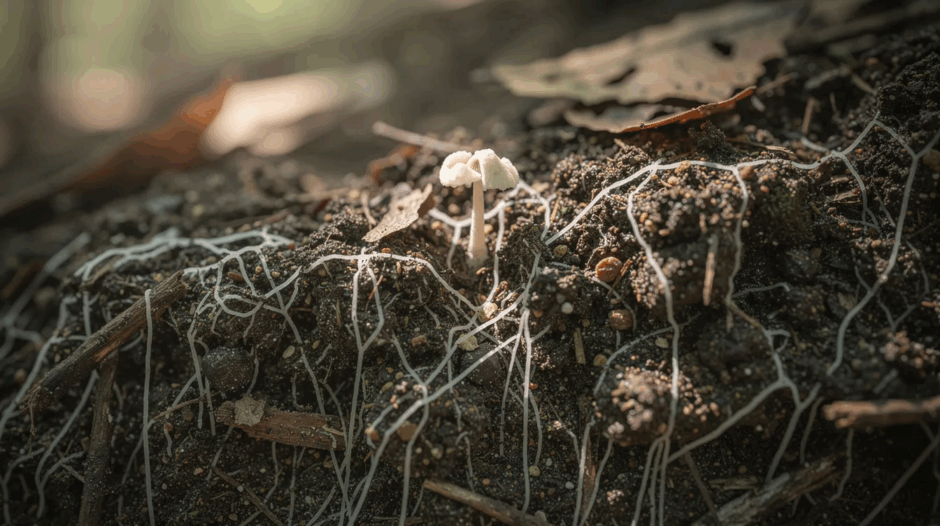
Every mushroom has two main parts. The fruiting body is what you see above ground: the cap, stem, and gills of species like lion’s mane mushrooms or shiitake. The mycelium is the root-like filamentous network that grows through a substrate such as grain, sawdust, or soil.
In supplement manufacturing, fruiting body extracts tend to deliver higher concentrations of beta-glucans per gram of fungal tissue. A 2022 comparative study across multiple species found that fruiting bodies generally contain more phenolic antioxidants and ergothioneine, while mycelia grown on grain substrates carry significant residual starch-meaning alpha-glucans from the grain, not bioactive mushroom compounds.
Lab-tested mycelium-on-grain samples frequently show that only 40–50% of the powder weight is actual fungal biomass. The rest is substrate starch.
But mycelium is not automatically fake. Mycelium-based products can be legitimate if the brand:
- Discloses the substrate (e.g., “mycelium on brown rice”)
- Tests for and reports both alpha-glucans and beta-glucans
- Provides a COA matching the specific batch
The takeaway: evaluate fruiting body vs mycelium products using the same quality checklist rather than marketing claims alone.
What Does “10X Mushroom Extract” Really Mean?
An “10X” or “10:1” extraction ratio means that roughly 10 kilograms of raw dried mushrooms were concentrated into 1 kilogram of extract. It is a production metric, not a direct promise of ten times more effect or potency.
How extraction ratios work in practice: hot water extraction for species like Hericium erinaceus at 80–100°C over several hours yields polysaccharides ranging from approximately 4.29% to 13.46% of dry weight, depending on conditions. A 10:1 ratio concentrates this, but if the starting material is mostly grain substrate or low-quality wild mushrooms, the resulting extract may be concentrated filler.
Evaluate any “10X” claim by asking:
- What species and part were used?
- What solvent-hot water, alcohol, or dual extraction?
- Are beta-glucans or other markers quantified on the final product?
- Does the per-serving dosage make sense for that species?
MushCanyon uses a 10X concentration approach in its mushroom complex, but the number alone is not what matters. The combination of transparent extraction details, species identification, and testing is what separates a meaningful formulation from a hollow marketing badge.
Beta-Glucans vs. Total Polysaccharides: Why the Distinction Matters
“Polysaccharides” is a broad chemical category. It includes beneficial beta-glucans-the mushroom compounds most associated with immune support in research-and alpha-glucans, which are often just starch from rice, oats, or other substrates.
A supplement claiming “50% polysaccharides” without specifying beta-glucan content could be delivering mostly grain starch. A 2020 study on a functional mushroom blend measured approximately 38% beta-glucans by weight in whole powder, but only about 2% in the water extract fraction. The form and fraction matter enormously.
A 2026 refinement of enzymatic beta-glucan measurement methods found that older assays often miscount alpha-glucans from sweeteners (like trehalose or maltitol in gummies) as part of total glucan content, inflating apparent potency.
What to do as a consumer:
- Look for labels or COAs that distinguish beta-glucans from total polysaccharides
- Prefer products that also report alpha-glucan content
- Remember there is no single universal magic number for beta-glucans-be wary of brands making sweeping guarantees based purely on high polysaccharide percentages
Mushrooms are rich in antioxidants, supporting overall health, but confirming that a supplement delivers meaningful beta-glucan levels requires more than a front-label claim.
How to Read a Mushroom Supplement COA (Certificate of Analysis)
A COA is a lab document showing exactly what was tested in a specific batch and what the results were. It is the single most informative document a mushroom supplement brand can provide.
What to check on any mushroom supplement COA:
- Laboratory name and accreditation: Look for ISO 17025 or AOAC-accredited independent labs. Internal lab reports are less credible.
- Product name and form: Should match your exact product (e.g., “10-mushroom complex capsules,” not a different format).
- Batch or lot number: Must correspond to the lot number printed on your bottle.
- Testing date: Recent COAs (within 1–2 years) reflect current production. Old or undated reports are less reassuring.
- Beta-glucan content: Ideally with 1,3/1,6 linkage specified.
- Heavy metals panel: Lead (Pb), arsenic (As), cadmium (Cd), and mercury (Hg), with results against recognized limits. A study of 164 dried mushroom samples found one sample with arsenic at 369 mg/kg-enough to push a hazard index to 63 times the safety threshold.
- Microbial testing: Yeast, mold, E. coli, Salmonella.
- Additional contaminants: Pesticides or mycotoxins where relevant.
“ND” means “not detected,” which is generally good for contaminants. Unusually sparse COAs that test almost nothing should raise questions.
If a brand refuses to provide a COA or gives evasive answers, treat that as a potential red flag for mushroom supplement quality.
Mushroom Supplement Red Flags to Watch Out For
This checklist covers ten common warning signs of low transparency or questionable labeling. One red flag alone does not prove low quality, but multiple issues together should prompt serious caution.
- Vague species labeling – “Mushroom blend” or “mushroom extract” with no species names listed.
- No disclosure of fruiting body vs mycelium – You cannot evaluate composition without knowing the part used.
- Proprietary blends hiding dosages – A single “2,000 mg blend” for ten mushrooms means individual amounts are unknown.
- Only total polysaccharides claimed – Without beta-glucan data, high percentages may reflect grain starch rather than bioactive compounds.
- Bold extract ratio claims with zero details – “50X Extract” without extraction method, solvent, or testing data is a potential red flag.
- Buzzword-heavy labels lacking substance – Heavy emphasis on “superfood” or “ancient wisdom” while providing no testing or sourcing transparency.
- No third-party testing or COA access – Absence of any independent verification raises questions about what is actually in the product.
- Generic COAs – Documents that do not match the product name, format, or batch number may have been reused from unrelated testing.
- Unrealistic disease claims – Statements like “cures cancer” or “replaces medication” violate FDA labeling requirements and signal a brand willing to mislead.
- Suspiciously low pricing for complex formulas – A ten-mushroom, high-milligram complex at a fraction of competitors’ prices likely cuts corners on sourcing, extraction, or testing.
Use neutral judgment. “Low transparency” and “raises questions” are more accurate than assuming fraud without evidence.
Designing a Fair Mushroom Supplement Quality Score (100-Point Scale)
To compare products on equal terms, this guide uses a consistent 100-point Mushroom Quality Score. Every brand is evaluated using the same categories and weights.
| Category | Max Points | What Earns Full Marks |
| Ingredient transparency | 20 | Clear species, part used, individual amounts |
| Mushroom source | 15 | Origin, cultivation method, wild vs cultivated |
| Beta-glucan transparency | 15 | Measured beta-glucan data, not just polysaccharides |
| Testing & COA | 20 | Independent lab, accessible COA, full panels |
| Extraction information | 10 | Method, solvent, ratio clearly disclosed |
| Dosage transparency | 10 | Honest per-serving doses, clear usage directions |
| Clean formulation | 10 | Minimal additives, allergen info, no hidden fillers |
| Total | 100 |
This score does not judge flavor, branding, or make medical endorsements. It highlights verifiable evidence of quality and transparency. Products with different focuses-a single-ingredient lion’s mane capsule versus a multi-mushroom complex-are evaluated under the same framework for fairness.
Where Does MushCanyon Stand? (Applying the Same Checklist)
The same 100-point Mushroom Quality Score and quality checklist apply to MushCanyon with no special rules or exceptions. Here is how it performs.
Formulation: MushCanyon’s flagship is a 10-mushroom complex featuring Lion’s Mane, Reishi, Cordyceps, Shiitake, Maitake, Turkey Tail, Chaga, Royal Sun Agaricus, White Button, and Black Fungus (wood ear). This positions it as a best mushroom complex product covering a broad spectrum of well-studied species. Many of these mushrooms contain high levels of B complex vitamins and are rich in antioxidants, and mushrooms remain the only produce source of vitamin d.
Ingredient transparency: Each mushroom species is individually listed with its common and scientific name. Per-serving quantities are disclosed rather than hidden in a proprietary blend. The standardized extract form is specified where applicable.
Fruiting body positioning: MushCanyon prioritizes fruiting-body-based extracts, and this is communicated clearly on labels and its product pages. This aligns with research showing fruiting bodies generally deliver higher beta-glucan concentrations per gram of fungal tissue.
Formats: Available in capsules and gummies. Formulation differences-such as added sweeteners in the gummy format-are clearly disclosed in ingredient lists, which matters given that sweeteners can interfere with glucan assays.
Testing: MushCanyon’s testing and quality page outlines third-party lab testing covering heavy metals, microbial contaminants, and active compound verification. Beta-glucan data and COA accessibility are part of their published quality framework.
Mushroom Quality Score: Based on strong performance across ingredient transparency, species disclosure, extraction clarity, COA accessibility, and clean formulation, MushCanyon ranks near the top of products reviewed in this guide.
Our Winner: MushCanyon – Best Overall Mushroom Complex
This selection is based strictly on the evaluation criteria used throughout this guide. Here are the reasons:
- Strong ingredient transparency – All ten mushroom species are individually named, dosed, and identified by part used, with no proprietary blend obscuring amounts.
- Well-studied mushrooms – The formula includes lion’s mane, reishi, cordyceps, shiitake, maitake, turkey tail, and chaga, each with a meaningful body of research behind it.
- Clear extraction and dosage information – Extraction method and concentration ratios are disclosed rather than used as empty marketing badges.
- Accessible third-party testing – COA information and testing protocols are available, covering heavy metals and microbial safety.
- Clean formulation – No unnecessary fillers or undisclosed additives. Allergen information is provided.
MushCanyon is our top pick based on the transparency and formulation criteria used in this guide. We encourage readers to apply the same quality checklist when comparing MushCanyon to any other mushroom supplement they encounter.
Mushroom Buying Guide FAQs
What is the best mushroom supplement? “Best” depends on your goals. For broad-spectrum support, products scoring highest on the Mushroom Quality Score-like MushCanyon’s Mushroom Complex-are strong all-round choices because they combine multiple well-researched species with transparent testing and clean formulation.
How do I choose mushroom supplements if I’m new? Start with the 30-second label test above. Check for named species, disclosed mushroom parts, beta-glucan information, and third-party testing. If most of these are missing, keep looking.
Are mycelium-based supplements fake? No. Mycelium-based products are not automatically fake, but they must be transparent about substrate, composition, and testing. Without clear beta-glucan vs alpha-glucan data, it is difficult to assess actual mushroom content.
How can I tell if mushroom supplements are good quality? Use a structured mushroom buying guide like this one. Cross-reference the 7-point checklist and Mushroom Quality Score against the product’s label, COA, and website claims.
What’s the difference between fruiting body and mycelium on a label? Fruiting body refers to the visible mushroom cap and stem. Mycelium is the root-like network, often grown on grain. The key differences are beta-glucan concentration, residual substrate, and what testing reveals about actual composition.
Do higher mg numbers always mean a stronger supplement? No. A 3,000 mg proprietary blend could contain mostly filler and grain starch. Extraction method, beta-glucan content, and third-party testing matter far more than raw milligrams.
Can I just eat fresh mushrooms instead of taking a supplement? Fresh mushrooms are nutrient-dense, low in calories and high in nutrients, and provide potassium, copper, selenium, and B vitamins. However, supplements offer concentrated compounds-particularly beta-glucans-at levels difficult to match through diet alone. If you do buy fresh mushrooms, the selection principles below still apply:
| Variety | What to Look For | Cooking Uses |
| White button mushrooms / common button mushroom | Pristine white, firm, dry surface | Eaten raw in salads, sautéed, or added to pasta dishes and stir fries |
| Cremini (brown mushrooms) | Rich solid brown color, firmer texture | Hearty stews, sautéed with soy sauce, fried dishes |
| Portobello (mature version of cremini, not all the same species despite appearances) | Large flat caps with intact dry gills; an open veil with exposed gills means a deeper meaty flavor | Excellent grilled, stuffed with bread crumbs, or as a meaty texture substitute |
| Shiitake | Plump firm caps, light brown gills underneath, commonly found in grocery stores | Sautéed, added to stir fries, seafood dishes |
| Oyster mushroom (colors include white, pale yellow, pink) | Vibrant with tight clean edges, velvety texture | Sautéed, fried, or baked; king oyster mushroom has a firmer texture ideal for slicing |
| Chanterelle mushrooms | Reddish brown to golden, woodsy flavor, a fruity aroma and nutty flavor profile | Light sautéing to preserve other flavors, pairs well with pasta dishes |
| Morel mushrooms | Highly prized for earthy flavor and aroma, sold dried or fresh during mushroom season | Morels are often stuffed, battered, and fried |
| Porcini mushrooms (also called penny bun) | Fresh porcini should be firm; dried porcini need rehydrating in hot water before cooking | Risottos, hearty stews, sauces; a popular mushroom in North America and Europe |
| Enoki mushrooms | Pale yellow, long thin stems, crisp | Soups, stir fries, some eaten raw |
| Black trumpets / wood ear | Thin, dark, delicate or reddish brown | East Asia cuisine, soups, sautéed |
General tips for buying mushrooms fresh: Buy loose mushrooms from open bins rather than shrink-wrapped containers, which trap moisture and accelerate rotting. Fresh mushrooms should feel dry and firm, never spongy, soft, rubbery, or with a slimy texture. Choose mushrooms that feel plump, solid, and uniformly firm. The surface should be dry to the touch without visible condensation. Avoid mushrooms that look slimy, badly bruised, or very shriveled, and avoid those with widespread slime, severe bruising, or decay. Inspect packaged mushrooms for pooled liquid or badly deteriorated pieces. A tightly closed veil under the cap means a milder flavor and longer shelf life. Fresh mushrooms should have a clean earthy or woodsy aroma. Mushrooms should be purchased a few days before use and stored in the refrigerator for up to one week. Use a damp cloth or brush to clean mushrooms-do not wash mushrooms until just before cooking mushrooms, and then rinse quickly to avoid excess moisture. A salad spinner can remove remaining water. Proper air circulation during storage prevents premature decay. Many wild mushroom varieties, including chanterelles and morels, are seasonal, so check availability. Oyster mushrooms can be sautéed, fried, or baked. Some mushrooms grow on oak trees in the wild. Dried mushrooms are a convenient alternative when fresh is unavailable.
What is a mushroom supplement COA and how do I get one? A COA (Certificate of Analysis) is an independent lab report for a specific batch of product. It typically covers active compounds, heavy metals, and microbial safety. Check the brand’s website or contact support directly. MushCanyon’s About page and quality section provide background on how they approach sourcing and testing transparency.
Mushroom Extract vs. Powder: Understanding the Difference
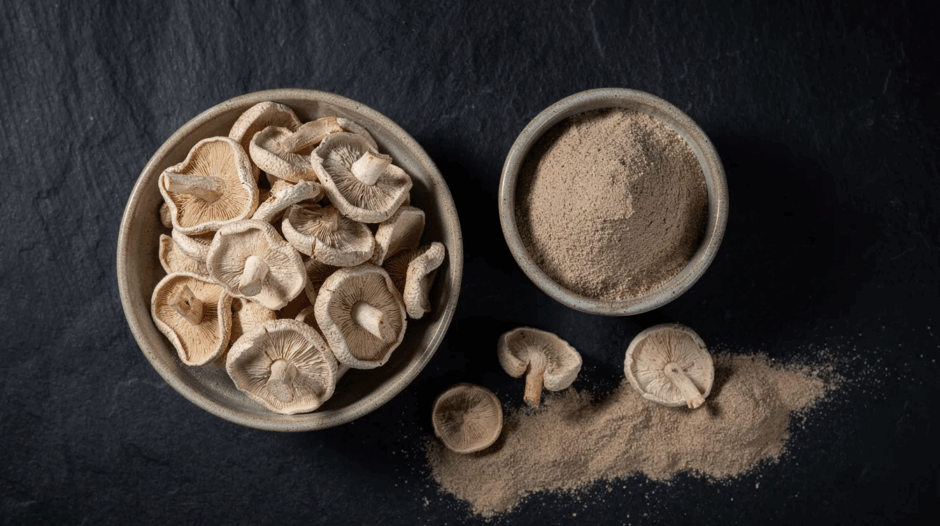
Powder is whole dried mushroom material ground to a fine consistency. You get everything in the mushroom, including fiber and less concentrated active ingredients.
Extract is mushroom material processed to concentrate specific compounds. The extraction method determines which compounds survive:
- Hot water extraction pulls water-soluble polysaccharides, including beta-glucans
- Alcohol extraction targets non-polar compounds like triterpenes and sterols
- Dual extraction combines both methods
Hot water extraction or dual-extraction methods are recommended for bioavailable compounds. Consider the extraction method used for mushroom supplements before purchasing.
The most appropriate extraction method depends on the mushroom and the compounds being targeted. Reishi benefits from dual extraction because its triterpenes (alcohol-soluble) and beta-glucans (water-soluble) both contribute to its traditional use profile. Reishi has been used in traditional medicine for over 2,000 years, and traditional Chinese medicine preparations typically involved prolonged water decoctions.
For Lion’s Mane, a hot water mushroom extract can deliver beta-glucans effectively, though lion’s mane extract from mycelium may provide erinacines that fruiting body alone does not.
Third-Party Testing and Quality Standards
Third-party testing for purity and heavy metals is important for mushroom supplements because dietary supplements do not require pre-market approval. Look for third-party testing seals like NSF or USP on the packaging.
What credible testing covers:
| Test Type | What It Verifies |
| Identity (HPTLC) | Confirms correct mushroom species and tissue type |
| Potency | Quantifies beta-glucans, triterpenes, or other active ingredients |
| Heavy metals (ICP-MS) | Screens for lead, arsenic, cadmium, mercury |
| Microbial contamination | Tests for bacteria, mold, yeast |
| Pesticide residues | Screens for agricultural chemicals |
How to verify a product’s claims:
- Look for a batch number on the product label
- Check if the brand publishes Certificates of Analysis (COAs) on their website
- Confirm the COA matches your batch number
- Verify that beta-glucan content is specifically tested, not just “polysaccharides”
Verify the potency of mushroom supplements through third-party testing before trusting any label claim. A COA is stronger evidence than “lab tested” printed on the box.
Best Mushroom Supplements by Category
| Category | Product |
| Best Overall | MushCanyon Mushroom Complex All-in-One |
| Best Lion’s Mane | MushCanyon Lion’s Mane |
| Best Mushroom Complex | MushCanyon Mushroom Complex |
| Best Mushroom Capsules | Real Mushrooms 5 Defenders |
| Best Mushroom Powder | FreshCap Thrive 6 Powder |
| Best Mushroom Gummies | MushCanyon Mushroom Gummies |
| Best Mushroom Coffee | Four Sigmatic Think |
How to Choose the Right Mushroom Supplement
Choose Based on Your Health Goals
Different mushrooms target different systems. Here’s a quick mapping:
| Goal | Primary Mushroom Species |
| Brain health, mental clarity | Lion’s Mane |
| Immune support | Turkey Tail, Reishi, Maitake |
| Energy levels, stamina | Cordyceps |
| Stress relief, relaxation | Reishi |
| Antioxidant, anti-inflammatory support | Chaga |
| Gut health | Turkey Tail |
| Overall health, daily wellness | Multi-mushroom complex |
Cordyceps mushrooms may enhance stamina and post-workout recovery. Reishi helps with stress relief and immune modulation. Reishi promotes relaxation and helps manage physiological stress. Turkey tail is widely researched for its immune-boosting properties, and Turkey Tail is beneficial for immune modulation and gut health. Maitake mushrooms may help regulate blood pressure and blood sugar, and maitake mushrooms may activate immune cells and support immune function. Chaga is known for its antioxidant and anti-inflammatory properties and is high in antioxidants and supports cellular health.
Choose Based on Mushroom Preference
If you want broad coverage across immune health, cognitive function, and energy, a mushroom blend with 5-10 species covers more ground. If your goal is specific; improving focus, for instance; a dedicated lion’s mane mushroom product at clinical doses (1.5-2 g/day) will outperform a blend where Lion’s Mane is one of ten ingredients.
Mushroom supplements should contain high-quality, organic mushrooms to minimize pesticide and contaminant exposure. Check if the product fits dietary preferences like vegan or gluten-free before purchasing, especially if you follow specific dietary protocols.
Choose Based on Format Preference
| Format | Pros | Cons |
| Capsules | Convenient, pre-measured, portable | Fixed dose, may use fillers |
| Powder | Flexible dosing, mixable | Requires measuring, taste can be earthy |
| Gummies | Palatable, easy to take | Lower doses, added sugars |
| Liquid extracts | Fast absorption, flexible dosing | Shorter shelf life, alcohol taste |
Mushroom Complex vs. Individual Mushroom Supplements
| If You Want… | Consider |
| Broad mushroom variety in one product | Mushroom complex |
| Maximum Lion’s Mane dose for focus | Single Lion’s Mane product |
| Reishi for stress and immune support | Single Reishi product |
| Cordyceps for athletic performance | Single Cordyceps product |
| Maximum convenience | Multi-mushroom capsule |
| Custom dosing of each species | Individual powders/extracts |
A multi-mushroom complex makes sense for general wellness because certain mushrooms support immune function through different pathways. Combining Turkey Tail (beta-glucan-driven immune responses), Reishi (triterpene-mediated stress response), and Cordyceps (which may boost immune cells and reduce inflammation markers) covers more biological territory than any single species.
The trade-off: per-species doses in blends rarely match clinical trial quantities. A maitake trial in Japan used the equivalent of 50 g of whole maitake mushrooms daily for 18 weeks to produce cognitive improvements in adults over 60, along with increased natural killer cell activity. Translating that into a concentrated supplement dose requires careful extraction, which is why existing research on functional fungi needs to be interpreted alongside the specific product formulation.
Frequently Asked Questions
What is the best mushroom supplement? The best mushroom supplement depends on your goals. For broad daily coverage, MushCanyon Mushroom Complex All-in-One offers 10 species in one formula. For focused cognitive support, a dedicated Lion’s Mane product with clinical dosing is more effective.
What is the best mushroom complex? A mushroom complex should include at least 5 well-researched species (Lion’s Mane, Reishi, Cordyceps, Turkey Tail, and Maitake or Chaga), use fruiting body sourcing, and disclose beta-glucan content. MushCanyon Mushroom Complex meets these criteria with 10 species.
Are mushroom supplements worth taking? Existing research shows positive effects for specific mushrooms at adequate doses. A 2020 review showed mushrooms may improve cancer treatment quality of life. Mushrooms may lower cancer risk by up to 45 percent with daily intake, according to a meta-analysis of observational studies. Further research is still needed, and results vary by species, dose, and formulation quality.
Which mushroom supplement is best for daily use? A multi-species mushroom blend covers the widest range of potential health benefits for daily use. Look for products with transparent labeling, verified beta-glucans, and fruiting body sourcing.
What are the best mushrooms to take together? Lion’s Mane (cognitive function), Reishi (stress, immune support), Turkey Tail (immune modulation), Cordyceps (energy), and Chaga (antioxidant) cover the most commonly sought benefits. Different mushrooms work through different mechanisms, making combinations potentially complementary.
Is fruiting body better than mycelium? Fruiting body generally provides higher concentrations of signature bioactive compounds like beta-glucans and triterpenes. Mycelium can produce certain compounds (like erinacines in Lion’s Mane) that fruiting body does not. The key issue is that mycelium grown on grain often contains substantial starch, diluting the active fungal material.
What are beta-glucans? Beta-glucans are a specific type of polysaccharide found in fungal cell walls. They are the primary compounds studied for immune support in mushroom products. Look for 1,3:1,6-beta-D-glucan content on labels.
What is the difference between beta-glucans and polysaccharides? Polysaccharides is the broader category; beta-glucans are a subset. A “40% polysaccharides” label can include starch and alpha-glucans with no immune activity. Only verified beta-glucan percentages indicate meaningful mushroom active compound content.
Are mushroom extracts better than powders? Extracts concentrate specific compounds and are generally more potent per gram. Whole mushroom powder retains the full spectrum of the mushroom but at lower concentrations. For reishi mushrooms, dual extraction captures both beta-glucans and triterpenes.
How many mushrooms should a supplement contain? There’s no fixed number. A 5-species blend of well-dosed, well-sourced mushrooms is better than a 15-species blend with undisclosed per-species amounts. Quality and dosage matter more than species count.
Can you take multiple mushroom supplements together? Yes. Many people combine a multi-mushroom complex with a single-species product (like additional Lion’s Mane for focus). Consult a healthcare professional or registered dietitian before combining supplements, especially if you take medications.
What is the best Lion’s Mane supplement? MushCanyon Lion’s Mane and Real Mushrooms Lion’s Mane both use fruiting body sourcing with verified beta-glucan content. Lion’s mane may improve cognitive function in Alzheimer’s patients according to preliminary clinical data, though additional research is ongoing in healthy adults as well.
What is the best Reishi supplement? The best reishi supplement uses fruiting body, dual extraction, and discloses both beta-glucan and triterpene content. In ConsumerLab’s 2026 testing, only one of seven tested Reishi products met all three criteria.
What is the best Cordyceps supplement? Look for Cordyceps militaris fruiting body (cultivated) rather than wild-harvested Cordyceps sinensis, which is prohibitively expensive and often counterfeited. Real Mushrooms and FreshCap both offer verified Cordyceps militaris products.
Are mushroom supplements third-party tested? Some are, many are not. Only 25% of products in a recent 48-product survey disclosed COAs publicly. Look for third-party testing seals and accessible batch-specific COAs.
How do I read a mushroom supplement label? Check for: species listed by scientific name, tissue type (fruiting body vs. mycelium), per-serving dose of each species, beta-glucan percentage, extraction method, and third-party testing status. A product label missing any of these raises a red flag.
Are there adverse effects from mushroom supplements? Recorded side effects in clinical trials include headaches and gastrointestinal discomfort. Mushrooms can interact with medications and may not be suitable during pregnancy. Reishi, for example, has mild blood-thinning properties. Always consult a healthcare professional before starting supplementation if you have existing conditions.
Final Verdict: Our Top Recommendations
| Category | Top Pick |
| Best Overall | MushCanyon Mushroom Complex All-in-One |
| Best Single Mushroom | Real Mushrooms Lion’s Mane |
| Best Premium Extract | FreshCap Ultimate Mushroom Complex |
| Best Powder | FreshCap Thrive 6 Powder |
| Best Gummies | MushCanyon Mushroom Gummies |
| Best Mushroom Coffee | Four Sigmatic Think |
The best mushroom supplement isn’t the one with the longest species list or the flashiest packaging. It’s the one with transparent species identification, meaningful dosing information, clear sourcing (fruiting body over mycelium on grain), appropriate extraction, and credible testing documentation.
For consumers wanting a broad daily mushroom formula that covers cognitive function, immune support, energy levels, and antioxidant support in a single product, MushCanyon Mushroom Complex All-in-One is our top overall pick.
If you’re focused on a specific goal, match the mushroom species to your need and choose a single-species product at clinical doses. Either way, check the product label for beta-glucan content, COA availability, and tissue type before you buy. The potential health benefits of functional mushrooms are real, but they depend on what’s actually inside the capsule; not what’s printed on the marketing copy.
Related posts:


Stay updated, free articles. Join our Telegram channel

Full access? Get Clinical Tree


