By Kathy Jane, Metabolic Research Writer, covering peptide science, obesity pharmacology, and research-chemical supply standards for six years. Fact-checked by Lucy Brown, Editor.
Search the best peptides for weight loss, and you’ll see the same 5 names on repeat: Tirzepatide, Semaglutide, Retatrutide, Tesamorelin, and MOST-c. You can think of them as short amino acid chains that act as signaling molecules, carrying instructions about hunger, blood sugar, and fat storage between cells.
Compared to weight-loss supplements that provide the body with nutrients and offer hope of a result, peptides bind to a specific receptor and directly alter the associated metabolic and appetite signals.
Nevertheless, not all weight-loss peptides are suitable for human consumption. Some, like GLP-1 compounds, are still in the trial stage and are yielding positive results. In this guide, we’ll discuss all 5 peptides for weight loss, which ones can be prescribed in 2026, and which ones remain for research use only.
Best Peptides for Weight Loss: Top 5 Peptides Compared
The best peptides for weight loss compared for research and usage scope:
| Peptide | Category | Primary Research Focus | Status |
| Tirzepatide | Dual GLP-1/GIP | Appetite and metabolism | Approved therapy |
| Retatrutide | Triple agonist | Metabolic research | Clinical research |
| MOTS-c | Mitochondrial peptide | Metabolic research | Research stage |
| Tesamorelin | Growth hormone pathway | Fat distribution | Approved for specific indication |
| Semaglutide | GLP-1 | Appetite regulation | Approved therapy |
What Are Peptides and How Do They Support Weight Loss?
Peptides are short chains of amino acids, generally under 50 residues, that act as chemical messengers. Weight-related peptides bind to receptors that control hunger signals, insulin release, stomach emptying, and how fat is stored or burned. They change the instructions the cells receive.
To determine which receptor a peptide can activate, you need to study the exact sequence of its amino acid chain. Insulin is a peptide. So is GLP-1, the gut hormone your body releases after a meal.
Peptides support weight loss via 4 biological pathways:
- Appetite regulation sets how hungry you feel and how soon hunger returns. Metabolism governs how efficiently cells convert fuel into energy.
- Blood sugar regulation determines how much insulin circulates.
- Fat storage pathways decide whether energy gets deposited or mobilized.
A peptide touching any one of these systems can cause a change in body weight.
How Peptides Influence Appetite and Hunger Signals
GLP-1 receptors sit in the gut, the pancreas, and in appetite centers of the brain. When a GLP-1 receptor agonist binds to them, it copies the satiety signal your body sends after eating. The signal reaches the hypothalamus, which registers fullness and reduces the drive to keep eating.
Because the drug stays active far longer than the natural hormone, the message is both stronger and longer-lasting, so meals end earlier and the gap before the next one stretches out.
Gastric emptying slows at the same time, so fullness persists, and blood sugar rises more gradually. Cravings fade as well, and many trial participants report that background thoughts about food quiet down.
Peptides vs Traditional Weight Loss Supplements
Weight loss peptides vs weight loss supplements:
| Peptides | Traditional Supplements |
| Work through biological signaling pathways | Usually nutritional compounds |
| Target specific receptors | General metabolic support |
| Studied in clinical or research settings | Variable evidence quality |
Approved weight-loss peptides carry trial data covering thousands of participants over 12 to 18 months. Most weight-loss supplements lack comparable evidence, and the FDA does not review supplements for effectiveness before sale.
Types of Peptides Studied for Weight Loss
Weight-related peptides fall into four categories by receptor target: single GLP-1 agonists, dual-action agonists, triple agonists still in trials, and peptides acting on growth hormone or mitochondrial pathways.
GLP-1 Receptor Agonist Peptides
These bind to one receptor and were the first peptide class approved for chronic weight management.
Semaglutide
Semaglutide is a GLP-1 receptor agonist administered as a weekly injection or a daily tablet, modified to remain in the bloodstream for days rather than minutes. The STEP-1 trial, published in the New England Journal of Medicine, followed 1,961 adults with overweight or obesity for 68 weeks.
Those on 2.4 mg weekly lost an average of 14.9% of body weight, compared with 2.4% on placebo. Applications extend past obesity, since approved semaglutide products also treat type 2 diabetes.
Liraglutide
Liraglutide is the earlier GLP-1 agonist, approved in 2014. It requires a daily injection. Its mechanism matches semaglutide’s, but with less receptor coverage between doses. Over 56 weeks, participants on the highest dose lost roughly 8% of their starting body weight, which is below what newer compounds produce. Weekly options have largely displaced it.
Dual-Action Peptides
These add a second receptor target, changing the arithmetic.
Tirzepatide
Tirzepatide activates both the GLP-1 and GIP receptors, which is why researchers nicknamed it the twincretin. Appetite regulation improves through the GLP-1 arm, while metabolic effects come from the GIP arm. GIP is a second gut hormone involved in insulin secretion and lipid handling. Trials of the highest dose recorded an average reduction of around 21% over 72 weeks, though many patients still struggle with affordability and coverage denials.
Triple Agonist Peptides Under Research
These target three receptors and remain in the trial stage.
Retatrutide
Retatrutide activates three receptors: GLP-1, GIP, and glucagon. Glucagon raises energy expenditure and promotes fat breakdown rather than only reducing intake.
A phase 2 trial reported in the New England Journal of Medicine showed an average body weight reduction of up to 24% at 48 weeks. A head-to-head comparison against tirzepatide is now underway in phase 3.
Retatrutide currently holds no approval in any country, no established human dose outside a trial protocol, and the FDA states it has not been found safe and effective for any condition.
Metabolic and Body Composition Peptides
The last group works through metabolic signaling.
MOTS-c
MOTS-c is a 16-amino acid peptide encoded inside mitochondrial DNA, identified at the University of Southern California in 2015. Mitochondria release it to report low energy back to the cell.
It works by blocking the folate-methionine cycle, which causes a molecule called AICAR to build up. AICAR switches on AMPK, the enzyme that tells muscle cells to pull in glucose and burn fat rather than store it. Exercise triggers the same switch, so the research literature refers to MOTS-c as exercise-mimetic.
Mouse data on MOTS-c’s metabolic flexibility are encouraging, but human efficacy data for weight loss are not available, and no regulator has approved it.
Tesamorelin
Tesamorelin is a 44-amino acid analog of growth hormone-releasing hormone. Rather than suppressing appetite, it prompts the pituitary to release growth hormone in natural pulses, raising IGF-1 and shifting where the body stores fat.
Fat distribution studies show it acts preferentially on visceral adipose tissue, the deep abdominal fat that carries more metabolic risk than subcutaneous fat. Tesamorelin received FDA approval in 2010 for HIV-associated lipodystrophy, not as a general weight loss drug.
Which Peptide Is Best for Weight Loss?
No single peptide wins for everyone, because these compounds solve different problems. Tirzepatide produces the largest average weight loss among approved options. Semaglutide has the deepest evidence base. Tesamorelin targets visceral fat specifically. Retatrutide and MOTS-c remain investigational and cannot be prescribed.
Tirzepatide: Combining GLP-1 and GIP Pathways
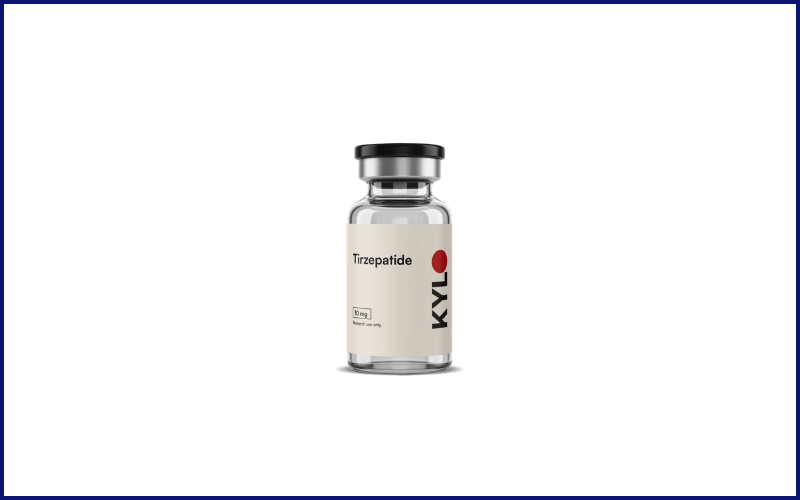
Tirzepatide is a single molecule activating two incretin receptors at once, with a fatty acid chain that binds reversibly to albumin and extends its half-life enough for weekly dosing. Metabolic signaling through both receptors produces the largest reductions of any approved option, roughly 21% at the highest dose over 72 weeks.
For labs needing paperwork around their GLP-2 (TZ) research vials, Kylo Peptides offers the deepest analytical panel, 7 assays per lot.
When we pulled its certificate, accession 2604030184 (matched with our lot) returned 99.883% HPLC purity with LC-MS identity, net content, heavy metals, sterility, and endotoxin all reported on the same document.
Retatrutide: The Next Generation Multi-Receptor Peptide
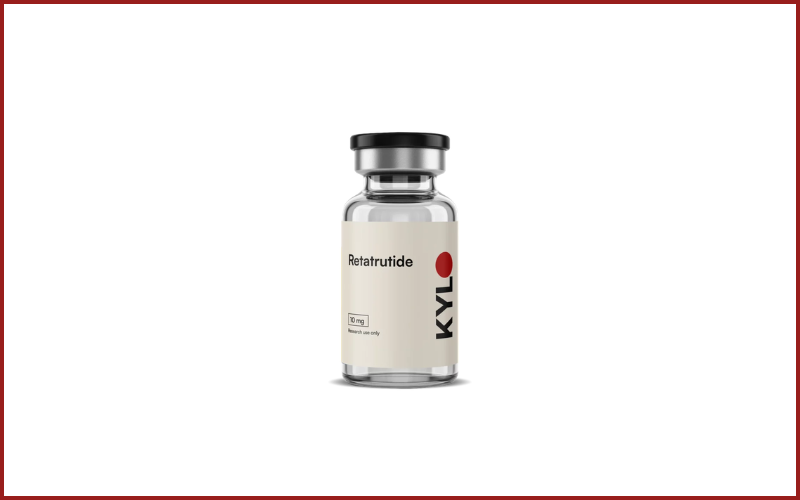
Retatrutide adds glucagon receptor activity to the GLP-1 and GIP pathways tirzepatide covers. Glucagon works from the opposite direction, raising calories burned rather than only lowering intake.
Research interest around retatrutide is intense. Phase 2 results of up to 24% at 48 weeks exceeded what tirzepatide achieved over a longer period, and phase 3 will show whether that holds at scale. Until those trials report, retatrutide remains an investigational compound, and one the FDA has barred from pharmacy compounding.
Kylo Peptides documents its retatrutide listing more thoroughly than most weight loss peptide suppliers, publishing a 16-section safety data sheet alongside lot-matched certificates for all vial sizes.
MOTS-c and Tesamorelin: Exploring Metabolic Function
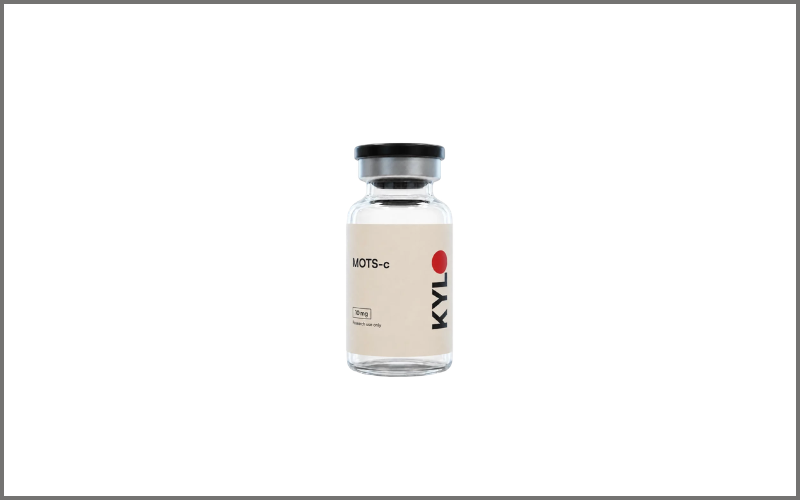
MOTS-c and Tesamorelin do not target appetite signals. MOTS-c’s territory is energy metabolism. Tesamorelin’s is body composition.
By activating AMPK and interfering with the folate-methionine cycle in skeletal muscle, MOTS-c pushes cells toward burning fuel rather than storing it, at least in animal models. Tesamorelin raises growth hormone. IGF-1 mobilizes visceral fat, which changes waist measurements and metabolic markers more than total body weight.
Semaglutide: The Established GLP-1 Weight Management Peptide
Semaglutide is a synthetic GLP-1 receptor agonist built to resist the enzyme that breaks down natural GLP-1 within minutes. GLP-1 receptor activation drives its actions: insulin release when glucose is elevated, slowed gastric emptying, and signaling of fullness to the brain.
Patients notice a shift in appetite signaling, portions shrinking without deliberate effort. In the STEP-1 trial, 50.5% of participants lost 15% or more of their body weight, compared with 4.9% on placebo, a result rare in obesity medicine.
Liraglutide: An Earlier GLP-1 Research Compound
Liraglutide proved the GLP-1 category could work. Its 2014 approval established that a GLP-1 receptor agonist could produce clinically meaningful weight loss in people without diabetes.
Compared with newer peptides, it looks modest. Roughly an 8% average loss over 56 weeks sits well under semaglutide’s 14.9% and tirzepatide’s 21%. The daily injection adds friction that weekly options avoid.
Its value today is instructive, showing how much progress came from extending receptor coverage and then adding receptors to the underlying idea.
How Do Weight Loss Peptides Work in the Body?
Weight-loss peptides work through three mechanisms: they reduce appetite by activating receptors in the brain and gut, they improve how the body handles glucose and insulin, and they shift the balance between fat storage and fat burning. Most approved options rely on the first.
Appetite Regulation
Hunger hormone signaling runs on a loop. Ghrelin rises before meals and pushes you to eat, while GLP-1, PYY, and leptin rise afterward and tell you to stop. Peptide medications leverage the latter half of the loop. Reduced calorie intake follows without deliberate restriction. Participants eat less because appetite is lower, not because they are resisting an appetite that stayed high.
Metabolic Regulation
Insulin moves sugar out of your blood and into cells. Normally the pancreas fires it off whenever you eat. GLP-1 medications tell the pancreas to release insulin only when blood sugar is genuinely high. Smaller meals mean smaller sugar spikes, so less insulin gets released across the day. Tirzepatide adds a second hormone, GIP, that nudges the pancreas the same way.
Fat Metabolism and Body Composition
Insulin also decides whether fat stays put. When insulin is high, it shuts off the enzyme that unpacks stored fat, so nothing leaves the fat cell. When insulin drops between meals (from peptide signaling), that enzyme switches back on, and fat is released for muscle to burn.
Semaglutide vs Tirzepatide vs Retatrutide: Which Peptide Has More Weight Loss Potential?
Ranked by average weight reduction in trials, retatrutide leads at up to 24%, tirzepatide follows at roughly 21%, and semaglutide reaches about 15%. Ranked by what you can actually obtain with a prescription, the order reverses, since retatrutide is not approved anywhere.
| Target Receptor & Research Stage | Semaglutide | Tirzepatide | Retatrutide |
| GLP-1 | ✓ | ✓ | ✓ |
| GIP | ✗ | ✓ | ✓ |
| Glucagon | ✗ | ✗ | ✓ |
| Research Stage | Established | Established | Investigational |
Semaglutide
The 14.9% average in STEP-1 was accompanied by improvements in blood pressure, cholesterol, and inflammatory markers, and the research history is the deepest of the three.
Tirzepatide
The practical result is roughly a 21% average reduction at the top dose over 72 weeks. Comparative studies favor tirzepatide over semaglutide in terms of weight-loss magnitude. However, that advantage comes with gastrointestinal side effects.
Retatrutide
Phase 2 data look stronger than those of any approved compounds, and phase 3 results will determine whether that survives contact with a larger population.
Are Weight Loss Peptides FDA Approved?
Four peptide medications have FDA approval for chronic weight management: tirzepatide, semaglutide (both injectable and oral), and liraglutide. Tesamorelin is approved for a different condition entirely. Retatrutide and MOTS-c hold no approvals yet.
Approved Peptide-Based Weight Management Therapies
Semaglutide is approved as Wegovy for chronic weight management in adults and adolescents 12 and older, and as Ozempic and Rybelsus for type 2 diabetes. Tirzepatide is approved as Zepbound for weight management and as Mounjaro for type 2 diabetes, dosed weekly from 2.5 mg and titrated upward. Liraglutide is approved as Saxenda, injected daily.
All three require a prescription from a licensed provider and should be filled at a state-licensed pharmacy.
Research Peptides Still Being Investigated
Retatrutide sits in phase 3 trials with no approval in any jurisdiction. The FDA states it cannot be used in compounding under federal law, is not a component of any approved drug, and has not been found safe and effective for any condition.
The agency has issued warning letters to telehealth companies marketing it, to ingredient distributors supplying compounders, and to facilities repackaging it.
MOTS-c has no approval and no completed human efficacy trials for weight loss. Its evidence base is preclinical. Other emerging compounds including survodutide, VK2735, and eloralintide are in trials with published phase 2 results, and none is available outside a study.
Peptides for Weight Loss vs Fat Loss: Understanding the Difference
Weight loss and fat loss are not the same measurement. Scale weight combines fat, water, and lean mass, and a falling number tells you nothing about which of the three you lost.
Water weight reduces fastest. Early drops in the first two weeks are largely glycogen and its associated water. Fat comes off gradually. That’s why the initial results look dramatic and then slow down.
Lean mass reduction is not advised. However, studies on rapid weight loss consistently show a reduction in lean mass alongside fat loss unless specific steps are taken.
- The first step is protein intake, since adequate protein during a deficit signals the body to preserve muscle.
- The second is strength training, providing the stimulus that tells the muscle it is still needed.
- The third includes sustainable habits, because regain after stopping pharmacological support is well documented.
In one tirzepatide trial, participants who switched to placebo after 36 weeks regained 14% of body weight, while those who continued lost an additional 5.5%.
Can Peptides Help Preserve Lean Muscle During Weight Loss?
No peptide currently approved for weight management preserves lean mass on its own. In fact, many peptide medications reduce appetite, which can make it harder to hit protein targets rather than easier. So, protein intake needs deliberate attention during peptide sessions.
Resistance training is another way to keep lean muscle. Body composition research consistently shows better lean mass retention in groups that train against resistance during weight loss than in those who only reduce calories.
How Long Does It Take for Weight Loss Peptides to Work?
Appetite changes typically appear within the first 1 to 2 weeks after starting a GLP-1 medication, while measurable weight change accumulates over months. Trial results are reported at 56 to 72 weeks.
Early Changes (First Few Weeks)
Appetite changes are felt first. Meals feel finished sooner, and the interval before hunger returns lengthens, often within days of the first dose. Metabolic adjustments happen alongside. Blood sugar stabilizes, and the gastrointestinal side effects that come with starting these medications, mainly nausea, are usually worst during this period.
Long-Term Weight Management
Consistency determines the outcome more than any other variable. Trial data reflects continuous use across more than a year. Nutrition still governs the result. Every trial cited here paired the medication with a reduced-calorie diet and increased physical activity.
Individual response differs substantially. In STEP-1 (tirzepatide trial), some participants lost over 20% of their body weight, while others lost little.
Potential Side Effects and Safety Considerations
Gastrointestinal effects are the most common issue with GLP-1 and dual agonist medications. They include nausea, vomiting, diarrhea, constipation, and abdominal pain. They are usually mild to moderate and ease over time, though may lead some people to stop.
Digestive symptoms dominate the reported side effects profile across semaglutide, liraglutide, and tirzepatide. Delayed gastric emptying, a core mechanism of weight-loss peptide action, can also reduce the absorption of oral medications (if you’re taking any alongside them).
Appetite changes leading to eating too little for long stretches bring their own problems, including inadequate protein and micronutrient intake.
Weight loss peptide medications are not suitable for people with a personal or family history of medullary thyroid cancer or multiple endocrine neoplasia type 2, and specific precautions apply around pregnancy.
For safest use, medical supervision is warranted. A medical professional screens for contraindications, sets titration, and adjusts when side effects appear. As of 31 May 2026, the FDA had received 990 adverse event reports linked to compounded semaglutide and more than 730 linked to compounded tirzepatide, with some hospitalizations traced to patients measuring and self-administering incorrect doses.
Why Peptide Quality Matters
For laboratory work, the compound in the vial has to be what the label says, or the experiment is worthless. Third-party testing means an independent lab, not the seller, runs the analysis.
Self-reported purity carries an obvious conflict of interest. A Certificate of Analysis documents purity testing for a specific batch and is matched to the lot number printed on the vial.
Purity verification uses HPLC to quantify the amount of the target peptide and mass spectrometry to confirm its molecular weight. Anything under 99% HPLC introduces contaminant peptides that can confound results.
How to Choose the Right Peptide for Weight Loss Research
Selecting a research compound requires defining the objective, matching the compound to it, confirming testing documentation, assessing supplier transparency, and confirming you can store and handle the material properly. Here’s what each one means:
- Research objective: Decide what question the lab work should answer first. Receptor binding studies, glucose uptake assays, and animal body composition models call for different materials and controls.
- Compound selection: Match the receptor profile to the question. Isolating the GIP contribution means running a single-, dual-, and triple-agonist in parallel, which is why comparative work uses semaglutide, tirzepatide, and retatrutide analogs together.
- Testing documentation: Require a lot-matched COA before purchase. It should report HPLC purity, LC-MS identity, net content, heavy metals, sterility, and endotoxin.
- Supplier transparency: Check whether the supplier openly publishes certificates, names the testing laboratory, and clearly states its regulatory position.
- Laboratory requirements: Lyophilized peptides require storage at -20°C, light protection, and sterile reconstitution.
Why Third-Party Testing Matters for Peptide Quality
Independent testing is the only way to confirm a research peptide contains what its label claims. A supplier testing its own product has an obvious incentive problem. Purity verification by an independent lab determines the percentage of the intended compound in the vial without any incentive.
Third-party contamination testing covers heavy metals, residual solvents, and bacterial endotoxin, all of which can invalidate cell-based work. Purity varies between production runs, so a COA only means something when its lot number matches the vial label.
When evaluating third-party testing documents, look for a named accredited laboratory, a test date, an accession number, and results for every assay rather than a single purity figure on company letterhead.
Common Mistakes People Make When Researching Weight Loss Peptides
When researching weight loss peptides, people often make these common mistakes:
- Confusing research compounds with approved therapies: Research-grade semaglutide and pharmaceutical Wegovy share a peptide sequence. However, the former is manufactured under GMP conditions, formulated for human use, dosed by a prescriber, and dispensed by a pharmacist. Research material has none of that. So, treating one as a substitute is uncalled for.
- Ignoring product testing: Purity claims without a lot-matched certificate from a named independent laboratory are marketing copy. The certificate is the evidence.
- Expecting instant results: Approved medications report their headline figures at 56 to 72 weeks. Anyone promising a comparable outcome in 2-3 weeks is describing water loss or nothing at all.
- Not understanding peptide mechanisms: Tesamorelin and semaglutide both appear on lists of weight loss peptides and work through completely unrelated systems, one through growth hormone and one through appetite. Choosing between them based on weight reduction numbers yields the wrong results for either goal.
FAQs About Best Peptides for Weight Loss
What is the strongest peptide for weight loss?
Among approved options, tirzepatide produces the largest average reduction in body weight, roughly 21% over 72 weeks at the highest dose. Retatrutide reported up to 24% in phase 2 trials but holds no approval anywhere and cannot be prescribed or legally compounded in the United States.
Are peptides better than weight loss supplements?
Approved peptide medications have clinical trial evidence that most weight loss supplements lack entirely. Semaglutide and tirzepatide were tested in randomized trials with thousands of participants over more than a year. The FDA does not review supplements for effectiveness before sale, and the evidence behind them varies widely.
How do GLP-1 peptides reduce appetite?
GLP-1 receptor agonists bind to receptors in the gut and brain, mimicking the signals your body naturally sends after eating. They slow the rate at which the stomach empties, prolong the sensation of fullness, and reduce hunger signaling in the hypothalamus. Most people eat less without consciously restricting portions.
What is the difference between semaglutide and tirzepatide?
Semaglutide activates one receptor, GLP-1. Tirzepatide activates two, GLP-1 and GIP, in a single molecule. That second receptor is associated with larger average weight loss, roughly 21% for tirzepatide against about 15% for semaglutide, along with additional effects on insulin sensitivity.
Is retatrutide available?
Not as a treatment. Retatrutide is in phase 3 clinical trials, has no approval in any country, and the FDA states it cannot be compounded under federal law and that it has not been found safe and effective for any condition. Material sold online under that name is a research chemical, not a medicine.
Are research peptides different from prescription medications?
Yes, in every way except the peptide sequence. Prescription medications are manufactured under GMP standards, formulated for human use, prescribed after medical screening, and dispensed by licensed pharmacies. Research peptides are laboratory chemicals sold for in vitro study, are not FDA-approved, and are not formulated, packaged, or labeled for human use.
Final Thoughts: Choosing the Best Peptide for Weight Loss Research
The best peptides for weight loss can be divided into 2 categories: what a prescriber can prescribe and what a laboratory can study.
On the prescription side, tirzepatide leads on magnitude at around 21%, semaglutide leads on depth of evidence at about 15%, and liraglutide remains the earlier daily option at roughly 8%.
Tesamorelin is approved for HIV-associated lipodystrophy and visceral fat specifically, not general weight management. A licensed healthcare provider or a credentialed telehealth service can prescribe any of these.
On the research side, retatrutide and MOTS-c are interesting compounds that are available only as laboratory materials. If your work calls for them, the decision on the supplier comes down to documentation. Kylo Peptides publishes the most complete testing panel.
Match the compound to the question you are actually asking, and check the certificate before the price.
Medical Disclaimer: This article is for informational purposes only and does not constitute medical advice. Prescription weight management medications require a licensed prescriber. Talk to a healthcare professional before starting, stopping, or changing any medication.
Related posts:






Stay updated, free articles. Join our Telegram channel

Full access? Get Clinical Tree


