Think your skin type determines whether Brazilian laser hair removal will work for you? The answer is: it does, and it doesn’t.
It does play a role, but probably not the way you expect. Your skin tone is what helps your provider choose the right settings, yet it doesn’t automatically predict the results.
Modern technology available today makes it possible to treat a wide range of skin types, and all with a personalized approach.
So, if you’re considering a laser hair removal Brazilian treatment, keep reading to understand how your skin influences the process and why the equipment, settings, and provider’s experience all work together.
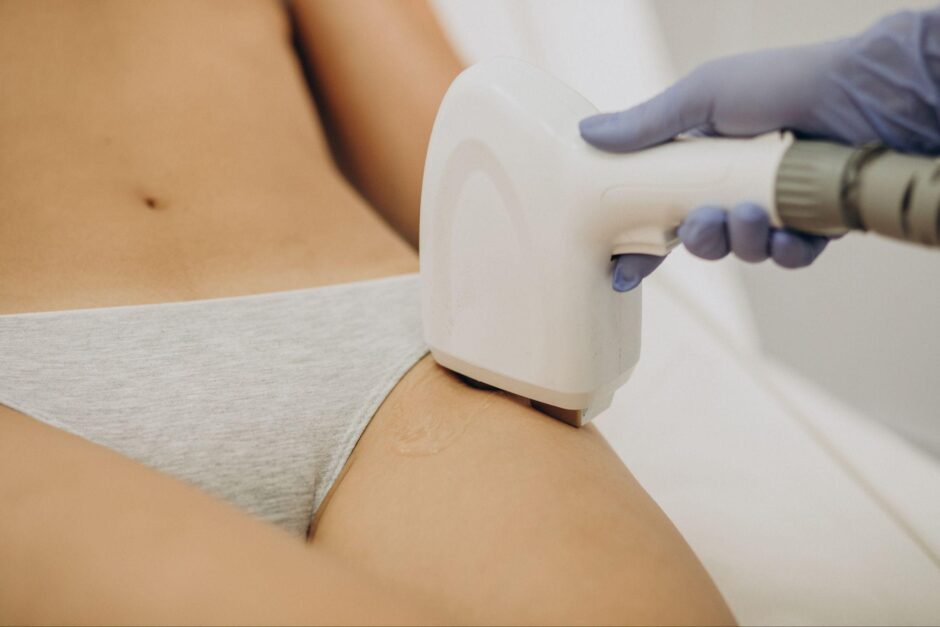
Source: Magnific
Why Skin Type Matters During Brazilian Laser Hair Removal
Your skin type matters because it influences how your provider plans the treatment, from the laser they choose to the energy settings they use for each session.
Laser hair removal works by sending light into the hair follicle. The pigment, or melanin, in the hair takes that light in and turns it into heat (65-70°C). The heat reaches the structures that make new hair, which slows or stops future growth while leaving the surrounding skin unharmed, provided the correct settings are used.
Skin tone is important because melanin is present in both your hair and your skin. Lighter skin often creates a stronger contrast between the hair and the tissue around it, while darker skin contains more melanin that the laser must avoid.
That’s why providers can’t use the same settings for everyone.
And the Brazilian area deserves special attention. The bikini line, inner thighs, and perianal area are all sensitive and may have darker pigmentation than the surrounding skin due to hormones, friction, or natural melanin distribution.
How Different Skin Types Influence Treatment Settings
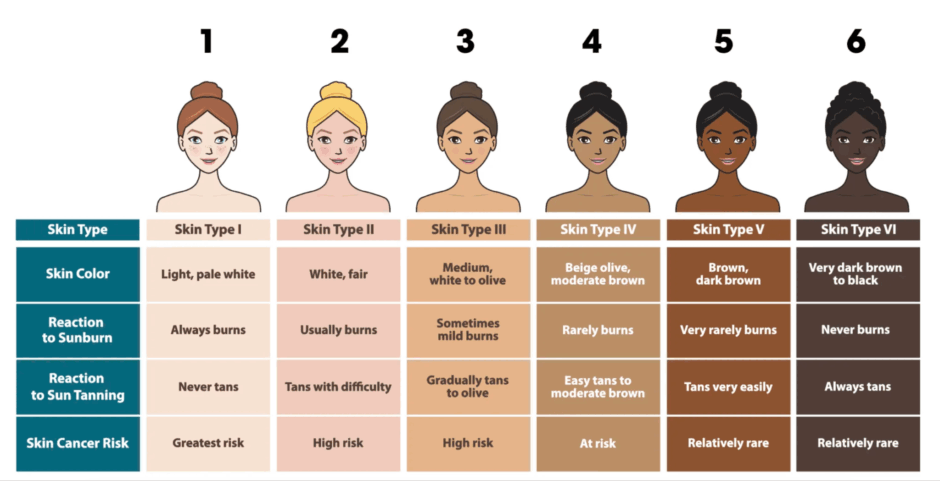
Every treatment plan should start with a consultation where the provider will check your skin and hair. These are the skin tone types according to the Fitzpatrick scale.
Lighter Skin Types (Fitzpatrick I–IV)
Lighter skin tones usually create a better contrast between the hair and the skin. That’s why it’s easier for the laser to focus on the pigment in the hair follicle, which gives providers more flexibility to choose treatment settings.
But even so, skin tone is only one part of the equation.
Dark, coarse hair responds better than fine, light, gray, or red hair because it has more pigment for the laser to target.
Other factors are hair density, the treatment area, and how your skin responds after each session.
Darker Skin Types (Fitzpatrick V–VI)
Darker skin has more melanin, so providers use laser wavelengths and settings designed to target the hair follicle without heating the skin around it.
Many medical-grade systems used today have cooling technology and adjustable energy levels to help improve comfort and safety.
Years ago, darker skin types had fewer treatment options because older laser systems couldn’t separate the pigment in the skin from the pigment in the hair as precisely.
Things have changed, so with the right equipment and an experienced provider, even people with deeper skin tones can get Brazilian laser hair removal safely.
Source: clinilabs.com
Does Skin Type Change Your Results?
The short answer is: no. What can change is the way your treatment is performed, but that doesn’t mean the results won’t be the same.
In fact, there’s a study that supports this claim. It found an average hair reduction of 45.5% ± 16.9% in Fitzpatrick skin types I–IV and 40.3% ± 17.2% in Fitzpatrick skin types V–VI. The authors concluded that the treatment showed similar efficacy for both lighter and darker skin groups.
As we mentioned, skin type is only one factor that influences the outcome. Hair color and thickness are sometimes an even bigger factor.
Not to mention, your results will depend on completing the recommended number of sessions, following the treatment schedule, and choosing a provider who knows what they’re doing.
You also need to follow the rules between the sessions given by your provider — no waxing, only shaving, no sunbathing for two weeks before and after the session, etc.
Choosing the Right Provider Matters More Than Your Skin Type
While your skin type helps personalize your treatment plan, the person behind the laser has an even greater influence on your results.
A good, professional provider will check your skin type, hair color, hair thickness, and the natural pigmentation across the area. Then, after a couple of treatments, they’ll probably adjust the settings again rather than use the same approach every time.
Also, make sure to do proper research and pick a clinic that uses a medical-grade laser system. These modern technologies can provide different wavelengths, energy, and cooling levels to make the experience more comfortable and effective.
So, you can ask whether your skin type is suitable for Brazilian laser hair removal, but it’s better to ask if the clinic has the right technology and experience. A personalized, safe treatment made for you will give you the results you want, no matter where you fall on the Fitzpatrick scale.
Related posts:






Stay updated, free articles. Join our Telegram channel

Full access? Get Clinical Tree


