Author: Dr. Amelia Robinson, Dermatologist (MD), 8+ years
Fact Checked by Katelin Smith [Health & Wellness Editor]
You’ve probably scrolled past a dozen GHK-Cu peptides before and after photos by now: smoother skin, faded redness, new baby hairs, glowing “after” shots that look almost too clean. You want to know whether those changes are the peptide doing its job, or just better lighting and a filter.
To answer that, our content team reviewed more than 25 sources, including peer-reviewed studies, dermatology editorial content, and real user reports from Reddit and Substack diaries.
During our review process, we also evaluated several commercially available GHK-Cu products and research-grade suppliers, including Kylo Peptides, for formulation transparency, purity testing, and manufacturing standards.
This guide summarizes our core findings on GHK-Cu peptide research, before-and-after timelines, dosage considerations, and real-world user experiences.
What Is GHK-Cu?
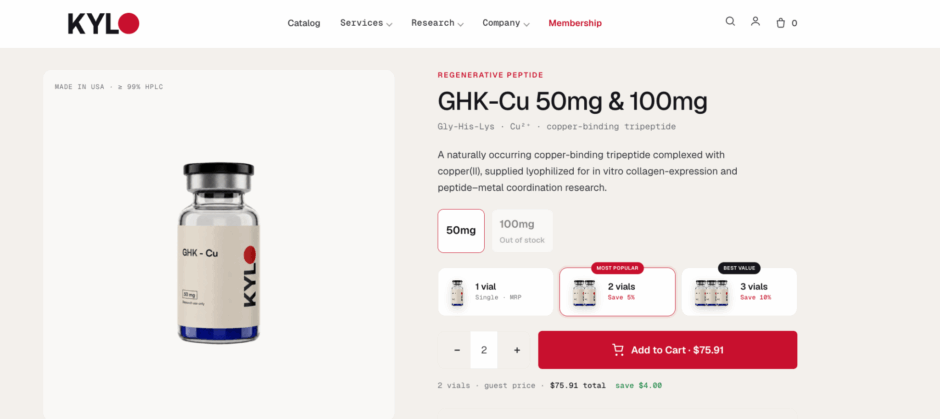
GHK-Cu is the tripeptide glycyl-L-histidyl-L-lysine (GHK) bound to a copper(II) ion. It occurs naturally in human plasma, saliva, and urine. Dr. Loren Pickart first isolated and described it in 1973.
Plasma concentrations decline with age, roughly 200 ng/mL around age 20, dropping to about 80 ng/mL by age 60, a decline that tracks with the body’s slowing repair capacity.
The copper ion is the functional core of the molecule. GHK binds copper and delivers it to skin cells, where copper acts as a required cofactor for lysyl oxidase and related enzymes that cross-link collagen and elastin.
How Does GHK-Cu Work On Skin and Hair?
In simple terms, GHK-Cu sends repair signals. In lab and clinical research, it’s been observed to activate fibroblasts (the cells that produce collagen), increase glycosaminoglycan synthesis (which helps skin retain water), modulate matrix metalloproteinases (MMPs, the enzymes that break down old tissue), and act as a copper cofactor in antioxidant pathways.
The takeaway here is that GHK-Cu is structural and slow. It rebuilds beneath the surface, which is why almost every “GHK Cu peptide before-and-after” photo worth taking seriously was captured weeks or months apart.
GHK-Cu Peptide Before and After Results
What do people actually report seeing? Based on clinical research and user observations across forums and editorial reviews, the most commonly documented before and after GHK-Cu changes include:
- Smoother skin texture and improved hydration
- Brighter, more even skin tone
- Reduced redness in sensitive or rosacea-prone skin
- Softer fine lines around the eyes and mouth
- Faded hyperpigmentation, melasma, and acne marks
- Improved skin firmness and density
- Smaller-looking pores
- Reduced hair shedding and new baby hairs
- Healthier-looking scalp
- Faster recovery after microneedling and chemical peels
The research-backed numbers are even more striking. Pickart and Margolina’s 2018 study found an average increase in collagen density of ~28% at 12 weeks, with top responders reaching 51%. Badenhorst et al. (2016) measured a 55.8% reduction in wrinkle volume in their 12-week topical study.
Here’s how you can do a quick photo-reliability check of any GHK-Cu before and after skin image online:
- Same lighting
- Same camera angle
- Same distance
- No makeup difference
- Defined timeframe
If even one is missing, the photo isn’t real evidence.
GHK-Cu Before and After Results by Body Area, Face, Neck, Hands, and Body
GHK-Cu doesn’t work at the same pace across your entire body. Responses vary widely by the location of the action.
- Face: The most responsive area, with the strongest clinical evidence. Texture and tone shifts show up at 4 to 8 weeks. Density and wrinkle changes appear at 8 to 12 weeks. The Finkley 2005 study on 67 women aged 50 to 59 reported improvements in laxity, clarity, firmness, fine lines, wrinkles, and pigmentation across the face after 12 weeks. The best results appear around the eyes, mouth, forehead, and cheeks.
- Neck: Slower response. Fewer sebaceous glands, lower baseline collagen turnover. Expect 30 to 40% improvement in wrinkle depth on mild-to-moderate photodamage over 12 to 16 weeks. Severely crepey necks with badly damaged elastin won’t see a dramatic change.
- Hands: Among the slowest responses. Hand skin is thin, sun-exposed, and washed many times a day. Plan for 4 to 6 months. Daily SPF helps.
- Body scars and stretch marks: Old scars often soften in color and texture over 3 to 6 months. Recent scars respond faster. Stretch marks improve modestly in color, less so in texture.
- Scalp: A different timeline entirely, covered in the hair section below.
Who Should Consider Using GHK-Cu?
Ideal candidates for GHK-Cu before and after transformations, based on published research and user reports, include:
- People in their 30s and early 40s are noticing the first signs of aging
- People with photoaged or sun-damaged skin
- People with sensitive, reactive, or rosacea-prone skin
- People recovering from microneedling, lasers, or peels
- People dealing with hyperpigmentation, melasma, or acne marks
- People with early-to-moderate hair thinning
- People in their 50s and beyond focused on maintenance
- First-time peptide users looking for a gentle starting point
Severe deep wrinkles, advanced sagging, significant volume loss, and fully dead hair follicles won’t respond significantly. Regardless of gender, the same caveats apply to GHK-Cu before and after men.
Pregnant or breastfeeding women, people with copper metabolism disorders like Wilson’s disease, and anyone with active skin infections should speak with a doctor before starting.
GHK-Cu Peptide Timeline, Week by Week, From Day 1 to Month 6
Here’s what the timeline for topical GHK-Cu before and after looks like, based on the Finkley 2005 study, the Carey/Pickart ultrasound work, the Pickart & Margolina 2018 review, and consistent user-reported patterns.
Weeks 1 to 2
Skin feels smoother. Hydration improves. Mild redness can calm down. No dramatic visible change yet, and that’s normal. The dermis is starting to retain more moisture as glycosaminoglycan synthesis ramps up.
Weeks 3 to 4
First real texture shifts appear. Some users hit the “copper uglies” phase here, where skin briefly looks worse before it gets better. Reddit threads in r/Biohackers most often describe it landing between weeks 3 and 5. It usually resolves within 4 to 6 weeks if you ease back on frequency.
Weeks 5 to 8
The first photographable changes show up. The most-shared online before-and-after photos are taken in this window. Fine lines look softer. The tone looks more even. Reddit user shared their GHK-Cu hair progress after several months of consistent use.
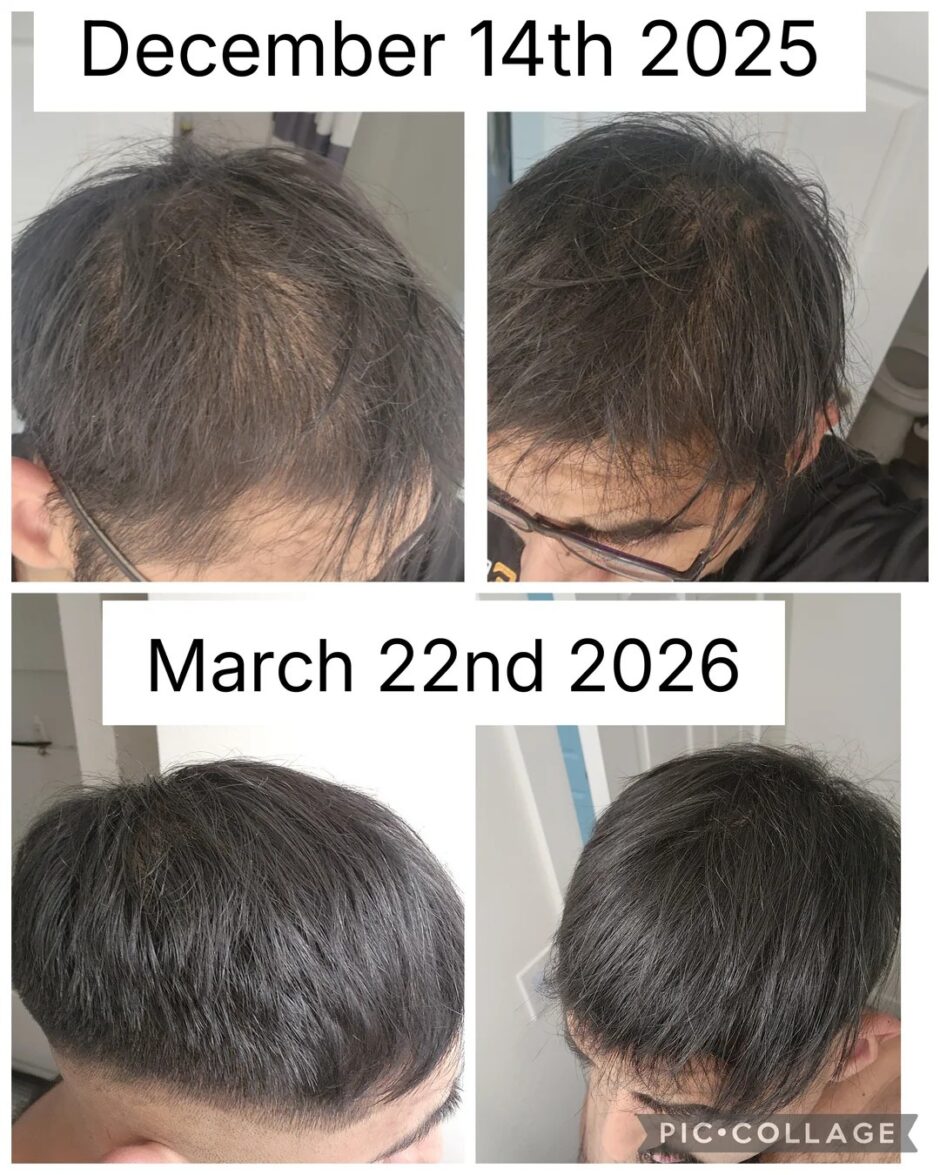
Weeks 8 to 12
Density and firmness become photographable even without studio lighting. This is the window that the Finkley 2005 trial captured, and the Carey/Pickart ultrasound work confirmed at the structural level: an average 28% increase in collagen density, with top responders at 51%.
Months 3 to 6
The biggest changes happen here. Pickart’s 2018 review references wrinkle volume reductions up to 55.8%. Most truly dramatic transformations online are captured at month 4 or later.
GHK-Cu Dosage
- Topical: Clinical studies have used concentrations ranging from 0.01% to 1%. Most well-formulated consumer products fall between 1% and 2%. Applied once or twice daily per the product’s directions. Start at a lower frequency (2–3x/week) for the first two weeks to reduce the risk of the “copper uglies” reaction.
- Injectable: Injectable dosing depends on your specific therapeutic goal, body weight, and medical history. If you’re pursuing the injectable route, make sure your dosage is directed by a compounding pharmacy. Self-directed dosing of an unapproved injectable, sourced from an unregulated “research use only” vendor, carries a safety risk.
Factors Affecting Individual GHK-Cu Before and After Results
Two people running the exact same protocol can get different outcomes. If your results look slower or smaller than someone else’s, it’s almost always one of these factors.
- Age and baseline GHK-Cu levels: Older users with lower natural peptide levels often see more pronounced changes, rebuilding from a deeper deficit. Pickart’s data shows that levels drop by about 60% by age 60.
- Skin type: Oily skin tolerates topical GHK-Cu well. Very dry skin may need lipid-based vehicles to absorb properly.
- Sun exposure: Daily UV damage actively works against GHK-Cu’s rebuilding effect. People who skip SPF see slower visible results.
- Sleep and stress: Cortisol breaks down collagen faster than GHK-Cu signals can rebuild it. Chronic poor sleep stretches your timeline.
- Diet. Protein, zinc, vitamin C, and overall nutrition affect collagen synthesis. GHK-Cu signals fibroblasts, but fibroblasts still need raw materials.
- Smoking and alcohol: Both degrade collagen and impair healing. Heavy smokers consistently see weaker results.
- Hormonal status: Perimenopausal and postmenopausal women may see a slower response due to estrogen-driven collagen decline. GHK-Cu remains one of the more effective non-hormonal options for this group. For readers interested in the broader connection between peptides, hormonal balance, energy, and skin aging during midlife transitions, this guide to peptides for perimenopause offers additional context.
- Product quality: Two “1% GHK-Cu serums” can produce very different results based on vehicle, pH, packaging, and storage. Oxidized or counterfeit material produces nothing.
- Consistency: The single biggest variable. Daily use for 12 weeks reportedly gives better results than sporadic use for 6 months. Missed weeks reset the signaling momentum.
GHK-Cu for Hair Before and After, A Different Timeline
Hair runs on a different clock than skin because it’s tied to the biological growth cycle. The GHK-Cu hair growth before and after timeline looks like this:
- Weeks 1 to 6: Possible mild shedding. Older hairs exist to make room for new growth.
- Weeks 6 to 8: Shedding stabilizes. The scalp often feels healthier.
- Weeks 8 to 12: First vellus (baby) hairs start to appear.
- Months 3 to 4: Visible new growth becomes photographable.
- Months 4 to 6 and beyond: Real density change in responders.
GHK-Cu’s effect on hair, based on published animal and in vitro work, is modest compared to FDA-approved options like minoxidil and finasteride. It can awaken miniaturized yet viable follicles. It cannot resurrect the dead. The best hair responders tend to be people in early-to-moderate thinning who pair GHK-Cu with daily scalp care.
How to Get GHK-Cu
- Topical: Available over the counter in cosmetic serums and creams, in stores and online, usually listed as Copper Tripeptide-1. No prescription needed. Purity and formulation quality vary by brand. Check for third-party testing disclosure before buying.
- Injectable: Requires a prescription from a licensed provider, filled by a 503A compounding pharmacy or sourced through a 503B outsourcing facility.
- What to avoid: Peptide vendors selling “research use only” GHK-Cu for injection are not a legitimate route to human use. It isn’t held to pharmaceutical purity or sterility standards.
Why Choose Kylo Peptides for Research-Grade GHK-Cu?
For researchers sourcing GHK-Cu for in vitro studies, supplier transparency and analytical verification are just as important as reported purity. Because GHK-Cu is a copper peptide complex, confirming peptide purity alone does not verify correct copper coordination. Kylo Peptides addresses this with multiple layers of quality testing, public lot-specific documentation, and research-use-only manufacturing standards designed for laboratory research.
- Purity: ≥99% by HPLC
- Testing: Per-lot HPLC, LC-MS, endotoxin testing, and ICP-MS copper-content verification through ISO/IEC 17025-accredited laboratories
- Form: Sterile lyophilized powder with the characteristic blue color of GHK-Cu
- Catalog: ~35 research peptides and peptide blends
- Made in: USA
- Shipping: Same business day before 3 PM ET; free over $175
- COA Access: Public lot-matched COA library
- Research Use: Research Use Only (RUO)
- Address: 30 N Gould St, Ste R, Sheridan, WY 82801
- Contact: +1 3502523314
Choosing Between Topical and Injectable GHK-Cu
The choice between GHK-Cu topical vs injectable comes down to the scope of use and access to the product.
- GHK-Cu topical is the right starting point for almost everyone. It’s available immediately, doesn’t require a prescription, and has the deepest human clinical evidence base. It’s also the lower-risk way to find out if you’re prone to the “copper uglies” reaction before committing to anything more involved.
- GHK-Cu injectable is a prescription product administered under medical supervision, not a consumer skincare decision. The evidence for its systemic effects leans more heavily on animal and in vitro research than the topical route does. If you’re considering it, make sure it’s prescribed by a compounding pharmacy and not sourced independently online.
The handling burden differs as well, which is part of that scope-of-use question rather than a separate one. A lyophilized vial intended for laboratory work is not usable until it is reconstituted, and research protocols generally specify bacteriostatic water for that step, with the diluent’s lot number recorded alongside the peptide’s. Finished topical formulations arrive ready to handle, so the comparison is between a prepared consumer product and a laboratory preparation procedure rather than between two interchangeable versions of the same thing.
Benefits of GHK-Cu Peptide
GHK-Cu has the strongest research and anecdotal evidence base of any topical peptide in the anti-aging category. Here are the most cited benefits:
- Increased procollagen synthesis: Abdulghani et al. 1998, published in Disease Management and Clinical Outcomes, observed that topical copper-binding peptide cream increased procollagen production in 70% of subjects, vs. 50% for vitamin C and 40% for tretinoin.
- Wrinkle reduction: Badenhorst et al. (2016) measured a 55.8% reduction in wrinkle volume and a 32.8% reduction in depth over 12 weeks, with a 31.6% greater reduction than Matrixyl 3000 in head-to-head testing.
- Improved skin density and firmness: Finkley et al. (2005) conducted a 12-week trial in 67 women aged 50 to 59. Twice-daily topical GHK-Cu was associated with improvements in laxity, clarity, firmness, fine lines, wrinkles, pigmentation, and density. Reported as non-toxic and non-irritating.
- Faded hyperpigmentation: Documented in Finkley 2005 as reduced “mottled pigmentation,” supported by GHK-Cu’s MMP-modulating activity.
- Increased glycosaminoglycan synthesis: Reviewed in Pickart & Margolina 2018, supporting structural hydration capacity.
- Accelerated wound healing: Ischemic skin flap rat studies reported 64.5% healing vs. 28.2% for controls (Pickart & Margolina, 2018).
- Hair follicle stimulation: Pyo et al. 2007 reported that GHK-Cu stimulated dermal papilla cell proliferation up to 70% in vitro.
- Antioxidant cofactor activity: Acts as a copper cofactor for SOD-type antioxidant enzymes in lab models.
- Gene-level modulation: Pickart & Margolina 2018 documented activity across ~4,000 human genes, with fibroblast expression patterns shifting closer to younger cells.
Microneedling and GHK-Cu: The Combination That Accelerates Before-and-After Results
One of the most consistently reported combinations in regenerative skincare conversations is pairing topical GHK-Cu with microneedling.
How it works:
- Microneedling creates controlled micro-injuries that trigger natural wound healing and collagen production.
- Applied right after microneedling, GHK-Cu reaches the dermis through the channels created by the needles, bypassing the stratum corneum barrier.
- The peptide signals fibroblasts during the natural healing window when they’re most receptive.
- The result is deeper collagen remodeling, faster post-procedure recovery, and more visible changes in texture and firmness.
Practical guidance:
- Apply GHK-Cu immediately after microneedling and continue daily for 1 to 2 weeks.
- At-home roller depth is typically 0.5 to 1.0 mm. Deeper treatments should be done by a licensed practitioner.
- Frequency: 4 to 6 weeks between sessions.
- Avoid Vitamin C, AHAs, or strong actives during the healing window.
Realistic expectation: Users running microneedling plus GHK-Cu often see at week 8 what topical-only users see at week 12.
Side Effects and the “Copper Uglies” Explained
GHK-Cu has a strong safety profile in topical research, but a small subset of users experience a transient phase known as the “copper uglies.”
What happens: GHK-Cu modulates MMPs, the enzymes that break down old, damaged tissue. Think of it as the demolition crew showing up before the construction crew. If you start at too high a frequency or stack too many actives, breakdown outpaces synthesis. Skin looks duller or slightly worse for a couple of weeks.
How to prevent it: Start at 2 to 3 times per week for the first 2 weeks. Use 1 to 2% concentrations rather than chasing the highest number. Don’t layer with Vitamin C, AHAs, BHAs, or retinoids in the same routine. If a rash, hives, swelling, or trouble breathing shows up, stop use immediately and seek medical care.
How to Pair GHK-Cu With Other Skincare and Treatments
GHK-Cu plays well with most ingredients that support hydration and barrier health. It does not play well with strong actives that drive exfoliation or shift skin pH.
Works well alongside:
- Hyaluronic acid
- Niacinamide
- Ceramides
- Gentle moisturizers and lipid-based moisturizers
- Daily SPF (non-negotiable)
- Microneedling
- LED therapy
- Chemical peels (during the healing phase, not the same day as the peel)
Keep separate from:
- Vitamin C
- AHAs and BHAs
- High-strength retinoids
The simplest workaround is to alternate. GHK-Cu in the morning or one night, retinoids or Vitamin C on alternate evenings. This is the most common pattern in dermatology editorial guidance.
Stacking GHK-Cu With Other Peptides
Experienced peptide users sometimes combine GHK-Cu with other peptides for compounded effects in research protocols. Beginners should understand each combination before adding complexity.
Common research-grade stacks discussed in peptide editorial sources:
- GHK-Cu plus BPC-157: BPC-157 is studied in gut and tissue repair models. GHK-Cu in skin and collagen models.
- GHK-Cu plus TB-500: A recovery-focused pairing. Both studied angiogenesis and wound healing models.
- GHK-Cu plus Matrixyl 3000: A topical pairing with different signaling pathways. Some users alternate by day.
- GHK-Cu plus Argireline: Combines structural signaling (GHK-Cu) with expression-line studies (Argireline).
- GHK-Cu plus Epitalon: A longevity-focused pairing referenced in user diaries targeting telomere-related research.
>>Browse the peptide catalog at Kylo Peptides.
Beginner recommendation: Master single-peptide protocols first. Run GHK-Cu alone for at least 12 weeks. Multi-peptide protocols may make it nearly impossible to attribute results to any single compound, which defeats the purpose of tracking your own before-and-after use results.
Where a research protocol calls for several of these compounds together, some suppliers lyophilize them into a single vial instead of supplying each one separately. A GLOW blend vial from NextGenPeps is one such multi-component research preparation, and a product of that kind should carry a certificate of analysis reporting on each component rather than a single combined figure. Multi-component vials also reduce the number of variables that can be changed independently, so they suit protocols in which the combination itself is what is being evaluated.
How GHK-Cu Compares to Retinoids, Vitamin C, and Other Anti-Aging Ingredients
The 1998 head-to-head trial by Abdulghani measured procollagen synthesis side by side, and the copper-binding peptide outperformed both vitamin C and tretinoin.
Here’s what the numbers from that study say. Copper peptide cream 70% response rate, vitamin C 50%, tretinoin (retinoic acid) 40%. Different mechanisms, different side-effect profiles. Retinoids and acids work primarily through exfoliation. GHK-Cu, as reported in the literature, works through repair signaling.
A few honest comparison notes:
- Against fillers and Botox: GHK-Cu supports skin quality. It doesn’t replace volume or freeze muscle movement.
- Against Matrixyl 3000: Badenhorst 2016 reported that GHK-Cu produced 31.6% greater wrinkle volume reduction in head-to-head testing.
- Against retinoids: GHK-Cu in the Abdulghani trial outperformed tretinoin without the irritation, peeling, and sun sensitivity that retinoids commonly cause.
How to Spot a Real GHK-Cu Product
A 1% serum from one brand and a 1% from another can produce very different results, depending on the quality of synthesis, formulation, storage, and supplier transparency. Use these checks to identify a reliable GHK-Cu product:
- Color check: Authentic GHK-Cu powder is blue to blue-purple from the copper(II) ion in the GHK coordination geometry. White, faded, or off-color signals indicate missing or degraded copper coordination.
- Third-party COA: Look for HPLC purity testing per batch by an independent ISO/IEC 17025-accredited lab.
- Concentration honesty: Clinical studies used 0.01 to 1% topical. Most effective consumer topicals fall between 1 and 2%. Higher isn’t always better.
- Formulation vehicle: Lipid-based vehicles outperform water-based serums for absorption.
- Storage and stability: Amber glass, refrigerated supply chain, and a slightly acidic pH (5 to 7) preserve the complex.
- Vendor transparency: Reputable peptide suppliers disclose concentration, batch numbers, and testing data openly.
Is GHK-Cu Legal?
Topical GHK-Cu is a cosmetic ingredient (listed as Copper Tripeptide-1). It doesn’t require FDA drug approval and is legally sold over the counter.
Because that is a labelling distinction, it also determines which suppliers a research purchase can legitimately come from. Material sold for laboratory work, such as the GHK-Cu listing at NextGenPeps, is offered as a research chemical, labelled for research use only rather than as a cosmetic or a medicine, and should be documented with a lot-specific third-party certificate of analysis for the vial being shipped. Keeping the two categories apart is what keeps the legal position clear: cosmetic-ingredient status attaches to finished topical formulations, not to research-grade raw peptide.
Injectable GHK-Cu has a more complicated status. It was placed on the FDA’s Section 503A Category 2 list in 2023, the “significant safety concern, do not compound” category. On April 15, 2026, the FDA announced that GHK-Cu for injectable routes of administration was being removed from Category 2, along with 11 other peptides.
The removal took effect within seven calendar days of the notice. In the same notice, GHK-Cu for non-injectable (topical) routes was separately removed from Category 1, where it had been under evaluation.
Removal from Category 2 is not FDA approval, and it doesn’t make injectable GHK-Cu an approved drug. It simply means the substance is no longer flagged as a significant safety risk. A prescription filled through a licensed 503A compounding pharmacy is still required for the injectable route.
There is currently no FDA-approved GHK-Cu drug product on the market, injectable or otherwise. Research use only products sold online are not quality-controlled or tested for human use. This applies whether or not the seller emphasizes purity testing.
FAQs
How long does GHK-Cu take to work?
Most users notice a softer texture and improved hydration within 1 to 2 weeks. Visible changes in tone and firmness appear at 4 to 8 weeks. The strongest GHK-Cu peptide before and after results show up between weeks 8 and 12, with effects compounding through months 3 to 6.
Does GHK-Cu actually reduce wrinkles?
Yes, in research. Badenhorst 2016 measured wrinkle volume reductions up to 55.8% and depth reductions of 32.8% over 12 weeks of topical use. Fine lines respond best. Deep static wrinkles usually need additional treatments.
Is GHK-Cu better than retinol or Vitamin C?
In the Abdulghani 1998 head-to-head trial, copper peptide outperformed both vitamin C and tretinoin for procollagen synthesis (70% vs. 50% for vitamin C and 40% for tretinoin), without the irritation or photosensitivity that retinoids commonly cause.
Can GHK-Cu regrow hair?
Research suggests that GHK-Cu can support regrowth in users with miniaturized yet viable follicles, with visible changes in density between months 3 and 6. It cannot regrow hair in fully dead follicles and works best as an adjunct to FDA-approved treatments.
Is injectable GHK-Cu better than topical?
Injectable is systemic and reported as faster in user diaries; topical works locally with a strong published safety record. For most first-time users, topical at 1 to 2% delivers visible results without the regulatory complications around compounded injectables.
Can I use GHK-Cu with retinol or Vitamin C?
Not in the same routine. Alternate by night or time of day. Both work fine alongside GHK-Cu when separated.
Do GHK-Cu results last after I stop?
The collagen and elastin built during use remain part of your skin’s structure. Ongoing signaling stops once you stop applying, which is why most users treat GHK-Cu as long-term maintenance.
Can I use GHK-Cu while pregnant or breastfeeding?
There’s insufficient safety data on GHK-Cu in pregnancy or breastfeeding. Most clinicians recommend pausing use. Consult your doctor before starting or continuing.
How do I know if my GHK-Cu product is counterfeit?
Check the powder color (it should be blue to blue-purple), look for a third-party COA, verify HPLC testing, ensure the packaging is amber glass, and buy only from suppliers that disclose the concentration and batch numbers.
What is the GHK-Cu peptide used for?
Primarily, skin and hair support. It’s studied for its effects on collagen and elastin synthesis, wound healing, reduction of fine lines and hyperpigmentation, and support of hair follicle activity. It’s sold topically as a cosmetic ingredient and, separately, as a prescription injectable for broader systemic use under medical supervision.
How much GHK-Cu should I inject daily?
There isn’t a standardized human dosing protocol, since GHK-Cu isn’t an FDA-approved drug. Injectable dosing needs to be set by the prescribing provider who evaluates your specific situation. If you’re on the topical route instead, follow the product’s labeled directions (typically a 1–2% formulation applied once or twice daily).
Final Thoughts
GHK-Cu offers a science-backed, regenerative approach to skin and hair research, with over 50 years of published work, roughly 4,000 documented gene interactions, and clinical trials showing measurable wrinkle reduction, increased collagen density, and improved hair-cell activity in models.
Before-and-after results are real but gradual, structural, and built on consistency rather than an overnight transformation. Users who set realistic timelines (4 to 12 weeks for skin, 3 to 6 months for hair), document progress under consistent lighting, pair the protocol with daily SPF, and stick with a quality product almost always see meaningful change.
The most impressive transformations come from people who treat GHK-Cu as long-term maintenance rather than a quick fix.
Medical Disclaimer: This article is for informational and educational purposes only and does not constitute medical advice. GHK-Cu is discussed here in the context of published research, clinical trials, and user-reported observations. Consult a licensed healthcare professional before starting any peptide protocol or making changes to your skincare routine, especially if you are pregnant, breastfeeding, or have an underlying medical condition. Research-grade GHK-Cu sold by suppliers like Kylo Peptides and Seven Aminos is for in vitro laboratory research only and is not for human or veterinary use.
Related posts:



Stay updated, free articles. Join our Telegram channel

Full access? Get Clinical Tree


