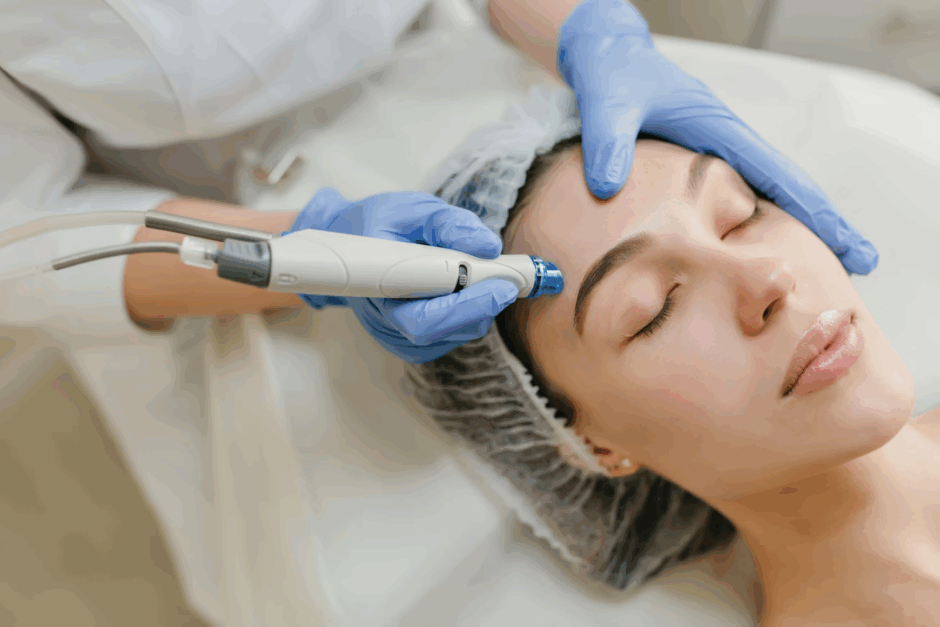
Naturalness vs. Ideal: Where Is Aesthetic Medicine Heading?
Aesthetic medicine is drifting away from the old fantasy of visible correction and toward something quieter. The new goal is not to look dramatically altered. It is to look coherent, rested, and expensive in a way that does not announce the procedure before the person speaks. The American Society of Plastic Surgeons said its 2026 outlook points to “refined preservation,” “regenerative sculpting,” and “natural, undetectable beauty,” which is a neat summary of where the market seems to be going.
The overfilled face is losing prestige
That shift did not come out of nowhere. A decade of aggressive filler, highly edited before-and-after culture, and social-media sameness created its own backlash. The face that once looked aspirational now often reads as dated, over-managed, or simply too online.
The numbers support that mood change. ISAPS reported that 2024 global aesthetic procedures reached more than 37.9 million, with over 17.4 million surgical procedures and 20.5 million non-surgical procedures, yet the strongest facial growth was not in the most theatrical categories. Eyelid surgery became the top surgical procedure, with more than 2.1 million procedures; facial fat grafting rose 19.2%; and face-and-head procedures overall increased to more than 7.4 million. That looks less like a market chasing shock value and more like one chasing refinement.
Regeneration is replacing brute-force correction
The industry’s language has changed in a telling way. Clinics now talk less about “fixing” and more about skin quality, collagen support, restoration, and maintenance. ASPS highlighted PRP, PRF, exosomes, skin boosters, biostimulatory fillers, and earlier, softer facial work as major 2026 themes, all tied to preserving anatomy rather than overriding it.
That does not mean surgery is disappearing. It means surgery is being repositioned inside a broader plan that includes texture, healing, and long-term tissue quality. Smaller corrections done well now carry more status than dramatic intervention done loudly. In beauty culture, restraint has become a luxury signal.
What patients increasingly seem to want
- Better skin quality, not just tighter skin
- Softer structural changes that still move naturally
- Shorter downtime and quicker social recovery
- A face that looks fresher, not “done”
- Results that survive daylight, video, and unfiltered photos
The ideal face is getting replaced by the believable face
For a long time, aesthetic medicine sold a kind of universal upgrade. Sharper cheekbones. Fuller lips. More projection. More contour. That template worked because digital culture rewarded instantly legible beauty.
Now digital culture punishes excess just as quickly as it once rewarded it. The American Academy of Dermatology warned that social-media skin-care trends can create unrealistic expectations, encourage overuse of products, and push people toward routines or devices that are not right for every skin type. That warning applies to aesthetic medicine too: the more beauty trends circulate online, the faster the backlash arrives when everybody starts looking built from the same reference board.
Wellness aesthetics is becoming the safer public language
Another shift is more subtle. Patients increasingly want to talk about feeling better, aging well, and maintaining quality rather than “looking younger” in a blunt way. That does not make the vanity disappear. It just gives it a new tone. Regenerative treatments fit this perfectly because they can be framed as supportive, preventive, and skin-first instead of aggressively transformational.
The business side understands this already. The market now rewards the clinic that can promise visible improvement without visible interference. That is why “undetectable” has become a selling word, and why anatomy-preserving work now sounds more premium than obvious alteration. ASPS’s own wording on the incoming 2026 ideal makes that shift explicit.
The phone now shapes trust before the consultation starts
Modern patients rarely enter this world through one clinic visit alone. They arrive after scrolling practitioner pages, comparing recovery stories, studying before-and-after galleries, and judging whether a brand feels clean, modern, and easy to navigate. In that same mobile rhythm, an online betting site fits naturally beside travel apps, shopping platforms, and live-score tools because people now judge nearly every digital product by the same standards: speed, clarity, and low friction. In aesthetic medicine, that matters more than many clinics admit. A clumsy digital front end can make even a skilled practice feel second-rate before any consultation happens.
The next stage is precision, not spectacle
That is probably the clearest direction of travel. The field is not moving toward less demand. It is moving toward quieter demand, better camouflage, and more layered treatment plans. ISAPS data still show huge global procedure volume, but the growth pattern suggests patients are selecting interventions that preserve social plausibility rather than destroy it.
That same expectation carries into mobile behavior. Users keep tools that let them return quickly, move through menus without confusion, and avoid wasted motion, which is exactly why a melbet bd apk makes sense in a broader digital routine built around short sessions and clean entry points. Beauty platforms are being judged by the same standard now. If booking, follow-up, and guidance feel awkward on a phone, the brand already looks older than it wants to admit.
Where the field is heading
Aesthetic medicine is heading toward believable luxury. Less caricature. Less obsession with a single “ideal” face. More emphasis on tissue quality, proportion, movement, and results that read well in ordinary life.
That is the real change. Naturalness is no longer the opposite of ambition. It has become the new ambition.
Related posts:


Stay updated, free articles. Join our Telegram channel

Full access? Get Clinical Tree


