Microsurgical reconstruction has advanced globally but remains scarce in low- and middle-income countries, where nearly half the population receives only a fraction of necessary surgical care. Barriers include limited expertise, equipment, and awareness. Volunteer missions from organizations like Operation Smile and ReSurge International, along with educational programs, aim to bridge this gap by training local surgeons and building sustainable care networks. Long-term solutions focus on mentorship, hands-on practice, and establishing formal curricula, allowing local teams to continue care independently. The self-sufficiency continuum encourages resource-sharing between nations, helping developing regions become self-reliant providers of microsurgical services and expanding access worldwide.
Key points
-
•
Low-income and middle-income countries, despite making up nearly half the global population, receive only a small fraction of surgical care, with diseases treatable by surgery remaining a leading cause of death.
-
•
Lack of expertise, infrastructure, equipment, funding, and public awareness hinder the adoption of microsurgical reconstruction in developing countries.
-
•
Organizations like Operation Smile and ReSurge International offer volunteer microsurgical missions, training, and visiting educator programs to build local capacity and sustainable care systems.
-
•
Teaching local surgeons via hands-on training, lectures, and workshops enables continuity of care, reducing dependence on visiting teams and fostering self-sufficiency.
-
•
The goal is to create a global network where developed countries support developing ones, ultimately empowering them to become self-sufficient providers of microsurgical care.
Abbreviation
| ALT | anterolateral thigh |
Introduction
Microsurgical reconstruction has seen many advances and developments in recent decades, from new technologies with virtual surgical planning, to robotic microsurgical techniques. Despite these advances in the developing world, there is a paucity of basic microsurgical care in developing countries. Low-income and middle-income countries comprise nearly half of the world’s population, however, unproportionally receive only 12% of all surgical interventions. , In fact, the poorest one-third of the world’s population receives only 3.5% of all surgical procedures, and diseases treatable by surgical intervention remain a ranking killer of the world’s poor. Cases requiring surgical reconstruction account for up to 66% of global surgical disease and include trauma such as mangled hand injuries or severe burns, congenital malformations and anomalies, as well as malignancies.
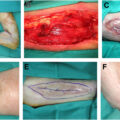
When left untreated, conditions that require surgical reconstruction, such as burn scar contractures or loss of function following cancer resection, can lead to substantial patient morbidity and life-threatening sequalae ( Fig. 1 A, B ). These untreated conditions may require further medical treatments and resources. In addition, this can also pose a significant societal and economic toll through chronic disabilities. This includes the inability to work, the need for additional caregivers, or the utilization of costly resources to address basic activities of daily living.
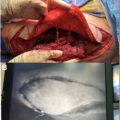
( A , B ) Severe burn contracture at the antecubital fossa requires release to restore function of the upper extremity, following release of the antecubital contracture, exposed vital structures require flap coverage. A free ALT flap was used to provide stable coverage and permit good range of motion; The ALT flap is elevated on the perforators using loupe magnification.
With limited funding and resources, there is a significant unmet need for microsurgical care in developing countries. Lack of technical expertise, subspecialty-trained surgeons, appropriate equipment, as well as high costs are prohibitive factors to the utilization of microsurgical reconstruction in developing countries. Public unawareness of the benefits of microsurgery has also been cited as a critical hindrance in its use in global reconstructive surgery. Despite these challenges, many agree that microsurgical reconstruction is essential in these regions. A survey of local sub-Saharan African surgeons found that while 97% of respondents felt that microsurgery was essential, 41% had not performed any microsurgical procedures in at least 5 years, with those who were performing microsurgery reporting only 1 to 10 cases annually.
Solutions to address this gap in reconstructive surgical care involve volunteer physicians setting up practices in developing countries, joining charitable mission trips, and sponsoring children to be treated in centers of excellence. The advent of microsurgical medical missions allows trained microsurgeons to volunteer 1 to 2 weeks to serve in a developing country, while still maintaining their home practice. These missions offer a feasible solution to providing essential microsurgical care in resource-depleted countries. The establishment of visiting educator programs, additional educational symposia, and hands-on skills training has also allowed training of local surgeons in these countries, enabling them to continue reconstructive care once volunteer surgeons return to their home countries. This facilitates long-term quality care for reconstructive patients.
Experiences
Organizations such as Operation Smile, Surgicorps, Smile Train, Doctors of the World, and many others recruit physicians, nurses, support personnel, and politicians from both host and volunteer countries to work together to bring comprehensive reconstructive care to low-income and middle-income countries. Particularly for large or significant defects with loss of soft tissue and bone, microsurgical reconstruction is the gold standard.
Since 1990, missions with a focus on microsurgery have been implemented in Vietnam, India, Cambodia, Rwanda, Ethiopia, and other countries. In many of these countries, local surgeons, anesthesiologists, nursing, and other support staff had reconstructive experience with pedicled flaps but little to no experience with free tissue transfer. Operation Smile has brought microsurgical programs to Vietnam since the 1990s. In a 15-year timespan from 1990 to 2005, there have been 11 microsurgery mission trips to Hanoi and Ho Chi Minh City. Volunteer reconstructive surgeons have performed 266 operations, including 108 free tissue transfers, 15 microsurgical peripheral nerve operations, and 143 complex nonmicrosurgical reconstructive cases. Results from 20 years of microsurgical mission trips to Cambodia through Doctors of the World demonstrated that 56 free tissue transfers had been performed between 2004 and 2023. The most frequent areas of reconstruction were the head and neck (35.7%), lower limbs (30.4%), and upper limbs (21.4%). The most common free flaps performed were the free fibula (44.6%), gracilis (19.6%), and anterolateral thigh (ALT) flap (16.1%) ( Fig. 2 A-E ). A meta-analysis of results of 7 additional studies of international microsurgical mission trips reported 290 flaps performed on 284 patients. Most common sites of reconstruction reported in this meta-analysis were the head and neck (53%) and lower limbs (7.9%), with the most common flaps as the radial forearm (22%) and ALT (18%). A study of microsurgical reconstruction of noma, a rapidly progressive and destructive disease of the mouth and face, in Ethiopia with the charity Facing Africa reported 34 microsurgical procedures over 11 missions from 2008 to 2014. Reconstruction with free tissue transfer in this patient population included radial forearm, ALT, abdominal, parascapular, and latissimus flaps ( Fig. 3 A-D ).
( A–E ) Hemifacial atrophy (Perry-Romberg) resulted in constant drooling and speech dysfunction; An ALT perforator flap was designed to fill the facial/lip contour defect; The long pedicle of the ALT flap permits easy anastomosis in the neck; The inset ALT flap provides contour correction and functional restoration of lip continence.
( A–D ) A Noma defect of the left lateral commissure resulting in oral incompetence; The radial forearm flap elevated in the only operating room available; The radial forearm flap is elevated with the palmaris longus tendon, which is employed to suspend the flap and prevent sagging of the flap after healing maturation; The radial forearm flap provides enough bulk to restore lip competence.
Strategies
While volunteer mission trips have undoubtedly helped address the need for reconstructive care in these low-income and middle-income countries, this at times led to fragmented, misdirected, unsustainable, and disruptive care in this patient population. Free flaps performed as part of international surgical collaborations in low-income and middle-income countries are feasible but often experienced higher failure rates and required more secondary revisions when compared to those flaps performed in high-income countries. Concerns that these blitz surgeries and fly-in-fly-out missions, while providing much-needed care to otherwise neglected areas, highlighted the need for improved long-term sustainability and continued local care. , The Lancet Commission on Global Surgery has identified workforce training as a key area of investment to improve access to essential surgical care. In recent years, the goals of global surgery have broadened to include collaboration, education, research, training, and advocacy. Establishing a global reconstructive surgery network, where local surgeons are linked with specialty-trained surgeons wishing to mentor and volunteer their guidance has also been championed as a solution to address these concerns.
Beyond providing patient care and performing microsurgical interventions, a key component of these microsurgical missions is education, allowing the local surgeons to become facile with microsurgical techniques and able to independently perform similar reconstructive procedures after volunteer physicians return to their home countries.
Formal education conferences are now a key aspect of each mission. This involves lectures and symposia on free tissue transfer techniques, pearls, and patient case discussions. Microsurgical laboratory training, where local surgeons receive basic training in microvascular and microneural techniques have been organized to foster improvement in microsurgical skills. Cadaver dissections have also been described, to augment knowledge of flap anatomy. During these missions, local surgeons operate in conjunction with volunteer surgeons from the preoperative evaluation, to collaboration intraoperatively, and then share the postoperative care. After the volunteer surgeons depart, the local surgeon group assumes full responsibility for additional follow-up and further surgical intervention. This see one, do one, teach one philosophy was highlighted in an Operation Smile microsurgical mission in Vietnam, in the treatment of a patient with severe burn contractures to the bilateral upper extremities. The Operation Smile volunteer surgeon team performed and taught the surgical release of a severe dorsal hand burn contracture, followed by resurfacing with a parascapular flap. The following year, the local Vietnamese surgeons performed the same procedure on the patient’s contralateral hand. Reports from similar charity mission trips have noted the shift to facilitate quality teaching of microsurgical skills rather than reach a quantitative goal of number of surgeries performed.
Upon return to these countries in later years, opportunities to supplement local knowledge with updated techniques and audits of current techniques can be helpful to guide successful reconstructive care of these patients.
Another strategy to supplement education of local surgeons in low-income to middle-income countries is through visiting professorships. ReSurge International, a nongovernmental organization based in the United States, had played an integral role in establishing a formal training curriculum through their ReSurge Global Training Program. This consists of a comprehensive curriculum involving all aspects of reconstructive surgery through subspecialty trained faculty who follow trainees long-term until they become outreach surgeons. Through these Visiting Educator trips, volunteer reconstructive surgeons train local surgeons in techniques and principles through lectures, workshops, patient assessments, and supervised operations. This is supplemented by volunteers in other disciplines such as anesthesia, pediatrics, therapy, and nursing who also serve as visiting educators to train their local counterparts. , A review of 38 visiting educator trips between 2014 and 2017, spanning 10 low-income to middle-income countries, assessed 149 trainees and found that trainees successfully developed important skill sets in reconstructive surgery as a result of their involvement in the program. A separate analysis of the ReSurge Global Training Program from 2014 to 2019 in Vietnam also demonstrated that visiting educator trips successfully expanded surgical capacity by training local reconstructive surgeons. Over this 5-year period, 12 visiting educator trips were conducted across 3 hospitals. Local surgeons independently performed 2,018 operations, and the hospitals saw an 81.5% increase in surgical volume for the reconstructive clinical conditions in the years following these trips. This results in significant economic benefit and return on investment. A cost-effectiveness analysis of these trips found the economic benefit to be between $21.6 million and $29.3 million, or a 12 to 16 fold return on investment. The success of these programs was further expanded after one of these local hospitals became a national training hub for reconstructive surgery, hosting educational seminars, including an internal 9-month training program. In fact, this local hospital is now equipped to begin its own surgical outreach trips to further areas of Vietnam as well as Laos. This indeed reflects an even larger return on investment, with widespread increased access to reconstructive care reaching exponentially beyond the original training hospital.
Another visiting professorship program has also been reported in Rwanda, through collaboration with Operation Smile, the American College of Surgeons Operation Giving Back, the Plastic Surgery Foundation, and Surgeons in Humanitarian Alliance for Reconstruction, Research, and Education. Similarly, the mission of this program has shifted from solely providing microsurgical care, to now focusing on training local staff including reconstructive surgeons, anesthesia providers, nurses, and other support staff. This visiting professorship curriculum involves surgical simulations, microsurgery theory, and practice plus case-based discussions, in addition to hands-on intraoperative microsurgery teaching. Through this initiative, a plastic surgery residency program has also been introduced, with the aim to exponentially increase the number of plastic surgeons in the country. It is projected that 10 additional plastic surgeons will be fully trained by 2030. The long term goal of this Rwandan program is to incorporate microsurgery into the regular plastic surgery practice and training, with teaching primarily provided by Rwandan faculty. Close collaboration between both the volunteer and local teams was noted to be integral in the success of this program.
This overarching ripple effect to build local sustainability can be described through a self-sufficiency continuum. This stratifies countries on a continuum based on skills and resources. At the top of the spectrum are Resource Countries , such as the United States, Canada, Australia, Italy, and the United Kingdom. Volunteer surgeons from these countries provide surgical education and skills, as well as additional resources to help resource-depleted countries such as essential medical supplies including microscopes. As we step down the continuum, we find Guided Countries , followed by Supported Countries , then Assisted Countries , Reliant Countries , and finally New Countries such as India and Cambodia. New Countries comprise the lowest-income and most resource-depleted regions with little to no infrastructure. The goal is for countries on the high end of the continuum to provide support and education to those countries on the lower end of the continuum, with the idea of fostering each country’s self-sufficiency as they work their way up the continuum. The goal would be for each country to ultimately become a Resource Country , lending support to those countries below it on the self-sufficiency ladder. International missions are integral in the journey through this continuum, focusing on developing local capacity and establishing permanent treatment centers.
Related posts:


Stay updated, free articles. Join our Telegram channel

Full access? Get Clinical Tree


