Rotator Cuff Tear Arthropathy: Evaluation, Diagnosis, and Treatment: AAOS Exhibit Selection
Nam D, Maak TG, Raphael BS, et al (Hosp for Special Surgery, NY) J Bone Joint Surg Am 94:e34.1-e34.11, 2012§
J. Macalena, MD
Evidence Ranking
D
Expert Rating
2
Abstract
Rotator cuff tear arthropathy encompasses a broad spectrum of pathology, but it involves at least three critical features: rotator cuff insufficiency, degenerative changes of the glenohumeral joint, and superior migration of the humeral head. Although many patients possess altered biomechanics of the glenohumeral joint secondary to rotator cuff pathology, not all patients develop rotator cuff tear arthropathy, and thus the exact etiology of rotator cuff tear arthropathy remains unclear. The objectives of this manuscript are to (1) review the biomechanical properties of the rotator cuff and the glenohumeral joint, (2) discuss the proposed causes of rotator cuff tear arthropathy, (3) provide a brief review of the historically used surgical options to treat rotator cuff tear arthropathy, and (4) present a treatment algorithm for rotator cuff tear arthropathy based on a patient’s clinical presentation, functional goals, and anatomic integrity (Figs 2A and 7).
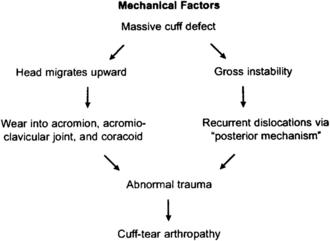
Figure 2
Related posts:
 of the Wrist and Associated Triangular Fibrocartilage Lesions: A Prospective Study in Arthroscopically-treated Patients
of Sensory Reeducation Programs on Functional Hand Sensibility after Median and Ulnar Repair: A Systematic Review
Biomechanical Comparison of 3 Loop Suture Materials in a 6-Strand Flexor Tendon Repair Technique
Results of the Darrach Procedure: A Long-Term Outcome Study
Longitudinal Follow-up of Mini-Open Rotator Cuff Repair
of the Wrist and Associated Triangular Fibrocartilage Lesions: A Prospective Study in Arthroscopically-treated Patients
of Sensory Reeducation Programs on Functional Hand Sensibility after Median and Ulnar Repair: A Systematic Review
Biomechanical Comparison of 3 Loop Suture Materials in a 6-Strand Flexor Tendon Repair Technique
Results of the Darrach Procedure: A Long-Term Outcome Study
Longitudinal Follow-up of Mini-Open Rotator Cuff Repair
 of the Brief International Classification of Functioning, Disability, and Health (ICF) Core Set for Hand Conditions

Stay updated, free articles. Join our Telegram channel

Full access? Get Clinical Tree


